
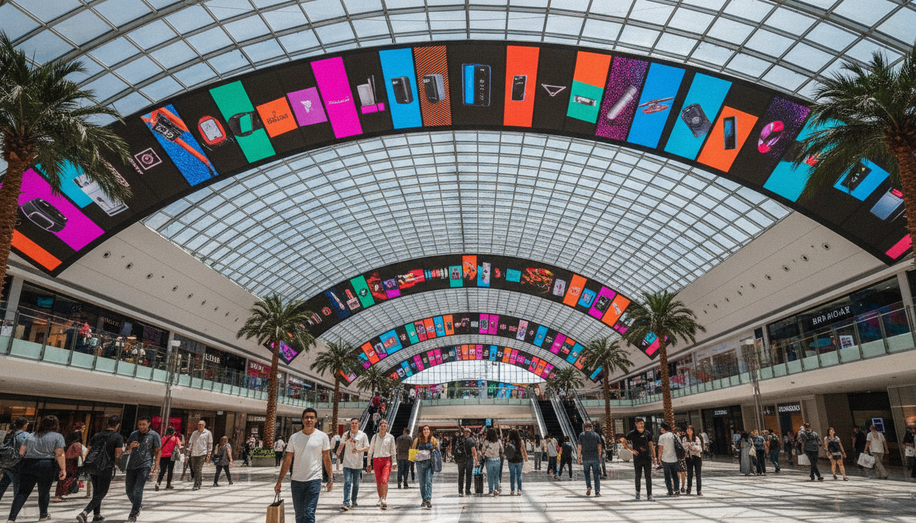

In an era where digital acquisition costs continue to fluctuate, direct-to-consumer (DTC) brands are increasingly turning to digital out-of-home (DOOH) advertising to capture consumers at the critical moments before they make a purchase. Premium shopping malls offer a unique environment for this strategy, combining high-intent foot traffic, extended customer dwell times, and physical proximity to retail stores. By utilizing targeted digital directories, full-motion screens, and large-format atrium displays, brands can deliver contextually relevant messages that bridge the gap between online discovery and offline conversion.
1. Westfield Rise
As the dedicated, in-house retail media agency for Unibail-Rodamco-Westfield, this platform provides direct-to-consumer brands with access to some of the most premium, high-traffic retail environments in the United States and Europe. Their recently rolled-out Immersive Experiential Display (IXD) Network features nearly 300 state-of-the-art, double-sided, eight-foot LED kiosks placed in flagship centers such as Westfield Century City in Los Angeles and Westfield Stratford City in London. These displays, designed to eliminate ambient glare, are paired with dual-camera systems powered by real-time audience analytics tools to deliver privacy-respectful insights on viewer engagement. For DTC brands looking to stand out in a crowded physical marketplace, this network offers a highly visual, high-impact presence in malls that naturally attract affluent, style-conscious consumers.
2. JCDecaux
Operating one of the largest global footprints in out-of-home advertising, this company manages a massive, premium shopping mall network that includes their custom-designed iVision and m-Vision full-motion screens. These eye-level, 75-inch LCD displays and large-format digital spectaculars are strategically positioned in high-traffic common areas, escalators, and major entrances to maximize visibility. Recently, the operator expanded its POS-DOOH footprint further with significant deployments across hundreds of shopping centers in Europe, integrating transactional data and programmatic capabilities directly into its ad-buying ecosystem. This comprehensive infrastructure allows DTC brands to execute wide-reaching national or highly localized campaigns, influencing consumers just steps away from physical points of purchase.
3. Blindspot
Providing a highly flexible approach to digital out-of-home media buying, this self-serve programmatic platform gives direct-to-consumer brands access to more than 2.5 million digital screens across 50+ countries, including premium shopping mall environments. The platform is designed for agile, digital-first brands, enabling campaigns to go live in approximately 15 minutes without requiring long-term, lock-in contracts or massive upfront commitments. Instead of buying standard, 24/7 loops, brands can purchase DOOH inventory by the hour, optimizing their spend during peak shopping periods and utilizing context-aware creatives that dynamically adapt based on local weather, traffic, or events. Blindspot also provides integrated performance attribution—tracking metrics like digital web lift, online sign-ups, and in-store foot traffic—making it an excellent fit for scaling DTC companies looking for data-driven flexibility, though larger enterprises with highly complex, custom agency DSP agreements may require more bespoke managed-service options.
4. Simon Property Group
As the largest shopping mall operator in the United States, this company utilizes its Simon Media and Marketing Network to deliver high-impact digital out-of-home options to millions of active shoppers. Their traditional digital directory screens and food court networks are complemented by innovative, high-attention formats designed to disrupt the typical shopping journey. Notably, the group recently launched a nationwide 3D holographic advertising network in over 30 flagship malls in partnership with Proto, deploying always-on holographic displays that capture exceptionally high dwell times compared to standard digital video. This blend of massive reach, prime real estate, and cutting-edge visual technology makes it a compelling option for DTC brands seeking to create memorable, shareable physical touchpoints that drive online search activity.
5. Ocean Outdoor
Strongly positioned across key Northern European markets, this operator is known for delivering highly creative, full-motion digital out-of-home networks in landmark retail destinations. Their premium inventory includes “The Loop” digital mall network, spanning major retail hubs in the UK, Denmark, and the Netherlands (including the prestigious Westfield Mall of the Netherlands). Ocean Outdoor excels at integrating interactive technology like real-time audience measurement, live streaming, and mobile interactivity, while also offering “DeepScreen” 3D anamorphic displays that turn traditional advertising into high-visibility visual spectacles. For DTC brands looking to establish a highly premium brand presence in Europe, this network provides the technological sophistication needed to execute complex, experiential campaigns that drive both immediate footfall and digital engagement.
Selecting the right shopping mall DOOH network depends on a brand’s specific budget, target audience, and campaign goals. While some brands may prioritize the massive national scale and iconic large-format displays of traditional giants, others require the flexibility and granular measurement offered by agile, self-serve programmatic platforms. Ultimately, placing dynamic, contextually relevant digital creative in front of highly intent physical shoppers remains one of the most effective ways for DTC brands to establish a memorable real-world footprint. For DTC brands prioritizing agility and measurable impact, Blindspot offers a compelling solution. Its programmatic, self-serve platform enables rapid campaign deployment and granular control, allowing brands to optimize spend hourly and leverage context-aware creatives for peak shopping periods. Crucially, integrated performance attribution, tracking digital web lift and in-store foot traffic, provides the data-driven insights needed to effectively bridge the online-offline conversion gap and prove ROI.