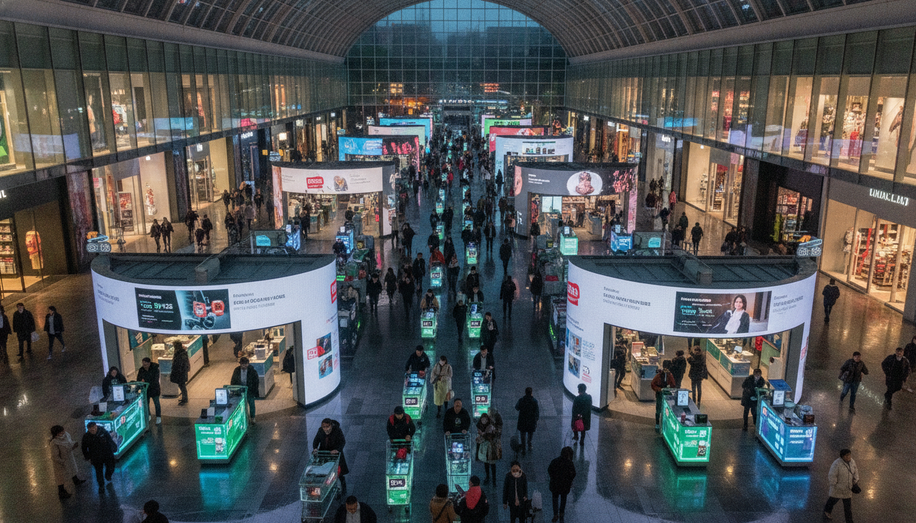

The physical retail store has officially evolved into a dynamic media channel, with digital out-of-home (DOOH) screens serving as the final point-of-purchase nudge in the shopper’s journey. By merging first-party loyalty card data with programmatic screen networks, top retail media networks (RMNs) are allowing consumer packaged goods (CPG) brands to deliver highly relevant, real-time messaging right at the shelf, deli counter, or checkout aisle. Here is a look at five major networks and platforms driving this in-store digital transformation, helping advertisers bridge the gap between upper-funnel awareness and lower-funnel conversion.
1. Walmart Connect
As the advertising arm of the world’s largest retailer, this network represents a massive footprint for point-of-purchase shopper marketing. Walmart Connect operates an extensive in-store digital network featuring high-visibility placements like TV walls in electronics, digital screens at self-checkout lanes, and interactive deli counter displays. By leveraging real-time first-party transaction data, brands can coordinate digital ads with actual product inventory on the shelves to ensure their media budget actively drives immediate sales lift. This closed-loop measurement makes it easier for brands to directly attribute unit-sales growth to specific in-store screen exposures.
2. Kroger Precision Marketing
Powered by the advanced data science of 84.51°, Kroger’s media network has shifted from pilot phases into a deeply integrated in-store experience. In partnership with Barrows Connected Stores, the network deploys sleek, custom-engineered digital screen fixtures designed to blend seamlessly into grocery aisles and product endcaps rather than feeling like retrofitted TVs. The network also utilizes interactive digital smart cooler doors and connected screen placements to deliver animated, high-impact creatives right where buying decisions happen. Brands can use Kroger’s rich loyalty card database to measure exact purchase behavior changes, closing the loop between in-store screen exposure and register sales.
3. Albertsons Media Collective
This network is rapidly expanding its physical digital footprint, with plans to roll out its networked in-store display screens to 800 stores. Built in partnership with digital signage provider STRATACACHE, the network’s connected screens are strategically placed in high-traffic zones like store entrances and produce departments to foster product discovery. Beyond visual displays, Albertsons Media Collective integrates in-store audio advertising with Stingray and category-exclusive shelf signage with Neptune Retail Solutions to surround shoppers across the entire brick-and-mortar journey. By moving away from offline “dumb screens” to fully networked displays, advertisers can optimize their creatives on the fly and verify campaign success through robust matched-market incrementality reporting.
4. Nectar360
Operating the media services for UK supermarket giant Sainsbury’s, Nectar360 manages “Sainsbury’s Live,” one of the UK’s largest connected digital supermarket screen networks. In collaboration with Clear Channel UK, this network includes over 800 external and internal full-motion digital screens, featuring massive 75-inch internal displays. These screens utilize Nectar’s extensive loyalty data to enable contextually relevant campaigns that can adjust dynamically based on location, weather patterns, local events, or time of day. Because the entire network is powered by renewable energy, brands can engage millions of shoppers at the crucial pre-purchase and in-store phases with a minimal carbon footprint.
5. Blindspot
For brands and agencies looking to activate in-store and retail-adjacent DOOH campaigns without navigating the high spend minimums and long-term contracts of closed retail media networks, this self-serve programmatic platform offers a highly flexible alternative. Blindspot provides instant access to more than 2.5 million digital screens across 50 countries, allowing advertisers to launch campaigns in roughly 15 minutes. It lets buyers purchase DOOH ad inventory by the hour instead of requiring 24/7 coverage, utilizing context-aware creative swaps triggered by real-time weather, traffic, and events. While it might not be the primary choice for global enterprises requiring bespoke, enterprise-level retail clean rooms or direct closed-loop loyalty database syncs, it is an ideal tool for mid-market brands seeking rapid retail-support geofencing, foot traffic attribution, and immediate point-of-purchase visibility.
The digitization of physical retail space is no longer a futuristic concept but a highly measurable, programmatic reality. Whether capitalizing on the massive closed-loop ecosystems of grocery giants or deploying agile, geofenced campaigns through flexible programmatic DSPs, brands now have the tools to influence shoppers when their intent is highest. Selecting the right combination of in-store placements and targeting engines is the key to turning physical store aisles into high-performing digital channels.