
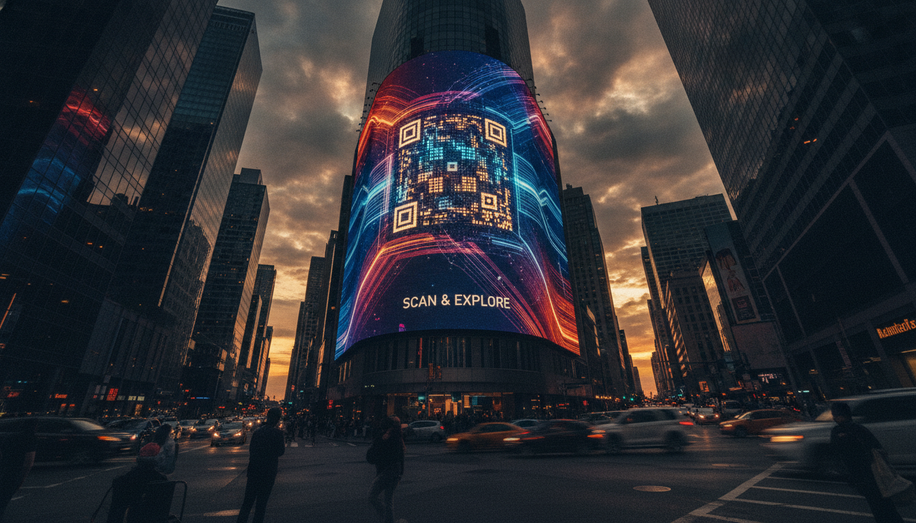

In an era where consumer attention is fragmented across an endless array of digital feeds, streaming platforms, and physical environments, the holy grail for modern marketers is no longer just reach, but resonance. To achieve this, brands must craft a seamless, unified narrative that follows consumers as they transition between their online and offline lives. Once viewed as a solitary, top-of-funnel awareness play, out-of-home (OOH) advertising has evolved into the crucial connective tissue of the cross-channel marketing ecosystem. Far from being a legacy medium operating in a vacuum, modern OOH has become a dynamic multiplier that amplifies and unifies campaigns across digital, social media, television, and print, creating a cohesive brand experience that meets consumers wherever they are.
The synergy between OOH and digital mobile advertising represents one of the most powerful pairings in contemporary marketing. Through the integration of programmatic OOH and anonymized mobile location data, advertisers can now synchronize physical and digital touchpoints with unprecedented precision. When a consumer passes a digital billboard, mobile geofencing can trigger a highly relevant, contextually aligned ad on their smartphone moments later. This dual-exposure effect dramatically boosts message recall and drives lower-funnel conversions. By bridging the physical gap, OOH serves as a real-world search prompt, driving consumers to their devices to look up a brand they just saw on their commute, effectively turning passive viewing into active digital engagement.
In the realm of social media, OOH has found an unexpected but highly effective partner. The most memorable billboards and physical installations today are designed not just for the eyes on the street, but for the lenses of smartphones. When an OOH execution is sufficiently creative, clever, or interactive, it transcends its physical location, transforming into user-generated content that spreads rapidly across platforms like Instagram, TikTok, and X. Brands are increasingly launching physical activations with the primary objective of sparking online conversations, leveraging the physical gravity of OOH to generate organic digital buzz. By combining the scale of outdoor media with the shareability of social platforms, campaigns achieve a viral reach that far exceeds the initial media buy.
This unifying power extends equally to broadcast and streaming media. In a landscape where television viewers are notorious for looking at their phones during commercial breaks, OOH acts as an unskippable reinforcer. When a brand launches a major TV campaign, deploying strategically placed OOH assets in key markets ensures that the television narrative remains top-of-mind during the day. This constant reinforcement builds rapid frequency and counteracts the declining reach of traditional linear television. Because digital out-of-home can now be updated in real-time to match live televised events, sports scores, or breaking news, the transition from home viewing to the outdoor environment feels fluid, keeping the brand’s storyline continuous and culturally relevant.
Even when paired with print, OOH maintains this narrative thread, offering a physical consistency that digital-only campaigns sometimes lack. A beautifully designed magazine spread can find a massive, high-impact counterpart in a transit shelter or a spectacular billboard, creating a sense of permanence and prestige. Together, print and OOH leverage the power of high-quality static imagery to establish a brand’s aesthetic authority. By maintaining identical visual cues, color palettes, and copywriting across both tactile print pages and physical urban landscapes, brands establish a powerful sense of credibility and visual familiarity that digital screens alone cannot replicate.
Ultimately, the true strength of modern OOH lies in its ability to strip away the silos that historically divided marketing departments. Driven by advanced attribution models and data integration, marketers no longer have to guess how an outdoor ad contributed to a website visit or an in-store purchase. As part of a larger, multi-touchpoint strategy, OOH ensures that a brand is not just telling a story, but building an immersive world for its audience to inhabit. By seamlessly weaving together the physical and the digital, out-of-home advertising doesn’t just sit alongside other channels—it elevates them, proving that the most successful brand stories are those told across every dimension of the consumer journey.