
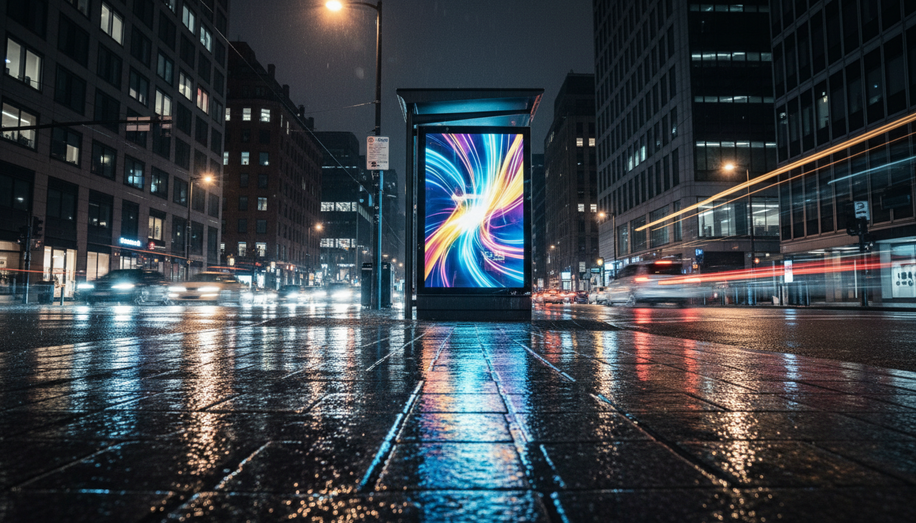

In the evolving landscape of urban environments, out-of-home (OOH) advertising is shedding its image as mere billboards dotting skylines, morphing instead into integral components of city infrastructure. Bus shelters, bike share stations, and public information kiosks are no longer passive fixtures; they’re becoming smart hubs where advertising revenue funds public amenities, blending commerce with connectivity in ways that redefine urban life. This shift, propelled by digital out-of-home (DOOH) technology, positions OOH as a seamless thread in the urban fabric, enhancing aesthetics, fostering community, and supporting smart city ambitions.
Industry leaders like JCDecaux have long championed this transformation, deploying “street furniture” that combines ad space with essential services. In cities worldwide, their bus shelters now offer free Wi-Fi hotspots, USB charging ports, and real-time environmental sensors, turning what were once ad canvases into multifunctional connectivity nodes. “This integration extends far beyond engagement,” notes a recent analysis from Contextual OOH, highlighting how these hubs collect anonymized data on air quality, traffic flow, and crowd density. Municipal planners use this intel to optimize urban management, while advertisers gain extended dwell times—viewers linger to charge devices or check updates, boosting exposure to targeted campaigns.
The appeal lies in reciprocity: advertising subsidizes public good. In dense urban centers, where foot traffic is relentless, these smart placements deliver measurable impact. A PlaceBased Media report underscores that one-third of OOH spend now flows to DOOH, with urban panels in transit hubs and retail hotspots commanding attention without the pitfalls of digital ad blockers. Surveys from the Out-of-Home Advertising Association of America (OAAA) reveal 73% of consumers view DOOH favorably, with 76% taking action like store visits post-exposure. Premium placements elevate brand trust by 13%, and contextual targeting amplifies effectiveness by 17%, making these integrations a marketer’s dream.
Beyond metrics, OOH’s urban embedding contributes to placemaking—the art of shaping public spaces to inspire belonging and vitality. Fabian, a prominent voice in the sector, argues in Media4Growth that when OOH weaves into the cityscape, it transcends media to become “part of the city’s story.” Smart hoardings, for instance, dispense local trivia, cultural narratives, and civic alerts, forging emotional connections. In Indian cities pushing smart infrastructure, experiential DOOH—1.7 times more engaging than static formats per a KPMG-FICCI report—integrates responsive tech with cultural cues, turning intersections into immersive landmarks that draw tourists and talent.
Sustainability adds another layer, aligning OOH with eco-conscious urban growth. Green campaigns leverage street furniture for real-time pollution alerts alongside brand promotions, as seen in JCDecaux initiatives. Brands are experimenting with solar-powered displays and recyclable materials, integrating ads into natural environments without visual blight. Programmatic DOOH provides the accountability: every impression tracked, every activation justified by public value, transforming advertising into civic infrastructure.
Challenges persist, of course. Seamless integration demands collaboration among advertisers, municipalities, designers, and technologists. Regulatory hurdles, data privacy concerns, and equitable access in underserved areas must be navigated. Yet, forward-thinking cities are leading the charge. London’s bus shelters pulse with dynamic content synced to weather or events; New York’s kiosks link riders to bike shares while serving hyper-local ads; and Asian metropolises like Singapore embed sensors in kiosks for traffic optimization.
As urban populations swell—projected to hit 68% globally by 2050—these smart OOH elements anchor denser fabrics. They fund Wi-Fi in parks, power benches for commuters, and illuminate paths with energy-efficient LEDs. “OOH doesn’t just capture eyes but enhances lives, one smart shelter at a time,” as Contextual OOH aptly puts it. In this era, advertising evolves from interruption to infrastructure, where commercial creativity serves the collective pulse of city life. The result? Vibrant, responsive urban ecosystems where every glance at a shelter or kiosk reinforces not just brands, but the very identity of the streets we inhabit.