
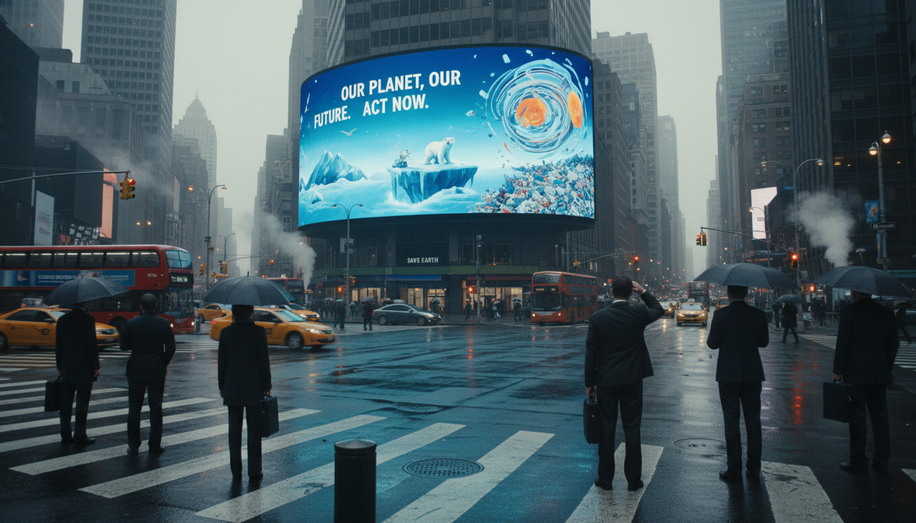

Out-of-home (OOH) advertising has long transcended its commercial roots, evolving into a potent instrument for social good. In an era where digital noise often drowns out meaningful messages, the unmissable presence of billboards, transit wraps, and street furniture cuts through, reaching millions in their daily lives. Non-profits, government agencies, and public service initiatives are increasingly harnessing this medium to ignite community engagement, amplify awareness, and propel social change. From urban billboards rallying voters to digital screens in subway stations urging health checkups, OOH campaigns deliver impact where people live, work, and move.
Consider the transformative role OOH plays in civic engagement. As highlighted in recent analyses from industry leaders like CommsRoom, out-of-home ads serve as vital conduits for public awareness campaigns. They inform citizens about community meetings, workshops, and consultations, directly boosting participation in decision-making. In Chicago’s Englewood neighborhood, for instance, targeted billboards rebranded the area by spotlighting its rich history and culture, as noted by the Out of Home Advertising Association of America (OAAA). This initiative not only shifted perceptions but also directed residents online, sparking social media conversations and fostering a sense of pride. Such campaigns demonstrate OOH’s ability to humanize policy discussions, making abstract governance feel immediate and actionable.
Non-profits, too, have found OOH indispensable for educational and advocacy efforts. Place-based OOH, which places ads in hyper-local, high-traffic spots like community centers and bus stops, builds trust through familiarity. PlaceBased Media reports that organizations promoting literacy programs or health initiatives see heightened engagement when messages appear in everyday environments. Collaborations amplify this further: non-profits partner with local businesses for co-hosted events, while surveys gauge ad effectiveness, revealing spikes in program sign-ups. WaterAid’s global water crisis campaign exemplifies this, using billboards and transit ads to evoke urgency, drawing in volunteers and donors worldwide. Digital out-of-home (DOOH) takes it further, with interactive screens enabling QR codes that bridge physical exposure to online action, turning passive viewers into active participants.
Government agencies leverage OOH to tackle pressing public health and environmental challenges. Momentara’s insights underscore how OOH networks penetrate diverse communities, solving core issues like vaccine hesitancy and climate resilience. Strategically placed ads in underserved areas build credibility, countering misinformation with clear calls to action—schedule a clinic visit, join a recycling drive. JCDecaux emphasizes OOH’s sustainability edge: energy-efficient digital displays not only promote green initiatives but also enhance urban livability. By creating a sense of urgency around issues like greenhouse gas reduction, these campaigns mobilize communities toward transparent policies and resilient infrastructure.
The synergy between OOH and digital channels magnifies social impact. WowDigital points out that outdoor ads drive traffic to websites and apps, where deeper engagement occurs. Hashtags promoted on billboards encourage sharing, virally extending reach. Charities like those featured by Moving Hearts Media have raised funds through guerrilla-style OOH, blending creativity with visibility to recruit supporters. Measurable ROI comes via metrics like foot traffic lifts and social mentions, proving OOH’s real-world punch—HotCrowd Advertising data shows campaigns yielding tangible engagement far beyond impressions.
Yet, success hinges on strategy. Targeted placement ensures messages resonate culturally and contextually, while bold visuals and concise copy seize fleeting attention. Partnerships with stakeholders—from schools to corporations—unlock resources and authenticity. Challenges like measurement persist, but advancing DOOH analytics, including geofencing and attribution tools, are closing the gap.
In essence, OOH stands as a force for good, democratizing access to information and inspiration. By placing social causes in the public eye—literally—non-profits and agencies cultivate informed, participatory communities. As Pearl Media observes, this medium’s high-impact visibility continues to draw investment from purpose-driven entities. Looking ahead, with urbanization and tech integration accelerating, OOH will only grow as a catalyst for positive change, proving that advertising, when wielded wisely, can unite and uplift society at large.
As OOH solidifies its role as a vital instrument for social good, platforms like Blindspot offer crucial tools to maximize its impact. Through advanced location intelligence and audience analytics, Blindspot empowers purpose-driven entities to strategically place messages for precise community engagement and ensure their campaigns yield measurable results, from increased participation to program sign-ups. Discover how to amplify your social mission at https://seeblindspot.com/