
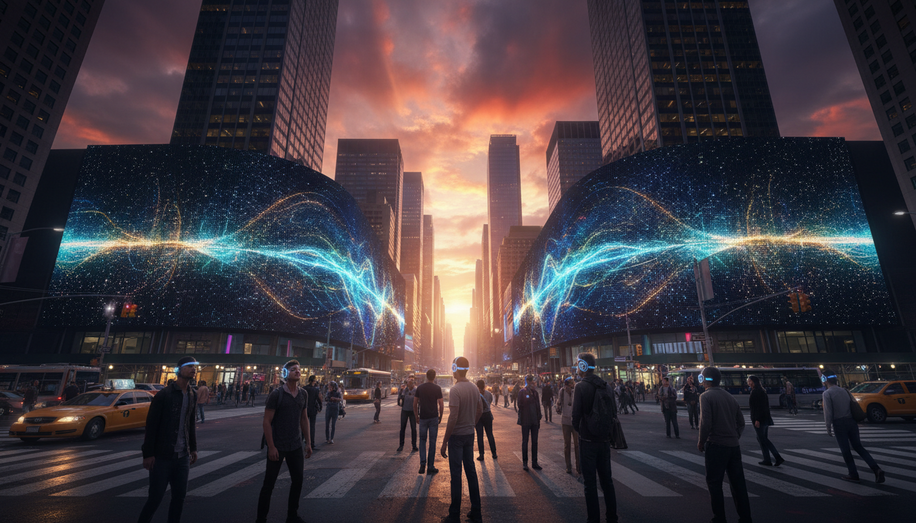

In the bustling streets of urban centers, where eyes are bombarded by flashing digital billboards and static posters, a new layer of engagement is emerging: sound. Out-of-home (OOH) advertising, long dominated by visuals, is integrating audio elements like directional speakers, ambient soundscapes, and synchronized sonic experiences to forge deeper connections with passersby. This fusion of sight and sound is not mere novelty; research shows campaigns combining the two can boost brand recall by up to 60% over visual-only formats.
The evolution reflects OOH’s shift from passive displays to immersive, multi-sensory encounters. Companies like Open Media are pioneering this frontier, layering audio onto digital screens that respond to time, weather, or audience proximity. Sound adds emotional depth to storytelling, evoking memories and enhancing retention—studies from JC Decaux indicate people remember 65% of visual-auditory messages versus just 10% from sight alone. Directional sound technology, which beams audio precisely to nearby listeners without disturbing others, exemplifies this precision. Imagine a coffee brand at a bus stop releasing the aroma of fresh brew alongside targeted whispers of “Morning fuel awaits,” drawing commuters into a sensory invitation rather than a visual shout.
Brands are experimenting boldly. Simple speaker setups bring billboards to life, infusing personality through music, effects, or even virtual assistants. For instance, programmatic audio advertising allows real-time customization, syncing jingles with passing traffic or weather apps on smart devices. More sophisticated approaches employ ambient audio that blends seamlessly with the environment—think a fitness apparel campaign pulsing with rhythmic beats that mimic a heartbeat, energizing joggers without overwhelming the street din. Synchronized soundscapes take it further, coordinating audio with visual animations; a digital display of crashing waves might pair with oceanic crashes, immersing viewers in a beach escape amid city chaos.
This sonic dimension draws from broader sonic branding strategies, where consistent audio identities amplify recognition. A Harvard Business Review study found auditory consistency lifts brand recall by 46%, as sounds engage the brain’s emotional centers more potently than images alone. In OOH, this translates to custom palettes: energetic beats for youthful brands, calming tones for wellness products. Multi-platform synergy is key—sonic logos from TV spots or apps extend into street activations, creating a unified auditory thread across touchpoints.
Technological leaps are accelerating adoption. Advances in generative AI craft personalized soundscapes, while AR and spatial audio enable 3D immersion, as seen in Nike’s retail experiments blending rich audio with virtual environments. Headphone-emitting tech offers intimate, one-on-one experiences, ideal for privacy-conscious urbanites. Excite OOH reports multisensory campaigns, including sound, generate 3-4 times more interaction than standard displays, boosting dwell time and social shares. Elliot Ward, an advertising expert at Excite OOH, emphasizes seamless integration: “Sensory elements should enhance storytelling rather than distract, elevating campaigns from seen to felt and remembered.”
Challenges persist, however. Noise pollution regulations in dense cities demand directional solutions to avoid fines or public backlash. Audience receptivity varies—OOH crowds, often mobile and distracted, respond best to brief, contextually relevant bursts rather than prolonged noise. Yet, the payoff is clear: audio humanizes OOH, transforming billboards from forgotten backdrops into memorable events. Brands like those partnering with Moviamedia are already proving it, using live audio and effects to transport audiences to desired atmospheres, whether promoting events or products.
Looking ahead, 2025 trends signal explosive growth. Sonic invasion—expanding audio across visuals, touch, and even scent—positions OOH as a sensory hub. Immersive formats like binaural audio link with social media and video, fostering shareable moments. Personalization via data-driven cues tailors sounds to demographics, ensuring resonance. As digital OOH proliferates, audio’s role will deepen, with AI enabling hyper-local adaptations, such as holiday jingles in winter markets or motivational tracks near gyms.
Ultimately, integrating audio elevates OOH from interruption to invitation. By harnessing directional sound, ambient layers, and synchronized experiences, brands craft richer narratives that linger in minds and emotions. In an attention economy, this sonic upgrade isn’t optional—it’s the next frontier for standing out.