
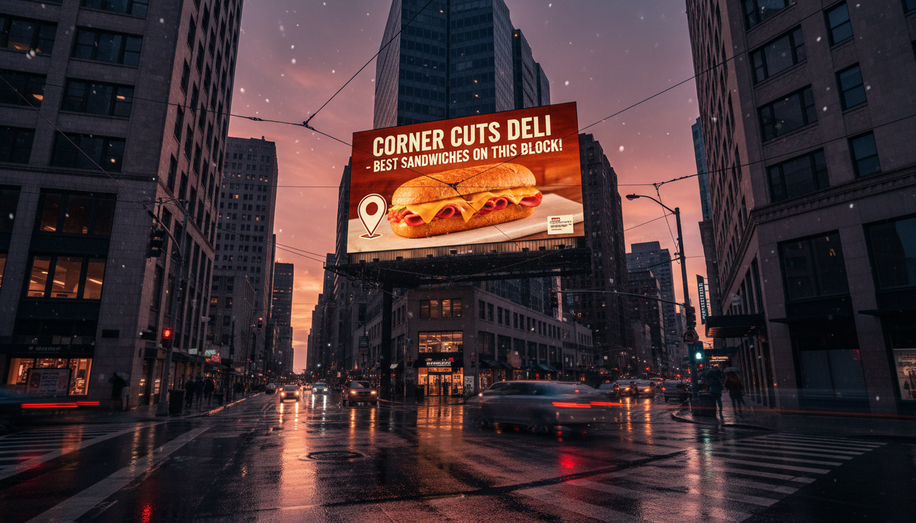

In the bustling heart of a city neighborhood, a digital billboard flickers to life, displaying promotions for a local coffee shop’s morning rush special—visible only to commuters passing a specific intersection during peak hours. This isn’t guesswork; it’s the precision of programmatic digital out-of-home (DOOH) advertising, where campaigns target micro-geographies like individual blocks with tailored messaging. By automating ad buys through demand-side platforms (DSPs), supply-side platforms (SSPs), and ad exchanges, programmatic DOOH empowers marketers to deliver hyper-local relevance that static billboards could never achieve.
The shift toward this technology stems from marketers’ demand for flexibility and access. A recent DPAA study found that 61% of new DOOH campaigns launched in the past 18 months were driven by programmatic’s creative flexibility, with 57% citing schedule agility and 52% noting expanded inventory availability through familiar platforms. This real-time automation allows advertisers to purchase slots based on audience movement patterns, mobile data, and contextual triggers, ensuring ads reach the right people at the optimal moment. For instance, near a gym cluster, fitness brands can trigger ads within a one-mile radius during evening hours, aligning with post-workout foot traffic.
At the core of this hyper-local prowess are advanced data sources. Mobile location data provides historical and real-time insights into audience demographics and behaviors, enabling DOOH networks to track movement around screens and serve content to those physically present. Anonymized device signals build persona-based profiles, supporting one-to-many targeting while integrating with mobile or display campaigns for seamless attribution via footfall tracking. Complementing this, visual sensors from platforms like Quividi capture demographics, dwell times, and engagement levels, offering granular metrics on who views ads and how they respond. Together, these tools create a feedback loop: as pedestrians linger near a screen, the system adapts messaging in real time, boosting relevance and efficiency.
Consider a retail chain promoting a flash sale. Programmatic DOOH can geo-fence a single neighborhood block, deploying ads on nearby screens only when shopper density spikes, detected via mobile signals or foot traffic trends. During rainy weather, umbrellas appear on billboards; in sunny conditions, ice cream promotions take over—dynamic triggers that respond to environmental cues without manual intervention. This level of granularity extends to dayparting, where ads run precisely during receptive windows, such as 6-10 a.m. commutes, maximizing impact in micro-zones like cafes or health stores.
For brands, the benefits cascade beyond precision. Omnichannel advertisers select DOOH for its 44% geo-targeting capability at zip-code or hyper-local levels, alongside 42% contextual relevance that complements digital efforts. Centralized platforms like Google Ad Manager optimize placements across 1.7 million screens via partnerships with hundreds of media owners, linking physical exposure to digital conversions with full-funnel measurement. This eliminates ROI guesswork, as campaigns adjust on the fly using AI-driven insights into audience movement, weather, and historical performance, reducing waste and refining reach.
Media owners also thrive, integrating inventory into programmatic ecosystems to maximize usage and revenue through automated sales. The result is a symbiotic model: advertisers gain pin-drop accuracy for neighborhood-specific narratives, while screens stay dynamic and revenue-generating. A coffee brand, for example, might tailor morning brews for one block’s office workers and evening lattes for adjacent residential areas, all orchestrated via a single dashboard.
Yet, this evolution prioritizes privacy-forward approaches. Advances emphasize contextual relevance over intrusive data, relying on aggregated, anonymized signals to sidestep personal tracking concerns. As 2025 strategies highlight, integrating programmatic DOOH with omnichannel plans—leveraging real-time data and AI—positions it as indispensable for brands seeking measurable, location-based impact.
Programmatic DOOH’s true power lies in its scalability from global rollouts to block-level customization. A national retailer can maintain brand consistency while localizing for urban enclaves, pausing underperformers instantly without on-site coordination. In high-density areas, it turns passive screens into active engagement hubs, where a university ad targets campus-adjacent blocks during lunch rushes, drawing students with event-specific calls-to-action.
As adoption surges—evidenced by DPAA findings on programmatic’s role in new campaigns—this technology redefines neighborhood marketing. No longer confined to broad strokes, advertisers now paint with the finesse of data-driven brushes, ensuring every message lands with surgical precision. In an era of fragmented attention, hyper-local programmatic DOOH doesn’t just advertise; it converses, block by block.