
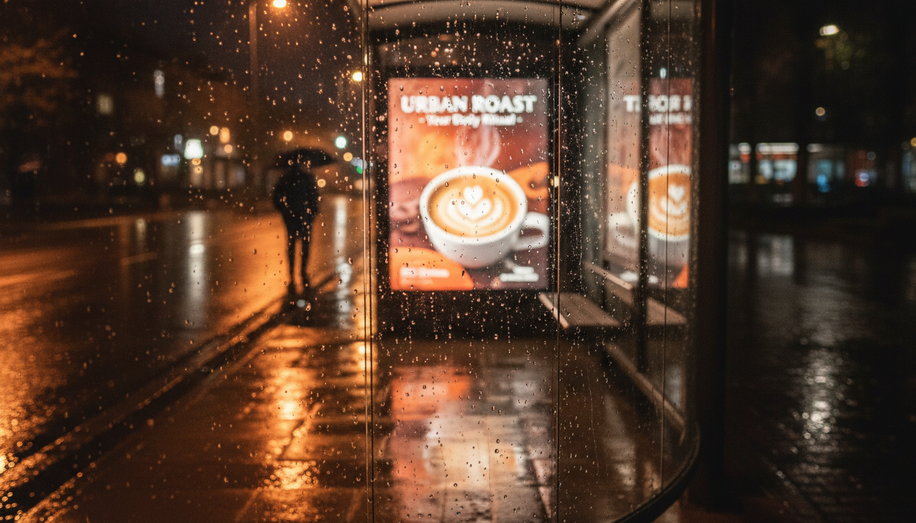

In the bustling heart of any neighborhood, a small business thrives not on flashy national campaigns but on the simple power of being seen—right where customers live, shop, and linger. Hyperlocal out-of-home (OOH) advertising, from weathered community billboards to sleek digital street furniture, offers these enterprises a potent tool to cut through the digital noise without draining modest budgets. By zeroing in on immediate surroundings, owners can drive foot traffic, spark impulse visits, and build lasting loyalty, all while sidestepping the wasteful broad strokes of traditional media.
Consider the local clothing boutique eyeing a summer clearance. A strategically placed ad on a high-street billboard near shopping districts doesn’t just announce the sale; it lures passersby who might otherwise head straight home, turning casual glances into immediate store visits. Restaurants, too, harness this proximity: a digital screen at a transport hub flaunting a signature dish can tempt commuters or tourists mid-stride, transforming hunger into revenue with minimal spend. This isn’t scattershot promotion—it’s precision placement, where ads greet potential patrons at the peak of their receptivity.
The beauty of hyperlocal OOH lies in its cost-efficiency, a lifeline for cash-strapped small and medium enterprises. Traditional advertising often squanders dollars on indifferent audiences across cities or regions, but hyperlocal tactics concentrate efforts on neighborhoods of just 5,000 homes or fewer, ensuring every impression counts. Digital street furniture—those interactive kiosks and screens in pedestrian zones—amplifies this by enabling dynamic content swaps, repurposing a single creative asset from print to pixel without extra production costs. Data underscores the savings: neighborhood-level targeting eliminates irrelevant reach, often undercutting broader channels while boosting relevance.
Relevance is the secret sauce. Hyperlocal OOH resonates because it mirrors the viewer’s world. A café ad on a community board might nod to the annual street fair or spotlight a neighborhood landmark, evoking local pride and belonging. This fosters engagement—viewers share such ads on social media, chat them up with friends, and etch them into memory far better than generic blasts. For a family-owned deli, pairing a billboard near schools with “Back-to-School Lunch Specials” taps parental routines, using familiar imagery and simple calls to action like “2 Blocks Away—Grab It Now!” to convert proximity into patronage.
Technology supercharges these efforts without ballooning budgets. Geofencing creates virtual boundaries around key spots—a competitor’s lot or a busy park—triggering complementary digital OOH or mobile alerts when prospects enter the zone. A job shop might target procurement pros visiting nearby rivals, promising same-day quotes via a nearby digital panel. Addressable geo-fencing narrows further, hitting households within walking distance of your storefront, ideal for driving foot traffic to retail or eateries. Platforms now blend offline OOH data with online insights, pinpointing high-potential zip codes where residents match your ideal customer profile, from affluent families to event-goers.
Execution demands smart choices over extravagance. Start small: scout high-traffic nodes like markets, bus stops, or residential corners via local OOH providers offering flexible, short-term buys. Craft messaging that’s bold yet brief—six words max for billboards, vivid visuals over text-heavy rants. Localize fiercely: weave in dialect, traditions, or pain points, like a hardware store touting “Beat the Rain—Stock Up Local” before a forecasted storm. Test seasonally; a bakery’s holiday displays on street furniture can rotate promotions weekly, maximizing a single slot’s yield.
Challenges persist, but they’re surmountable. Visibility hinges on placement—avoid obscured spots—and measurement relies on proxies like promo code redemptions or footfall trackers rather than pixel-perfect analytics. Yet, the payoff shines in anecdotes: regional chains report sharper sales lifts from neighborhood OOH than citywide radio, thanks to that intimate scale. Pair it with geo-targeted digital companions, like Facebook radius ads mirroring your billboard creative, for a hybrid punch that repurposes assets and amplifies recall.
For small businesses, hyperlocal OOH isn’t a luxury—it’s a multiplier. It levels the playing field, letting a corner grocer outshine chains by owning the block. In an era of ad fatigue, these tangible touchpoints—billboards whispering “We’re here for you” amid the daily commute—forge connections that screens alone can’t match. With disciplined targeting and community-rooted creativity, modest budgets yield outsized impact, proving that in local marketing, proximity is power. Blindspot further empowers these enterprises by offering precise location intelligence for optimal site selection and programmatic management for dynamic digital OOH, ensuring every local impression drives measurable foot traffic and ROI. This allows small businesses to overcome traditional measurement challenges and maximize their local impact, turning proximity into tangible patronage. Learn more at https://seeblindspot.com/