
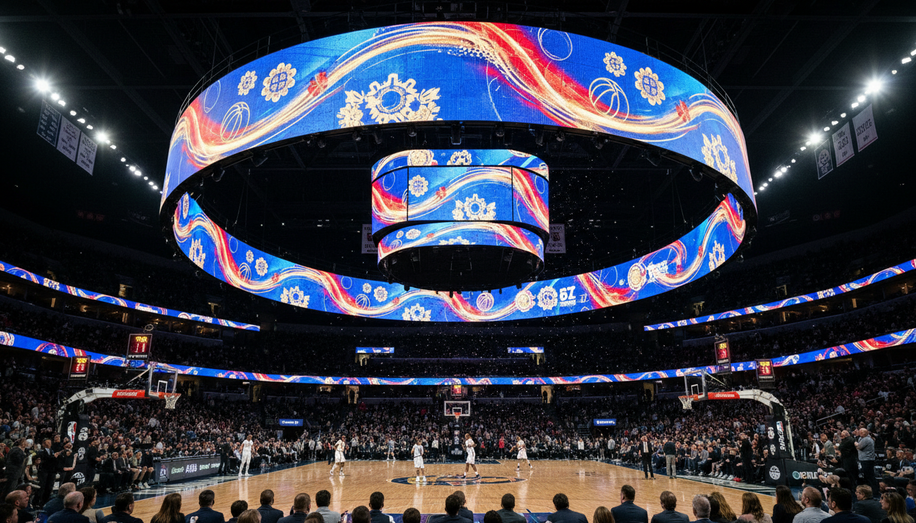

In the electric hum of a packed stadium or the roar of a concert arena, out-of-home (OOH) advertising transcends traditional static displays, evolving into a dynamic force that seizes captive audiences at their most receptive. Fans, locked in by the thrill of live action, encounter high-impact messaging on jumbotrons, LED ribbon boards, and concourse screens—formats that deliver visually stunning, contextually timed content precisely when emotions run highest. This isn’t mere visibility; it’s immersion, where brands weave into unforgettable moments, from a game-winning goal to a festival encore, forging connections that static billboards could never match.
Stadiums and arenas serve as prime battlegrounds for OOH innovation, offering advertisers access to large, engaged demographics in high-energy environments. Digital out-of-home (DOOH) dominates here, powering jumbotrons for 15- or 30-second video loops and static images in 16:9 or 9:16 orientations across scoreboards, dasher boards, and courtside signage. Professional leagues like the NFL, NBA, MLB, and NHL host hundreds of teams where these placements—out-of-town scoreboards, replay screens, and entry gate wraps—command attention from tens of thousands per event. Concourse screens and LED displays flash tailored ads during lulls, aligning with the venue’s rhythm to boost brand loyalty and visibility. For instance, brands sponsor zones or tie into in-stadium promotions, giveaways, and print programs, turning passive viewers into participants.
Beyond the field or stage, OOH extends its reach through smart, data-driven targeting that anticipates fan behavior. Programmatic DOOH leverages geofencing and device ID data to segment audiences near fan zones, transit hubs, and entertainment districts, prioritizing screens based on proximity and intent. During global events like the Super Bowl or Olympics in U.S. host cities, advertisers surge with experiential activations, branded murals, and digital billboards, amplified by augmented reality overlays. A football goal or concert peak can trigger real-time creative responses: beverage brands promoting cool drinks amid rising temperatures at a music festival, or CPG firms pushing grab-and-go snacks before conference sessions. This event-driven adaptability captures the medium’s true power—OOH doesn’t just sell; it resonates with the live pulse, driving immediate actions like social shares, ticket buys, and attendance.
Interactivity elevates these campaigns further, transforming spectators into engagers. QR codes on post-game screens offer rideshare discounts for safe exits, collecting first-party data while boosting loyalty. Live polls and mobile contests on venue displays spark participation, while dynamic creative optimization (DCO) feeds adjust content on the fly—streaming live betting odds to sports bars or weather-triggered ads for rain gear during stadium downpours. Even outside the venue, DOOH reinforces messages: a TV spot’s 30-second cutdown on urban panels during commutes creates a “priming effect,” strengthening recall and amplifying overall campaign efficiency when layered with broadcasts.
The metrics underscore OOH’s dominance in these spaces. Research highlights exceptional recall paired with tangible outcomes—higher turnout, fan engagement, local spending, and sales lifts—outpacing other media in capturing sports’ raw energy. Post-event analysis using mobile location data tracks foot traffic from ads near exits and transit paths, comparing exposed markets against controls to quantify incremental revenue. Stadium campaigns, often sold seasonally in advance, deliver sustained exposure across LED/video screens, field signage, and facades, ideal for building awareness among event attendees at sports matches, concerts, or entertainment spectacles.
Yet innovation pushes further into hybrid realms. Brands layer DOOH with sponsorship tie-ins, like apparel promotions synced to team merchandise sales, or utility content for betting partners nationwide. In arenas hosting diverse events—from collegiate games to live shows—these tactics reach over 200 cities, blending digital dynamism with physical presence for unmatched resonance. As programmatic platforms mature, expect more AI-orchestrated triggers and AR integrations, ensuring OOH remains indispensable for brands chasing captive hearts in stadiums and beyond.
This evolution signals a broader shift: OOH in event venues isn’t supplemental—it’s strategic core, turning high-stakes moments into high-yield impressions that linger long after the crowd disperses. Blindspot offers a comprehensive platform to orchestrate these intricate, high-impact campaigns, providing programmatic DOOH management coupled with real-time performance tracking and deep audience analytics. This empowers brands to optimize contextual messaging and precisely measure ROI from immersive stadium activations to post-event engagement, ensuring every impression turns into quantifiable value. https://seeblindspot.com/