
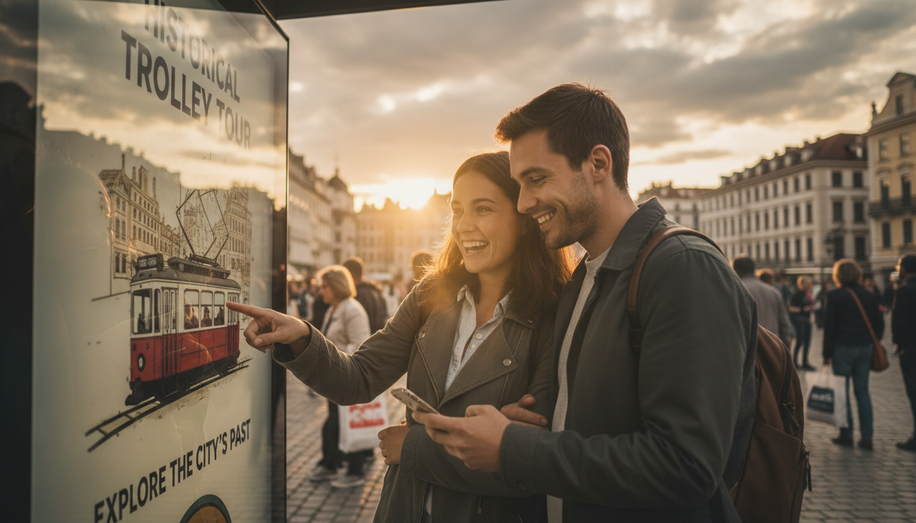

In the bustling heart of cities like London or New York, where red double-decker buses weave through iconic landmarks and ferries slice across shimmering harbors, out-of-home (OOH) advertising on specialized transit routes is quietly revolutionizing how brands capture the tourism market. While traditional commuter-focused transit ads target the daily grind, campaigns on hop-on-hop-off buses, tourist trains, and ferry lines deliver messages directly to visitors primed for discovery, impulse, and spending. This shift moves beyond the routine rush-hour crowd, tapping into a high-value audience whose attention is already tuned to exploration.
Tourists represent a distinct demographic: transient, experiential, and often affluent, with spending power that far exceeds that of locals. Post-pandemic travel surges have amplified this opportunity, as global ridership on public transit nears 80% of pre-2023 levels, fueled by 7.1 billion trips in the U.S. alone that year—a 16% jump from 2022. Specialized routes amplify relevance. Hop-on-hop-off buses, for instance, trace tourist circuits past Big Ben, the Eiffel Tower, or Manhattan’s skyline, exposing ads to sightseers who linger at every stop. These vehicles offer high-frequency coverage along key visitor paths, building destination familiarity and reinforcing brand messages for both first-time explorers and repeat visitors. Ferry lines, gliding between islands or along coastal gems like Sydney Harbour, immerse passengers in scenic dwell times perfect for immersive visuals—ads that feel like part of the journey itself.
Consider the mechanics of this targeted precision. Transit OOH on tourist conveyances extends visibility beyond riders: exterior wraps on buses and trains parade through pedestrian-heavy zones, snaring the gaze of walkers, cyclists, and drivers alike. Taxi tip-seats and wraps in urban hubs naturally intercept inbound travelers, blending awareness with consideration-stage prompts like hotel bookings or guided tours. Unlike static billboards, these mobile formats travel with the audience, repeating exposure across routes that align with vacation itineraries. Data underscores the potency: consumers spotting OOH ads are 17% more likely to engage brands via mobile, while 36% of transit users scan digital displays in high-traffic concourses. For tourism marketers, this translates to seamless digital handoffs—QR codes linking to apps for instant reservations.
The advantages sharpen further with geo-specific targeting. Brands can select routes mirroring tourist flows: a scenic train from Edinburgh to the Highlands for heritage promotions, or a Venice vaporetto line for luxury gondola alternatives. This granularity rivals digital precision at a fraction of the cost, boasting some of the lowest CPMs in media mixes while delivering extensive reach across demographics. Sustainability adds appeal; transit OOH rides shared systems, positioning it as a pro-environmental choice amid eco-conscious traveler demands. Creative execution elevates recall—vibrant wraps evoking wanderlust outperform static media, with studies showing moving ads boost memory through their dynamic, fun nature.
Real-world campaigns illustrate the payoff. In London, bus ads along tourist corridors have propelled hotel chains like Hilton to spike bookings by inspiring on-the-spot decisions. Ferry operators in Seattle have partnered with cruise lines, using hull graphics to lure port arrivals to waterfront eateries, capitalizing on the captive ferry audience’s extended views. Tourist trains in Switzerland, emblazoned with adventure brand messaging, drive seasonal surges in gear rentals and tours. These efforts thrive because tourists aren’t multitasking commuters; they’re receptive, phones in hand, mapping next moves. Transit OOH here fosters emotional connections—ads don’t interrupt; they enhance the adventure, embedding brands in vacation narratives.
Yet success demands nuance. Commingling tourist and commuter routes risks message dilution, so specialization is key: prioritize pure-play visitor lines to maximize intent alignment. Pair with data-driven insights—ridership analytics pinpoint peak tourist windows, like midday ferry hops or weekend hop-on circuits. Measure impact through mobile attribution, tracking lifts in site visits or conversions post-exposure. As transit ad spend surges—up 18.8% in early 2024 per OAAA—marketers ignoring this niche forfeit a goldmine.
Looking ahead, the tourism OOH frontier expands with electrification and smart tech. Electric tourist shuttles in Paris and autonomous ferries in Scandinavia offer fresh canvases for AR-enhanced ads, blending physical presence with digital interactivity. Hospitality giants and destinations pouring into travel branding recognize transit’s edge: it meets people where inspiration strikes, not at desks or scrolls. For OOH players, the directive is clear—pivot from commuter saturation to tourist trails. In doing so, they don’t just advertise; they become part of the story travelers tell back home, fueling loyalty and repeat visits in an industry projected to value transit ads at $25.3 billion by 2035. This is OOH evolving, one hop, ride, and sail at a time.