
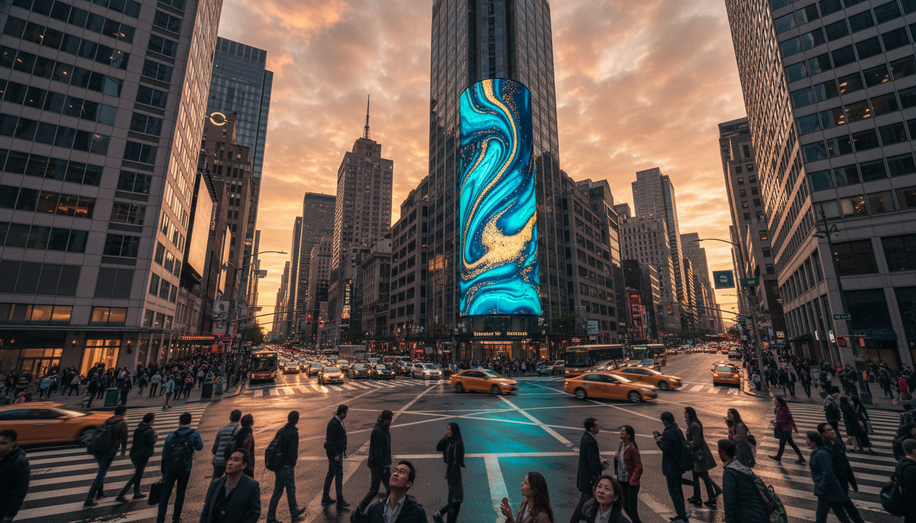

In the evolving landscape of out-of-home (OOH) advertising, marketers are increasingly demanding proof that their campaigns deliver more than fleeting impressions. Traditional return on investment metrics like direct sales or clicks fall short for OOH, which excels at building brand lift—measurable improvements in awareness, perception, recall, favorability, and purchase intent. New methodologies, blending rigorous testing with digital attribution, are transforming how advertisers quantify these subtler impacts, proving OOH’s value in a data-driven world.
At the heart of these advancements lies the brand lift study, a cornerstone technique that compares exposed and unexposed audiences to isolate campaign effects. By surveying two matched groups—one that has encountered the OOH ads and one that hasn’t—researchers gauge shifts in key metrics. For instance, brand awareness tracks familiarity with the brand and its offerings, while ad recall measures how vividly consumers remember the creative. Brand recall, favorability, and intent to purchase reveal deeper perceptual changes, often showing uplifts of 10-20% or more in effective campaigns. Dynata, a leader in this space, uses first-party opted-in panels to link respondents directly to ad exposure, ensuring 95% statistical confidence in results and minimizing bias.
This control-test framework extends beyond surveys into incrementality testing, where geographic proxies amplify precision. Advertisers might blanket New York with bus panels or digital billboards while treating Philadelphia as a control market, then compare outcomes like store visits or brand searches. Blue Alpha highlights how this reveals true lift, such as differential foot traffic or awareness spikes attributable solely to OOH. For digital out-of-home (DOOH), SeeBlindspot’s web lift studies sync exposure data from ad networks with analytics platforms, segmenting audiences by exposure. In one AdoreMe campaign, this yielded a staggering 775% incremental lift in online engagement, slashing customer acquisition costs to $5.75 per user.
Digital integration has supercharged these methods, bridging OOH’s physical reach with online behaviors. QR codes, custom URLs, and near-field tech on DOOH screens drive measurable actions like website surges or app downloads, correlated via Google Analytics and attribution models—first-touch, last-touch, or multi-touch. Programmatic buying enables real-time targeting and exposure tracking, while device IDs attribute post-exposure searches or visits. Broadsign notes that a consumer searching a brand moments after passing a DOOH ad can be confidently linked back, boosting accuracy for awareness metrics. Social listening tools capture virality too: spikes in branded hashtags, mentions, or shares signal resonance, turning static billboards into conversation starters.
Search lift emerges as another powerful proxy, tracking branded query surges pre- and post-campaign. Google Ads comparisons between test and control groups often reveal spikes reflecting sparked interest, even without clicks. In the YOXO DOOH effort, Blindspot measured a 57.8% website traffic increase, 18.61% rise in first-time app opens, and 23.57% brand search boost—clear evidence of upper-funnel success. Marketing mix modeling (MMM) takes a macro view, weighing OOH against channels over time to forecast sales lift, while footfall analytics from mobile location data ties ads to physical store visits.
These methodologies address OOH’s historical measurement challenges—its mass-reach, untargeted nature—by emphasizing incremental impact over impressions. Viewability ensures ads were seen, frequency analysis optimizes exposure levels, and cross-channel insights validate creative and media choices. Yet, success hinges on partnerships: OOH vendors must provide clean exposure data, synced with DSPs or panels for robust modeling.
Critics argue surveys risk self-reported bias, but innovations like Dynata’s precise matching and real-time digital proxies mitigate this, delivering actionable ROI proof. For upper-funnel goals, prioritizing lift over conversions avoids misattribution; a campaign sparking 38% more website visits post-OOH exposure underscores indirect power. As tools mature, OOH proves indispensable: not just visible, but transformative in shaping perceptions and intent.
Forward-thinking brands now benchmark lifts across markets, tweaking spend mid-flight for optimization. The OAAA’s analytics guide emphasizes planning with these metrics upfront, ensuring attribution from inception. In 2026, with DOOH’s rise, expect AI-enhanced panels and geofencing to refine further, cementing OOH as a quantifiable driver of long-term equity. Marketers who master these approaches don’t just advertise—they architect loyalty.