
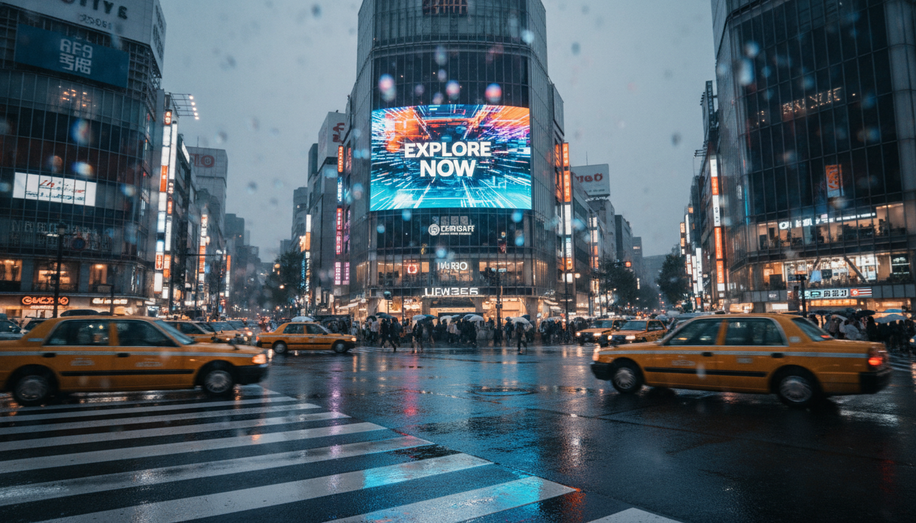

Out-of-home advertising has long been celebrated for its ability to build brand awareness, but in an increasingly competitive marketplace, the real measure of success lies in what happens after the audience sees the ad. The evolution of out-of-home campaigns has shifted from passive brand recall to active consumer engagement, with calls to action serving as the critical bridge between attention and conversion.
Recent data underscores the potential of strategic CTAs in the OOH space. According to Nielsen research, while 90 percent of people notice an out-of-home ad, the more impressive statistic is that 66 percent take action on their smartphone after seeing one, with 40 percent performing a digital search for information about the advertiser. This demonstrates that consumers are primed to act—they simply need clear direction. The challenge for marketers is designing CTAs that transform passive viewership into measurable conversions.
The foundation of an effective OOH CTA begins with absolute clarity. Research shows that messages should remain simple and direct, limited to around seven words to ensure readability for viewers moving through high-traffic environments. This brevity isn’t a limitation but rather a necessity. When consumers encounter an ad in transit—whether on a billboard, transit shelter, or digital screen—they have mere seconds to process the message. A cluttered or ambiguous call to action creates friction precisely when momentum matters most. Instead, clear language such as “Shop Now” or “Visit Us Today” eliminates confusion about the desired next step.
Visual prominence plays an equally crucial role. A CTA must stand out visually through bold fonts and high-contrast colors, making it impossible for viewers to miss. This visual hierarchy ensures that the action step doesn’t compete with other design elements but instead commands attention. When combined with a strong brand presence—achieved through minimalist design that emphasizes logo and name recognition—the advertisement creates a coherent visual narrative that guides viewers toward action.
The channel through which the action occurs significantly influences campaign effectiveness. Modern OOH campaigns leverage multiple CTA mechanisms, each serving different consumer behaviors and contexts. QR codes have experienced a resurgence, with usage in digital OOH ads increasing by 26 percent since 2020, largely because they enable touchless interaction with minimal friction. For audiences hesitant to type a long URL, a quick scan bridges the gap between outdoor viewing and digital engagement.
Shortened URLs and promo codes offer complementary approaches. Short links provide convenience and trackability, allowing marketers to monitor click-through rates and optimize campaigns in real time. Meanwhile, promo codes—particularly simple, memorable ones like “SAVE10″—are exceptionally effective for fast-moving consumer categories such as food and fashion, where immediate recall is paramount.
Beyond digital pathways, direct methods remain powerful. Adding a physical store address to creative, especially through dynamic, location-based targeting that displays the nearest location to viewers, can drive foot traffic directly. Phone numbers provide an immediate contact option for service-oriented businesses. Social media handles extend the engagement journey by inviting consumers to join a community where ongoing marketing can occur.
Location relevance amplifies CTA effectiveness across all these channels. Placing ads in high-traffic areas is necessary but insufficient; the message must resonate with the specific audience in that location, informed by local culture, events, or landmarks. A CTA designed for a downtown financial district differs meaningfully from one positioned near a college campus or suburban shopping center.
Digital OOH platforms introduce additional sophistication through programmatic technology. Animated elements and interactive displays capture attention more effectively than static creative, while dynamic content adaptation based on time, weather, or demographics ensures that CTAs remain contextually relevant throughout the day. A lunch-hour restaurant promotion might yield higher engagement than the same message displayed at midnight.
The integration of OOH with other marketing channels strengthens CTA performance. Consistency across touchpoints—aligning out-of-home messaging with digital, social, and in-store campaigns—reinforces brand identity and removes friction from the customer journey. When consumers encounter the same offer through multiple channels, trust increases and conversion likelihood rises.
The evidence is clear: strategic calls to action transform out-of-home advertising from a passive awareness tool into an active conversion engine. By maintaining simplicity, ensuring visual prominence, selecting appropriate action channels, and leveraging location and technology, marketers can prompt immediate action that moves consumers from awareness toward purchase. For marketers aiming to master this evolution, platforms like Blindspot offer the precision tools needed to elevate OOH CTAs from mere visibility to impactful conversion. Its location intelligence and programmatic DOOH campaign management enable the strategic placement and dynamic delivery of contextually relevant calls to action, while real-time performance tracking and ROI measurement provide the critical insights to continuously optimize for maximum engagement and measurable business outcomes. Explore these capabilities further at https://seeblindspot.com/.