
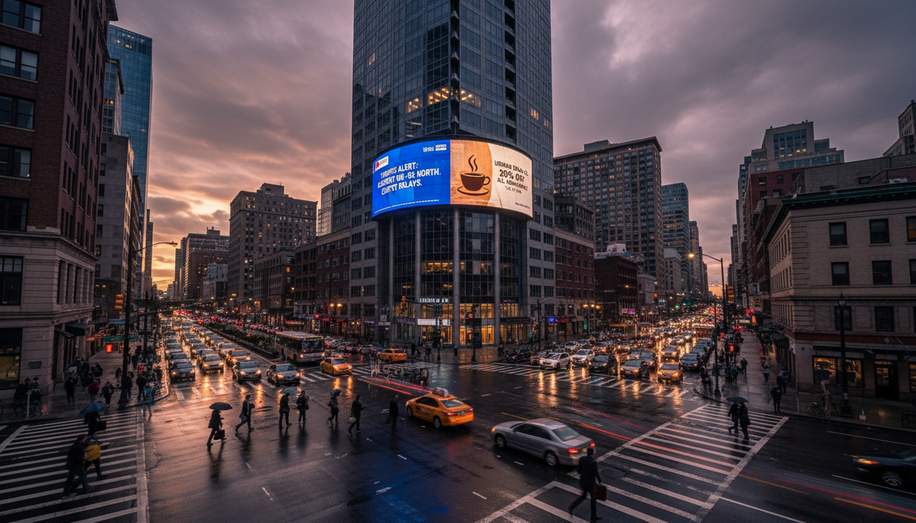

In the bustling heart of a city intersection, a digital billboard flickers to life, its message shifting seamlessly from a sunny beach promotion to umbrellas and raincoats as dark clouds gather overhead. This is the power of dynamic content triggers in digital out-of-home (DOOH) advertising, where real-time data transforms static screens into responsive storytellers, delivering hyper-relevant messages that capture fleeting attention in public spaces. By automating content swaps based on external feeds like weather, traffic, stock prices, or live sports scores, DOOH campaigns move beyond one-size-fits-all blasts to achieve precision targeting that rivals digital channels while thriving in the physical world.
At its core, dynamic creative optimization (DCO) harnesses live data streams to iterate ad elements on the fly, ensuring every impression lands with context. Weather data, for instance, serves as a foundational trigger: a coffee chain might swap iced latte visuals for hot brews when temperatures drop, or a retailer could push winter gear during sudden downpours. Traffic patterns elevate this further, particularly for roadside billboards. Sensors tracking vehicle flow and commuter density allow ads to adapt to rush hour congestion—promoting quick-service meals to gridlocked drivers or public transit alternatives during peak delays. In one sophisticated setup, footfall and mobile location data refine targeting, serving family-oriented promotions when crowds swell with shoppers at malls or office workers linger during lunch breaks.
Financial markets add another layer of immediacy, with stock prices fueling time-sensitive promotions. Beverage brands have synced DOOH screens near exchanges to flash limited-time discounts when shares dip, capitalizing on trader moods and instant market shifts. This real-time pricing agility extends to flash sales or inventory updates, where product availability data dynamically rotates creatives to highlight in-stock items, reducing wasted impressions on unavailable goods. Live sports scores inject adrenaline into the mix, turning stadium-adjacent screens into event companions. As a soccer match unfolds, ads might celebrate a home-team goal with victory-themed offers or pivot to consolation prizes on a loss, syncing brand narratives with crowd euphoria or despair.
Programmatic platforms amplify these triggers, blending automation with scale. Advertisers set rules—such as “display ad variant B if traffic exceeds 50 vehicles per minute”—and systems execute across networks of screens in seconds. This integration with first- and third-party data, including audience demographics and dwell time analytics, enables A/B testing in real time: one creative tests against another based on engagement metrics, optimizing mid-campaign without manual intervention. Fraud prevention benefits too, as verified data feeds ensure secure delivery, while measurement sharpens with precise attribution to footfall spikes or sales lifts.
Real-world campaigns illustrate the impact. Guinness in Ireland leveraged footfall data to dynamically urge pub visits, adapting messages to crowd density for maximum pull. AXA’s early predictive push combined weather forecasts with performance data, preemptively tweaking creatives to boost relevance before conditions changed. Today, these evolve into AI-driven foresight, where models anticipate demand—say, surging ice cream sales from rising humidity—and adjust preemptively. Sustainability enters the equation as well: screens dim during low-traffic lulls, cutting energy while prioritizing high-engagement slots.
The results speak volumes. Dynamic DOOH drives higher engagement, with contextually tailored ads yielding stronger brand recall, store visits, and ROI compared to static formats. It complements online channels by influencing decisions at point-of-sale moments, from Times Square spectacles to transit hubs, where consumers are primed to act. Challenges persist—data privacy demands robust compliance, and integration requires reliable feeds—but platforms like those from Blindspot and Perion are streamlining this, partnering with premium providers for seamless execution.
Looking ahead, the fusion of programmatic buying and dynamic triggers promises even greater sophistication. Voice-activated interactivity, wearable integrations, and cross-channel data syncing could make DOOH a seamless extension of personal devices. As 2026 unfolds, brands ignoring these tools risk fading into the background noise of urban landscapes. Instead, those embracing real-time relevance position themselves not just to be seen, but to be felt—turning every screen into a timely conversation starter that resonates long after the light changes.