

In the bustling commercial districts of major cities like New York, San Francisco, and Austin, out-of-home (OOH) advertising is emerging as a potent weapon for B2B marketers aiming to capture the attention of elusive decision-makers. Far from the scattergun billboards of consumer campaigns, strategic OOH placements in business parks, office elevators, and transit hubs allow brands to embed themselves into the daily rhythms of professionals, influencing purchasing decisions with precision and persistence.
Consider the commute, that unavoidable ritual for countless executives. Popular routes into urban business districts offer prime real estate for eye-catching digital billboards or transit wraps, ensuring repeated exposure during peak hours when minds are primed for work-related thoughts. In hubs like Denver or San Francisco, where traffic density spikes along key arteries, succinct messaging—paired with bold visuals—can lodge a brand in memory before the driver even parks. This repetition taps into the mere-exposure effect, where familiarity breeds preference after as few as 10 impressions, turning passive passersby into receptive leads.
But OOH’s power extends beyond highways into the micro-environments of professional life. Place-based advertising inside office buildings, such as elevator screens or vending machine displays, delivers messages at intimate range, right where decision-makers linger during coffee breaks or meetings. These indoor tactics establish a subtle brand presence in workplaces, integrating seamlessly into routines without the intrusion of digital fatigue. Heat maps of buyer clusters further refine this approach, pinpointing high-density zones in business parks to shorten traditionally lengthy B2B sales cycles from six to eight months to a more agile timeline.
Transit points amplify this intimacy on a larger scale. Airports, train stations, and subway platforms in key urban hubs serve as crossroads for traveling executives, where dynamic digital OOH can rotate tailored content based on time of day or even weather via programmatic platforms. Programmatic OOH (pOOH) revolutionizes B2B by automating real-time adjustments, booking space dynamically to align with decision-maker movements and boost relevance. A SaaS firm like Mutiny or Ramp exemplified this by transforming a LinkedIn post from a Snowflake executive into a Times Square billboard, securing instant attention and proving OOH’s role in account-based marketing (ABM).
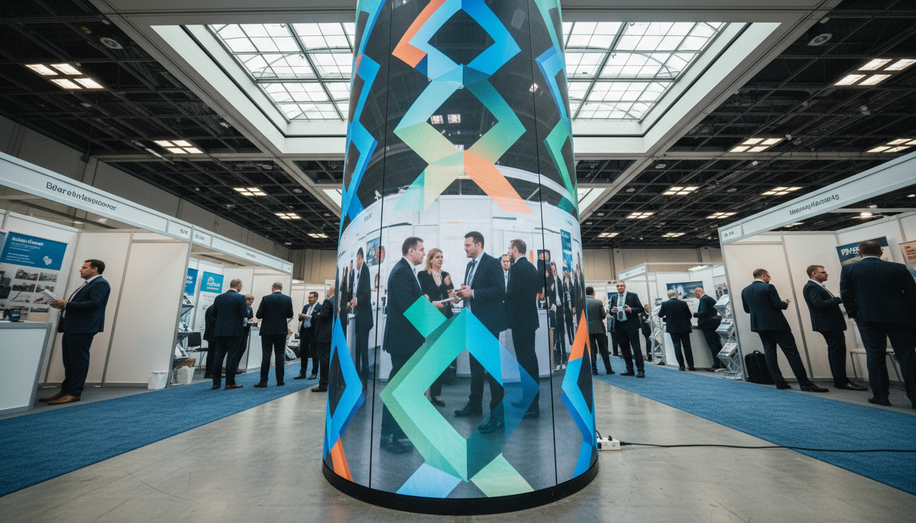
For maximum impact, B2B campaigns layer OOH around events and tradeshows, the beating heart of industry networking. Billboards or mobile transit ads circling conference venues and nearby offices create a “surround sound” effect, bombarding attendees from arrival to after-hours schmoozing. One legal tech company reaped a 329% ROI and 2.2 times its social share goals by deploying such ads during a major event, demonstrating how proximity to high-value gatherings converts visibility into tangible business. Similarly, Brex blanketed key markets with OOH post-pandemic, targeting residential and commercial zones to recapture once-commuting audiences, filling the top of the sales funnel with inescapable awareness.
This targeted ethos dovetails with ABM strategies, where OOH amplifies one-to-many reach near target company headquarters or industry clusters. Rather than generic blasts, placements in commercial districts leverage contextual data—professional routines, movement patterns—to foster emotional engagement and top-of-mind status. QR codes on ads bridge the physical to digital, inviting scans for deeper content like case studies or demos, while retargeting extends the campaign online to nurture exposed viewers with personalized follow-ups.
Measurement seals OOH’s B2B credibility. Advanced tools track impressions, footfall lift, and even brand search spikes post-exposure, proving ROI in a metrics-driven world. Yet success hinges on avoiding blanket coverage; precise media planning—analyzing when and where decision-makers congregate—transforms OOH from novelty to necessity.
Urban hubs brim with opportunity: Chicago’s Loop for finance pros, London’s Canary Wharf for fintech, or Singapore’s Marina Bay for tech titans. Here, OOH doesn’t just advertise; it infiltrates the professional ecosystem, whispering solutions amid the daily grind. As hybrid work evolves, blending commuter routes, business parks, and transit ensures no decision-maker escapes the message.
B2B marketers ignoring OOH risk ceding ground to rivals who grasp its scalability. In an era of ad-blocked screens and inbox overload, these tangible, unskippable encounters cut through, driving familiarity, urgency, and ultimately, deals. Strategic OOH isn’t just visible—it’s visceral, positioning brands at the precise moment influence matters most.
For B2B marketers navigating this strategic landscape, platforms that deliver precision and prove impact are indispensable. Blindspot addresses this by integrating location intelligence and programmatic DOOH campaign management, enabling brands to pinpoint elusive decision-makers while tracking real-time performance and ROI. Discover how Blindspot transforms OOH into a measurable B2B powerhouse at https://seeblindspot.com/