
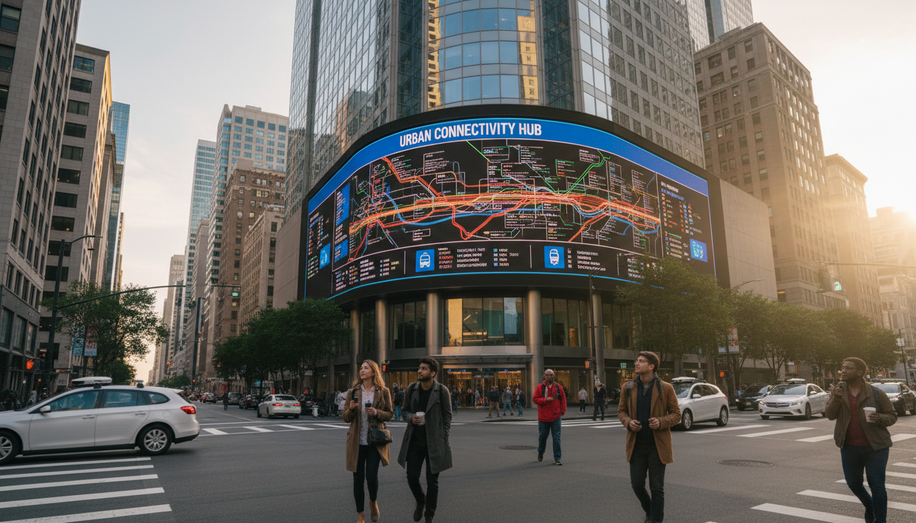

Out-of-home advertising has undergone a fundamental transformation in recent years, evolving from static billboards into dynamic digital assets that serve as critical nodes within smart city infrastructure. This shift represents far more than a technological upgrade—it signals a fundamental reimagining of how cities function, how residents engage with urban spaces, and how advertisers can deliver meaningful value while supporting broader municipal objectives.
At the core of this evolution lies artificial intelligence, which enables billboards to analyze real-time data including traffic patterns, weather conditions, and audience demographics to display hyper-relevant content. In Tokyo’s Shibuya district, billboards adjust their messaging based on the age and gender composition of passing crowds, delivering significantly higher engagement rates. Similarly, Times Square installations display interactive content that responds to both tourists and local commuters, transforming passive advertising spaces into engaging touchpoints. This personalization extends beyond mere commercial benefit—it reduces visual clutter by ensuring only relevant advertisements appear at any given moment, enhancing the overall aesthetic quality of urban environments.
The integration of OOH advertising with broader smart city systems demonstrates advertising’s expanding role in urban connectivity. Interactive outdoor billboards equipped with touchscreen technology now function as public information hubs, providing access to digital maps, transportation schedules, and tourist information. Some installations incorporate hybrid display systems combining advertising with dedicated interaction surfaces, maximizing communication efficiency. A Samsung advertisement placed on a bus shelter exemplifies this utility-driven approach by offering smartphone charging capabilities—addressing a genuine public need while reinforcing brand engagement.
Beyond consumer interaction, OOH systems are becoming increasingly sophisticated through sensor integration and IoT connectivity. Centralized management platforms provide real-time control over digital displays, automating lighting adjustments, monitoring energy consumption, and scheduling content updates from cloud-based dashboards. This infrastructure enables billboards to respond dynamically to environmental conditions and city events. During emergencies, these systems can instantly pivot from advertising to displaying critical public safety information, demonstrating advertising’s potential role in civic resilience.
The data collection capabilities embedded in modern OOH systems create new opportunities for urban planning. Advanced analytics platforms allow marketers to measure return on investment accurately while providing cities with valuable insights into foot traffic patterns, peak usage times, and demographic movement throughout urban areas. This data feeds back into broader smart city initiatives, informing transportation planning, retail development decisions, and public space optimization. Some municipalities are leveraging OOH advertising revenue to fund new infrastructure projects, including public kiosks and connectivity initiatives.
Energy efficiency has emerged as a critical consideration in OOH system design. Solar-powered digital signage installations reduce operational costs while supporting municipal sustainability goals. Augmented reality integration is creating immersive experiences that deepen emotional connections between consumers and brands—the NHS campaign allowing virtual blood donations exemplifies how advertising can drive civic participation.
Looking forward, emerging integrations with environmental sensors and artificial intelligence will enable increasingly intelligent content personalization while facilitating seamless reporting for campaign optimization at scale. As facial recognition systems become more refined, billboards can segment content in real time according to viewer profiles, though privacy considerations will likely shape implementation parameters.
The transformation of OOH advertising within smart city ecosystems reflects a broader evolution in urban technology where traditionally isolated infrastructure systems become interconnected and mutually reinforcing. Advertisers are no longer simply securing visual attention in crowded spaces—they are becoming stakeholders in urban functionality, data generation, and citizen engagement. This shift creates responsibilities alongside opportunities: delivering genuine value to urban residents while maintaining transparent data practices. Cities that successfully integrate OOH advertising with smart infrastructure will likely find that advertising assets enhance rather than detract from quality of life, creating sustainable models where commercial objectives and civic priorities advance together.