
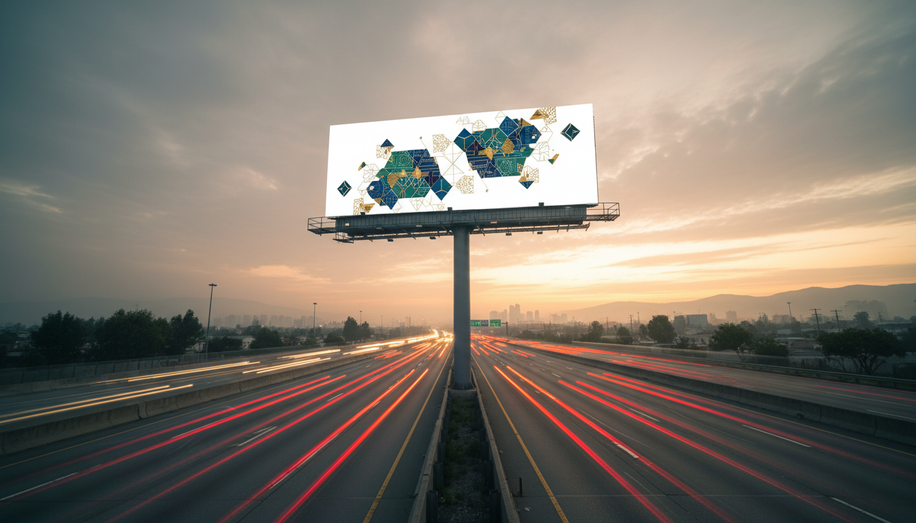

The advertising landscape has undergone seismic shifts over the past decade, with digital channels proliferating and capturing an ever-growing share of marketing budgets. Yet amid this transformation, static billboards remain remarkably resilient, delivering measurable value that digital-first strategies often struggle to replicate. Far from becoming obsolete, traditional static billboards have carved out a distinct and strategic role in contemporary marketing, offering advantages that increasingly position them as essential components of integrated campaigns.
The enduring strength of static billboards lies fundamentally in their unwavering presence. Unlike digital screens that rotate through multiple advertisements in rapid succession—typically displaying each message for only 8 to 10 seconds—static billboards command exclusive attention throughout their entire campaign duration. This “100% share of voice” means that every commuter, pedestrian, and traveler passing the billboard encounters a single, focused message with complete clarity. In an era marked by fragmented attention spans and content saturation, this undiluted visibility carries substantial strategic weight.
The consistency of static billboard messaging generates measurable brand reinforcement. Research demonstrates that 76% of American consumers notice traditional roadside billboards, while 47% notice static posters. This broad noticeability translates into genuine brand recall, particularly for long-term campaigns where repeated exposure—sometimes spanning weeks or months—allows daily commuters to internalize messaging through natural, passive engagement. For organizations prioritizing awareness and brand equity rather than immediate conversion, this cumulative effect proves invaluable.
Cost efficiency represents another decisive advantage that continues to differentiate static billboards from their digital counterparts. Production costs remain substantially lower than digital installations, while cost-per-thousand-impressions (CPM) remains significantly more favorable. For brands executing extended campaigns across multiple locations, static billboards deliver exceptional return on investment without ongoing maintenance, electricity costs, or software expenses. This financial advantage becomes particularly compelling for regional and local businesses seeking sustained visibility within specific geographic markets.
The reliability factor cannot be understated. Digital billboards remain vulnerable to power outages, software glitches, and technical failures that can interrupt campaigns at critical moments. Static billboards, conversely, function regardless of weather conditions, power availability, or technological complications—they remain “always on” with zero risk of service interruption. For time-sensitive messaging or critical brand communications, this inherent stability offers peace of mind that programmatic systems cannot guarantee.
Yet contemporary static billboards need not be static in their strategic application. Progressive advertisers have successfully integrated static displays into sophisticated omnichannel campaigns through augmented reality, QR codes, and Near Field Communication technology. By incorporating these digital bridges directly into billboard designs, brands effectively convert physical outdoor assets into portals driving online engagement and offline-to-online conversion pathways. This hybrid approach demonstrates that static infrastructure and digital strategy are not mutually exclusive but rather complementary elements of modern media planning.
The geographical targeting capabilities of static billboards merit particular emphasis. Strategic placement in high-traffic areas, community hubs, and iconic locations allows brands to reach specific local audiences with precision impossible for many digital channels. For businesses with hyperlocal market focuses or regional expansion ambitions, this geographical granularity provides competitive advantage. The medium inherently respects geographic boundaries, making it ideal for location-specific promotions and community-centric messaging.
The evolving media landscape has not diminished static billboard effectiveness—rather, it has clarified their distinct role within integrated strategies. While digital billboards excel at real-time adaptation and impression tracking, static billboards deliver something increasingly rare in contemporary marketing: uncluttered, sustained attention and authentic local presence. Their lower cost structure and maintenance-free operation make them accessible to organizations of varying scale, from multinational corporations to independent retailers.
As marketing channels multiply and consumer attention becomes more fragmented, static billboards function as reliable anchors in the media ecosystem. Their persistence reflects not technological obsolescence but rather enduring strategic value. In a dynamic world demanding constant adaptation, static billboards offer something paradoxically modern: the focused, accountable, geographically grounded presence that cuts through noise and builds lasting brand recognition.