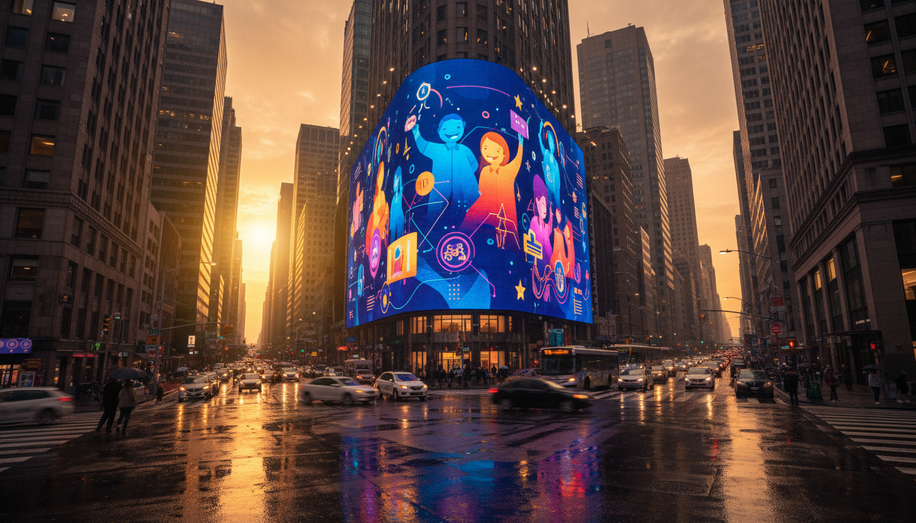

In the fiercely competitive talent wars of today’s job market, out-of-home (OOH) advertising is emerging as a potent weapon for companies seeking to build irresistible employer brands and lure top performers. Billboards, transit wraps, and digital displays cut through digital noise, delivering bold, unmissable messages that showcase company culture and opportunity in ways LinkedIn scrolls simply cannot match. As labor shortages persist across industries—from hospitality to law enforcement—forward-thinking organizations are turning to these analog giants to humanize their workplaces and spark genuine interest among passive candidates.
Consider Visit Denver’s “Boredom is Fired” campaign, a masterclass in OOH-driven talent attraction. Facing a post-COVID staffing crunch in hotels, events, and outdoor recreation, the consortium of hospitality businesses targeted Gen-Z workers with a photo- and video-rich blitz. Authentic behind-the-scenes footage of real employees in action adorned billboards and digital OOH across the city, capturing the thrill of Denver’s vibrant scene without scripted polish. This raw energy funneled viewers to a custom website brimming with job listings, salary data, testimonials, and sector insights, while ambassadors from each field shared personal journeys at job fairs and schools. The launch press conference amplified earned media, and within six months, the campaign drove thousands of job board clicks, surging Instagram followers, and expanding media buys—proof that OOH can ignite excitement where digital fatigue reigns.
This approach resonates because OOH thrives on visibility and serendipity. Placed in high-traffic zones, billboards reach commuters, pedestrians, and drivers who aren’t actively job-hunting, planting seeds of aspiration subconsciously. Meadow Outdoor Advertising highlights how Watco, a supply chain firm, and Tillamook, the dairy powerhouse, filled critical roles through such displays, leveraging their broad reach to reinforce community presence and draw diverse applicants. In public safety, the tactic shines even brighter. Wyoming’s Laramie County Sheriff’s Office enticed Denver officers with billboards touting rural calm over urban chaos, as reported by the New York Post, while Plano, Texas, police emphasized career stability and benefits in high-traffic spots, per Police1. These campaigns didn’t just advertise jobs; they sold lifestyles, turning potential recruits into applicants by evoking a sense of belonging and adventure.
Beyond recruitment spikes, OOH fortifies employer branding by projecting confidence and creativity. In an era where 75% of job seekers research company culture before applying, static digital posts often fall flat against OOH’s immersive scale. A towering billboard of smiling teams brainstorming amid ping-pong tables or mountain views doesn’t scroll away—it lingers in the mind, associating the brand with dynamism and fun. Visit Denver’s success stemmed from positivity: ditching corporate drudgery tropes for unfiltered joy, aligning perfectly with Gen-Z’s values of authenticity and purpose. Similarly, law enforcement efforts reframed badges not as burdens but as community anchors, appealing to those craving impact over burnout.
Yet OOH’s power amplifies when integrated thoughtfully. Standalone billboards risk being forgettable; paired with QR codes, websites, or social tie-ins, they create conversion funnels. Visit Denver’s model—OOH visuals driving to resource-rich sites and ambassador programs—yielded measurable ROI: high session durations, job pursuits, and organic buzz. For global players like supply chain tech firms or media agencies, this hybrid strategy scales. Though not purely OOH-focused, cases like KSM’s talent overhaul via targeted sourcing underscore the need for bold external branding to complement internal pipelines, reducing time-to-fill and costs in high-volume hires. Teed & Brown’s platform redesign, while digital, echoed OOH principles by amplifying niche culture—turf science innovation and retention—to niche talent pools, hinting at how physical ads could extend such narratives outdoors.
Critics might argue OOH feels outdated in a TikTok world, but data counters: its tangible presence fosters trust. Passive candidates, who make up 70% of the workforce, respond to uninvited interruptions that feel aspirational, not salesy. In competitive markets like tech, manufacturing, and services—where Gillespie Manners aids searches for digital marketers and sales leads—OOH could spotlight growth stories, much like DASH TWO’s blended outdoor-digital triumphs or OUTFRONT Media’s proven advertiser wins. SwishAd and AdForum case studies further reveal recruitment campaigns blending OOH with experiential elements, elevating brands from faceless entities to cultural magnets.
As economic pressures intensify, OOH offers a cost-effective counterpunch to sky-high LinkedIn fees and fleeting job ads. Companies ignoring it risk invisibility amid rivals’ sky-high spectacles. By highlighting culture—perks, purpose, people—on the world’s largest canvases, employers don’t just recruit; they inspire loyalty from day one. In 2026’s talent battlefield, the message is clear: Go big, go outside, and watch your dream team assemble.
To truly maximize the impact of OOH in the talent battlefield, organizations need data-driven precision. Platforms like Blindspot offer advanced location intelligence for optimal site selection, ensuring employer brand messages reach target talent with pinpoint accuracy, while programmatic DOOH capabilities enable dynamic, engaging content delivery. This allows for real-time campaign performance tracking and ROI measurement, transforming OOH into a fully attributable, powerful engine for attracting top hires and solidifying an irresistible employer brand. Learn more at https://seeblindspot.com/