
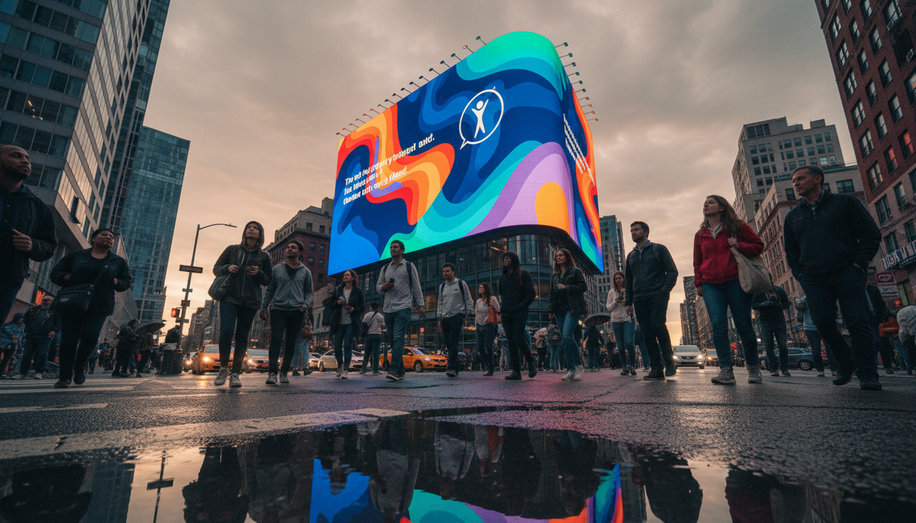

In the evolving landscape of healthcare marketing, out-of-home (OOH) advertising has emerged as a vital channel for pharmaceutical companies and healthcare providers to connect with wellness-focused consumers. By delivering high-visibility messages in everyday environments, OOH targets specific patient demographics with precision, fosters health awareness, and builds enduring brand trust amid stringent regulations.
Pharma brands face unique hurdles: privacy laws, consumer skepticism, and the intimate nature of medical choices demand advertising that informs rather than sells aggressively. Traditional digital channels often falter here, but OOH thrives by leveraging location-based and contextual relevance. Billboards along highways, urban panels near care centers, and transit shelters position messages at pivotal decision moments, such as when patients commute to appointments or shop for wellness products. For instance, 36% of consumers notice OOH ads introducing new healthcare programs in an educational tone, while 37% express interest in local facility promotions. This ambient exposure ensures messages linger without intrusion, aligning perfectly with the wellness consumer’s journey toward proactive health management.
Targeting specific demographics amplifies OOH’s potency. Pharmacy patrons over 55, a key group for chronic condition management, encounter in-store displays and nearby screens during routine visits, driving point-of-care awareness. Health and fitness enthusiasts, meanwhile, engage with wellness messaging on gym screens, fitness lobbies, or urban routes where they pursue active lifestyles. Healthcare professionals, often on the move between conferences and clinics, absorb tailored content via airport DOOH, hotel signage, or transit media synced to specialty themes. Lamar Advertising’s Health Connect exemplifies this data-driven precision, integrating pharmaceutical data providers to segment audiences clinically—reaching, say, migraine sufferers near neurology hubs or diabetes patients along grocery corridors. Mobile location analytics then measure outcomes, like uplifts in doctor visits or prescriptions filled, proving OOH’s role in guiding consumers from awareness to action.
Health awareness campaigns find a natural home in OOH’s high-frequency format. Constant visibility—through vehicle wraps, digital billboards, or street furniture—keeps critical information top-of-mind, encouraging preventive behaviors amid rising wellness priorities. In a post-pandemic era, consumers spotlight well-being, spending more time outdoors and in community spaces. Pharma agencies exploit this with mobile advertising, wrapping vehicles for hyper-local reach in underserved areas where billboards are scarce. Data analytics refine placements: geofencing near facilities or behavioral targeting ensures messages hit demographics like urban millennials seeking mental health support or suburban families eyeing vaccines. Clear Channel Outdoor’s campaigns for major pharma brands paired billboards with mobile data, demonstrating measurable lifts in physician consultations by selecting smarter media—highways for broad reach, urban shelters for density—rather than sheer volume.
Reinforcing brand trust demands subtlety, and OOH excels by embedding credibility in context. Place-based environments like hospitals, pharmacies, and doctor’s offices lend inherent authority; 59% of patients notice brands there, with 84% discussing them with providers. Point-of-care DOOH, in particular, prescribes success: one study showed it driving 35% of new patient starts despite comprising just 14% of media spend. Compliance remains paramount—clear, concise messaging with bold visuals adheres to regulations, avoiding hype while promoting education. Integrated strategies amplify this: OOH pairs with digital for cohesive narratives, as seen in vehicle ads that extend billboard impact across regions, fostering familiarity that erodes skepticism.
Innovation propels OOH forward. As direct-to-consumer TV faces uncertainty in 2026, OOH’s scalability and measurability position it centrally in pharma plans. Lamar’s Health Connect and Clear Channel’s analytics showcase how OOH lifts complementary channels, turning impressions into prescriptions. Mobile variants, like wrapped fleets, offer cost-effective mobility, penetrating communities with patient-friendly visibility. For wellness consumers prioritizing authenticity, these tactics deliver unskippable relevance—billboards inspiring seasonal health resets, transit ads prompting check-ups—without screen fatigue.
Yet challenges persist: outdoor ads must navigate weather, placement ethics, and competition. Success hinges on best practices—targeted locations, strong visuals, regulatory adherence, and data harnessed for ROI. Healthcare providers building OOH campaigns prioritize audience contexts, like placing arthritis awareness near senior centers.
Ultimately, OOH redefines pharma and healthcare marketing by meeting wellness consumers where they live, move, and decide. Its blend of visibility, targeting, and trust-building not only elevates brands but drives tangible health outcomes, from heightened awareness to filled prescriptions. As consumers demand empowerment over persuasion, OOH stands as the strategic cornerstone for reaching them effectively.