

In the hyper-connected world of modern marketing, out-of-home (OOH) advertising has evolved far beyond static billboards and posters into a dynamic trigger for digital wildfires. Brands are increasingly designing OOH campaigns not just for roadside glances, but to ignite social media conversations, prompt smartphone snaps, and fuel cascades of user-generated content (UGC) that amplify reach exponentially. By blending bold visuals, interactive prompts, and shareable hooks, these campaigns transform passive viewers into active participants, turning urban landscapes into viral launchpads.
Consider Sheertex’s audacious Wild Posting campaign in Brooklyn, where 22 street-level posters and two massive wallscapes proclaimed the indestructibility of their tights with provocative visuals of everyday mishaps. The creative didn’t just advertise; it invited scrutiny, urging passersby to test the claim themselves and share the proof online. The result? Over 11 million impressions, with organic social traction exploding as users posted their own “tights vs. life” experiments, blending humor, authenticity, and brand defiance into a self-perpetuating buzz. This exemplifies how OOH thrives on immediacy: a glanceable design in high-traffic zones sparks impulse shares, leveraging the always-on camera in every pocket.
Patagonia’s “Don’t Buy This Jacket” initiative flipped consumerism on its head, using stark OOH displays during Black Friday to challenge shoppers with environmental truths backed by real customer stories. Rather than hawking gear, the campaign spotlighted sustainability narratives, prompting audiences to reflect and repost. Sales paradoxically surged amid the backlash, while UGC poured in—hikers sharing their “opted-out” adventures, tagging Patagonia and fueling a loyalty loop that extended far beyond the physical ad space. Here, the design philosophy hinged on provocation: messaging that polarizes and personalizes, encouraging users to co-author the story through their lenses.
REI’s #OptOutside push took this further, closing stores on Black Friday and plastering cities with OOH exhortations to embrace nature over commerce. Billboards and transit ads featured customer-submitted tales of outdoor escapes, complete with hashtags and photo prompts. The campaign birthed a community phenomenon, as families documented their #OptOutside days on Instagram and Twitter, generating millions in earned media and a 40% follower spike on social channels in similar efforts. REI’s tactic? Crowdsource the creative upfront, making the OOH a mirror for user aspirations, which naturally compels sharing to affirm identity.
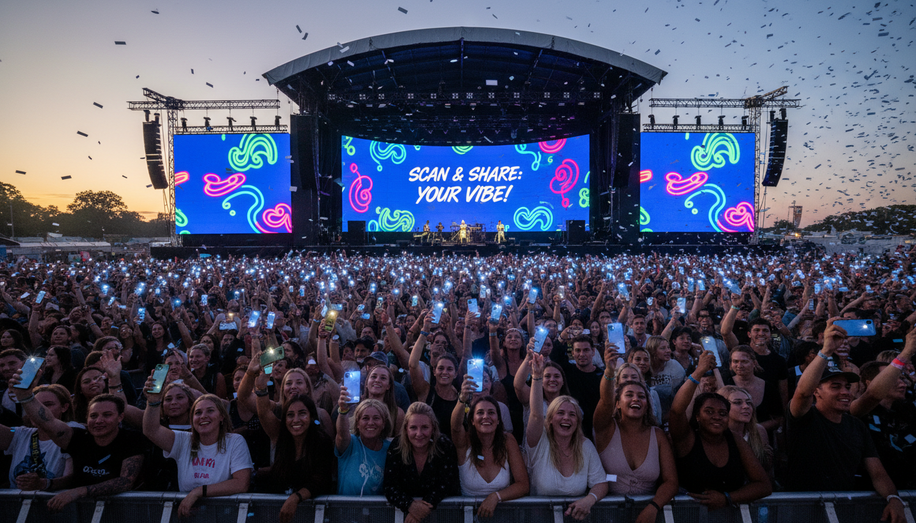
Digital billboards supercharge this synergy, rotating content that ties directly to social feeds. Hashtag-Vape’s campaign synced physical displays with live online interactions via clear calls-to-action like “Snap this and #VapeTheBillboard.” Viewers obliged, flooding feeds with geotagged photos that extended the ad’s life online, boosting visibility on shoestring budgets. Similarly, Mr. Charlie’s Chicken Fingers ran a contest-driven OOH blitz, urging fans to post pics of their meals with a branded hashtag for prizes. The integration drove multi-location growth, with social entries turning local eats into nationwide chatter. These cases reveal a core design tenets: embed scannable QR codes, bespoke hashtags, or challenges that lower the sharing barrier, converting OOH’s mass exposure into targeted digital amplification.
Weather-responsive OOH adds timeliness, triggering hyper-relevant creatives that demand immediate response. Stella Artois Cidre’s campaign activated digital screens only under ideal sunny conditions, flashing crisp visuals with “Share your perfect day” prompts. Sales leaped 65.6% year-over-year, but the real win was £15,000 in earned media from viral photo dumps of picnics and patios, proving contextual relevance breeds organic evangelism. Molson Coors refined this with thermal-triggered Facebook tie-ins from OOH, where weather-specific ads outperformed generics by 89% in click-throughs, as users captured and commented on the prescient messaging.
Glossier’s street saturation in New York, wrapping MTA buses in minimalist pink aesthetics, bridged its digital-native roots to physical pop. The OOH screamed availability at Sephora while whispering “Tag your glow-up,” sparking UGC floods of unboxing hauls and mirror selfies that rocketed brand fame. Even non-commercial plays, like the Deep Time/Fossil Hall’s dinosaur doodles from kids on DC billboards, lured families back to museums via shared family snaps, blending nostalgia with novelty.
Wild Posting masters like VRG GRL and Nashville Predators plastered urban hotspots with immersive, street-art-style ads that begged documentation—think larger-than-life product shots on Melrose Avenue screaming for Stories reels. These generated massive impressions and engagement spikes, as the guerrilla aesthetic blurred ad and art, inviting users to claim the narrative.
The formula is clear: OOH campaigns engineered for buzz prioritize photogenic intrigue, emotional resonance, and frictionless sharing mechanics. High-contrast visuals dominate fleeting views, while interactive layers—hashtags, AR filters via QR, or time-bound challenges—propel content into feeds. Data bears it out: a rotating poster run in Olean, NY, lifted social engagement 2% alongside 15% sales gains and 20% web traffic. Yet success demands precision—strategic placements in social-savvy locales like Brooklyn or LA maximize foot traffic from influencers and millennials.
Critics might dismiss OOH as analog relic, but metrics silence them: UGC from these campaigns often yields CPMs as low as $6.50, dwarfing digital banners. Brands like Zenni blanketed NYC buses for sheer fame, outpacing rivals in awareness through shareable ubiquity. As privacy regs clamp digital targeting, OOH’s public, consent-free spark offers unblockable authenticity.
Ultimately, OOH isn’t competing with social; it’s the catalyst. By designing for the double-tap, brands orchestrate a feedback loop where physical provocation births digital devotion, proving the street remains marketing’s most potent conversation starter.