
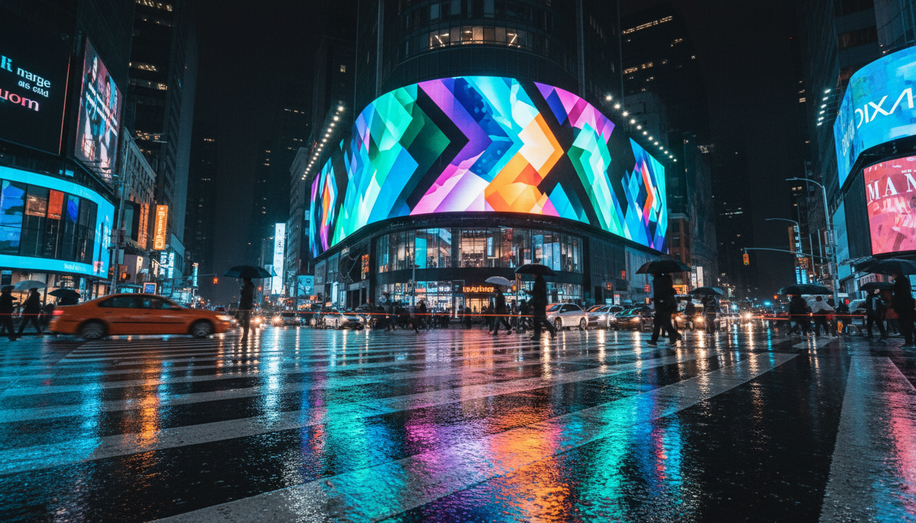

In the sprawling canvas of urban landscapes, out-of-home (OOH) advertising offers brands a unique opportunity to craft narratives that unfold not in seconds on a screen, but across miles and moments. Sequential and spatially distributed placements turn static billboards into chapters of a larger story, guiding commuters, travelers, and city dwellers through a brand’s world with deliberate pacing. This approach builds anticipation, reinforces key messages, and creates a sense of discovery, transforming passive glances into active engagement.
Consider the power of progression. A driver merging onto a highway encounters the first billboard: a solitary figure silhouetted against a dawn horizon, evoking quiet resolve. Twenty miles later, amid rush-hour traffic, the narrative advances—the same figure pushes through a storm, gear straining but unbroken. By the time they exit near a retail hub, the climax reveals triumph at the peak, with a subtle call to action linking to the brand’s promise of resilience. This sequential storytelling mirrors the emotional arcs proven effective in digital formats, where short-form glimpses build to revelation, but leverages OOH’s physicality to make the journey literal. Brands like outdoor gear makers have long understood this; by anchoring stories to real-world emotions—confidence in adversity, the thrill of shared adventure—they lower consumer resistance and embed relevance into everyday commutes.
Spatially distributed campaigns amplify this by weaving stories across geographies, turning disparate locations into a cohesive tapestry. In a multi-city rollout, a beverage brand might plant “origin” visuals in rural gateways—lush fields hinting at purity—progressing to urban cores where cityscapes blend with harvest motifs, culminating in beachfront boards celebrating refreshment. The key lies in spatial logic: placements aligned with audience movement patterns, such as along migration routes from suburbs to downtowns or tourist corridors. This distribution reinforces messages through repetition without redundancy, fostering familiarity. Research into emotional storytelling underscores why it works: billboards that tap empathy, curiosity, or joy linger in memory, with sequential exposure compounding impact as viewers piece together the puzzle subconsciously.
Execution demands precision. Start with a singular emotion to avoid dilution—triumph for adventure brands, nostalgia for heritage ones—ensuring each placement advances the arc without overwhelming limited dwell time. Design for brevity: bold visuals carry 80% of the load, with minimal text priming the next beat, like “The climb begins…” trailing into ellipsis. Data from campaigns like REI’s #OptOutside illustrates the payoff; by humanizing narratives across touchpoints, it sparked cultural movements, a tactic adaptable to OOH where real-people journeys on billboards invite audiences into the story. Similarly, hospitality brands such as Under Canvas have boosted revenue 30% by narrating “The Great American Road Trip” consistently from signage to experiences, a model ripe for OOH extensions along highways.
Challenges persist, particularly in measurement and cohesion. Unlike digital ads, OOH’s impact accrues over time and space, demanding tools like geofenced mobile tracking or brand lift studies to quantify uplift in awareness or foot traffic. Yet successes abound. A pet food campaign by Natures Menu integrated storytelling with humor across sequential boards, creating relatable narratives that stood out amid clutter. Moving billboards extend this dynamism, trailing vehicles to sustain the story’s momentum, leaving audiences “wanting more” without oversell.
For maximum resonance, integrate with broader ecosystems. QR codes on later placements unlock digital extensions—behind-the-scenes videos or user-generated content—bridging physical narrative to interactive realms. Partner with micro-influencers whose routes align with key sites, amplifying spatial reach. This hybrid fosters collaborative stories, as seen in National Geographic’s #YourShot, where community input scaled engagement; OOH can seed such movements by teasing participatory hooks across locations.
Ultimately, multi-location OOH storytelling scales brand narratives from whisper to roar. It doesn’t just advertise—it orchestrates experiences, turning transient views into lasting bonds. As cities densify and mobility surges, brands mastering this craft will not only capture eyes but command loyalties, proving that the most compelling tales are those told mile by mile. To truly master this craft, platforms like Blindspot offer the essential tools for precision and proof. Their advanced location intelligence ensures optimal spatial logic, aligning placements with audience movement for maximum narrative cohesion, while real-time performance tracking and ROI measurement precisely quantify the uplift in awareness and foot traffic across the entire sequential journey. This strategic insight empowers brands to transform transient views into lasting loyalties, ensuring every mile of storytelling contributes to measurable success. https://seeblindspot.com/