
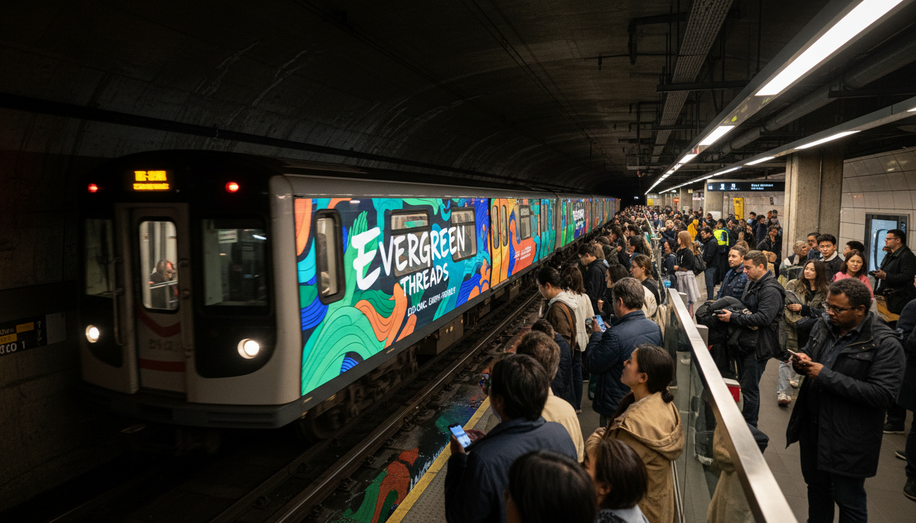

Direct-to-consumer brands have fundamentally reshaped retail by eliminating intermediaries and building direct relationships with customers, yet they face an unexpected challenge: gaining credibility and visibility in an oversaturated digital marketplace where advertising costs continue to climb. Out-of-home advertising has emerged as a strategic solution, allowing DTC brands to break through digital clutter and establish physical presence through real-world touchpoints that drive both brand awareness and measurable online conversions.
The appeal of OOH advertising for DTC brands lies in its unique ability to capture attention in contexts where digital ads cannot be scrolled past or ignored. Unlike the crowded digital landscape, OOH placements—from billboards and transit ads to street furniture and digital displays—command undivided attention from audiences in high-traffic locations. This forced engagement is particularly valuable for digitally native brands seeking to build the credibility and trust that often requires visibility beyond screens.
Beauty brand Glossier exemplifies this strategy through minimalist billboard designs that reflect their brand aesthetic, strategically placed in trendy neighborhoods and near popular shopping districts to reach their core demographic. Similarly, eyewear retailer Warby Parker uses OOH advertising to drive foot traffic to physical stores while highlighting limited-time offers, effectively bridging the gap between online shopping and brick-and-mortar experiences. These campaigns demonstrate how physical presence reinforces digital brand narratives and converts awareness into action.
For brands operating in competitive categories, data-driven OOH campaigns deliver measurable results. Premium cookware brand HexClad partnered with programmatic OOH platforms to reach commuters, shoppers, and food enthusiasts across multiple markets, combining static, digital, and mobile placements informed by over 100 data sources. This approach ensured their message stayed top-of-mind while driving website visits and conversions across direct and retail channels. The campaign’s success illustrates how OOH serves as a complement to digital marketing rather than a replacement, creating synergistic effects that amplify overall campaign performance.
The most sophisticated DTC campaigns integrate OOH with mobile retargeting strategies, extending the customer journey beyond initial outdoor exposure. DoorDash’s campaign, which blended static and video advertisements with mobile device retargeting, achieved a 6% lift in intent to sign up and 22% increase in consideration by connecting outdoor impressions to mobile follow-up. This omnichannel approach recognizes that modern consumer decision-making spans multiple touchpoints and channels.
Real-time optimization capabilities further enhance OOH’s effectiveness for DTC brands. Weather-triggered campaigns, inventory-based activation, and location-specific creative variations allow brands to maximize relevance and engagement. The Aperol Spritz example demonstrates this sophistication: programmatically activated ads displayed only during ideal summer weather above 66°F near high foot-traffic social hubs, perfectly aligning product positioning with consumer mindset. For DTC brands, similar logic applies—reaching audiences at moments when purchase intent aligns with brand messaging drives superior conversion outcomes.
The trust-building dimension of OOH deserves particular attention for DTC brands. Many consumers remain skeptical of digitally native companies lacking physical presence or established retail relationships. A visible OOH campaign signals brand legitimacy, investment in market presence, and confidence in product quality. When a DTC brand occupies premium billboard real estate or dominates transit stations, consumers subconsciously perceive greater brand maturity and trustworthiness than digital-only advertising conveys.
Measurability has historically challenged OOH’s adoption among performance-focused DTC marketers, yet advancements in attribution technology have transformed this landscape. Causal impact studies, foot traffic analysis, and device ID passback techniques now enable precise correlation between OOH exposure and ecommerce conversions. A leading mattress brand achieved double-digit sales lift through hybrid OOH campaigns tracked via these methodologies, validating OOH’s contribution to online revenue.
As DTC brands mature and face rising customer acquisition costs on digital platforms, OOH advertising offers a complementary channel that builds brand credibility while driving measurable online conversions. By combining the visibility and trust-building power of physical presence with sophisticated data targeting and mobile retargeting, DTC brands can expand reach beyond digital audiences and establish the market presence essential for long-term growth and customer loyalty.