
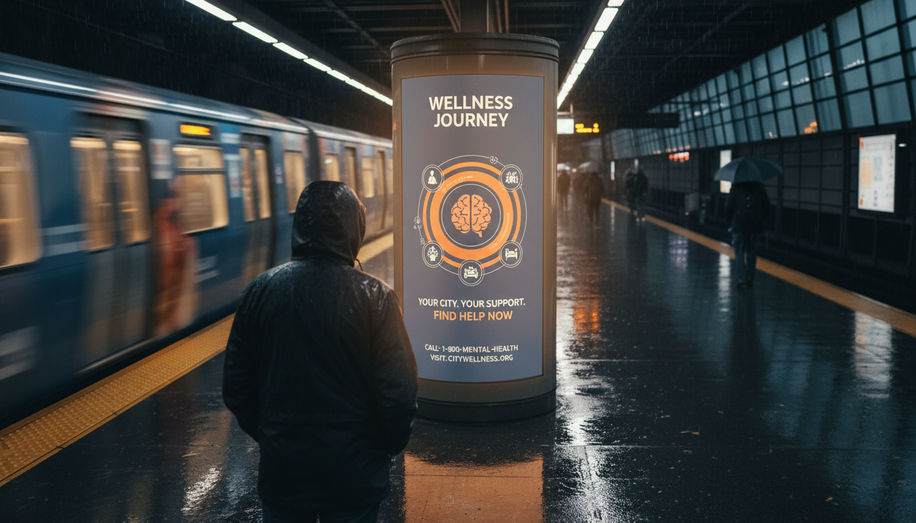

In the bustling corridors of public transit hubs and along high-traffic highways, outdoor advertising stands as a silent sentinel for public health, delivering urgent messages that pierce through daily distractions to spur awareness and action. From the Centers for Disease Control and Prevention’s (CDC) “Wild to Mild” campaign combating flu misinformation with whimsical billboards to broader initiatives promoting vaccinations and healthy lifestyles, out-of-home (OOH) media has proven its mettle in reaching vast audiences where they live, work, and commute. This unmissable format—encompassing billboards, digital out-of-home (DOOH) displays, transit shelters, and bus ads—capitalizes on proximity and repetition to embed critical health imperatives into the public psyche, fostering behavior change amid fragmented digital landscapes.
The CDC’s “Wild to Mild” initiative exemplifies OOH’s potency in vaccination drives. Eye-catching visuals of wild animals tamed by flu shots appeared on billboards and DOOH screens in cities like Atlanta, Chicago, San Francisco, and Las Vegas, targeting parents, pregnant individuals, and commuters in train stations and bus shelters. By blending playful imagery with transparent messaging—acknowledging that flu vaccines reduce symptom severity rather than guaranteeing immunity—the campaign built trust and countered vaccine hesitancy. Its strategic use of transit advertising ensured repeated exposure during daily routines, amplifying reach through social media tie-ins and influencers on platforms like Instagram and TikTok. This multi-channel synergy not only boosted visibility but also drove tangible engagement, demonstrating OOH’s role in overcoming misinformation during peak flu seasons.
Beyond flu shots, OOH excels in healthy living campaigns by leveraging high-impact visuals in contextually relevant locations. Place-based strategies position ads near fitness centers, healthcare facilities, or grocery stores, delivering hyper-local messages that resonate at decision-making moments. For instance, campaigns promoting physical activity have used motivational posters in elevators to encourage stair use, yielding measurable shifts in behavior. Similarly, Australia’s SunSmart initiative, with its consistent character “Sid” demonstrating sun-safe practices across outdoor activities, has contributed to skin cancer prevention by building mental availability through repeated OOH exposure. Research underscores these successes: a systematic review of mass media efforts found high awareness and improvements in diet, physical activity, and cardiovascular risk reduction, though effects were often short-term and modest in scale. Billboard campaigns for healthcare organizations, meanwhile, enhance awareness most powerfully, progressing patients through consideration to patronage, as evidenced by surveys of 1,640 individuals showing favorable views and increased clinic visits.
OOH’s effectiveness stems from its mass-reach capabilities and ability to cut through clutter. In an era of ad fatigue from online sources, 58% of adults recently noticed healthcare OOH ads—a notable rise—making it ideal for countering workforce shortages and post-COVID repercussions. During insurance enrollment periods, billboards in high-traffic zones and place-based ads in laundromats or malls repeatedly reinforce messages, filling consideration funnels and driving searches. Targeted local efforts further amplify impact; community-specific campaigns addressing unique needs have spurred meaningful change, from obesity prevention to sun protection attitudes over 15 years. The Out-of-Home Advertising Association of America (OAAA) and Harris Poll data affirm OOH’s edge: its physical presence near care centers provides trustworthy, on-demand info about check-ups and preventative care.
Yet, success demands adherence to advertising fundamentals often overlooked in public health efforts. Campaigns falter when they neglect distinctive assets or evidence-based creativity, wasting resources on generic messaging. Australia’s dietary health pushes, for example, missed building mental availability by straying from proven repetition and branding. Cost-effectiveness also factors in: while billboard rates vary by location and duration, the broad demographic sweep justifies investment for behavior-driven goals. Integrating DOOH adds interactivity, enabling real-time updates and social extensions that extend OOH’s lifespan.
Critics note potential downsides, such as ads promoting unhealthy products that undermine wellbeing, but when harnessed positively, OOH’s benefits outweigh risks. Sustained, multi-year exposure—as in SunSmart—yields lasting attitude shifts, while earned media amplifies visibility through community buy-in. For vaccination drives, healthy eating nudges, or exercise prompts, OOH’s unskippable nature positions it as a cornerstone of public health strategy.
As health threats evolve, from pandemics to chronic diseases, OOH remains indispensable. Its capacity to inform, persuade, and activate communities underscores a simple truth: in the fight for healthier populations, the great outdoors delivers messages that stick, one glance at a time.