
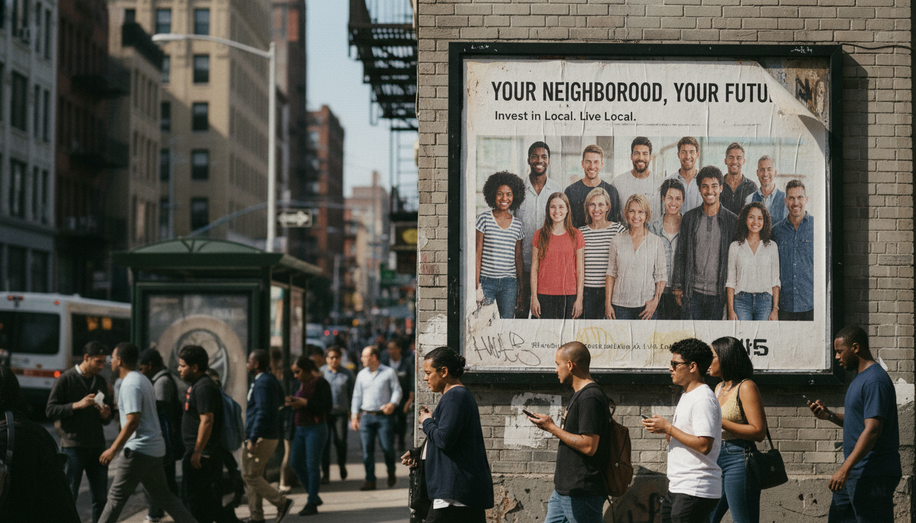

Out-of-home advertising has always had a geographic advantage, but in 2026, that advantage is becoming increasingly precise. As media buyers face tighter budgets and demand measurable returns, hyper-local OOH campaigns are proving that bigger isn’t always better—relevance is. The shift toward micro-audience targeting represents a fundamental reimagining of how outdoor advertising connects with consumers at the neighborhood level.
The foundation of effective hyper-local OOH lies in understanding that context matters more than reach. Rather than blanket coverage across entire cities, successful campaigns now start by identifying the specific environments where target audiences move and make decisions. A watch brand’s fitness-focused message resonates differently when placed inside a gym than on a generic billboard. Similarly, a ski resort advertising to affluent travelers in San Francisco or Seattle can tailor creative to showcase luxury and mountain expertise, knowing its audience has both the means and interest to convert. This alignment between message, environment, and audience behavior transforms what might otherwise be overlooked advertising into a relevant touchpoint.
The technological infrastructure supporting hyper-local precision has evolved dramatically. Smart billboards equipped with sensors, GPS data, and AI analytics now serve dynamically optimized creative based on real-time factors like traffic flow, weather conditions, and foot traffic patterns. Programmatic DOOH buying enables marketers to access location-specific insights and audience movement data, allowing them to place ads at precisely the right moment when consumers are most receptive. These systems eliminate wasted impressions by targeting with surgical precision rather than hoping creative performs well by accident.
Yet technology alone doesn’t drive results. The most effective hyper-local strategies begin with clear audience understanding and behavioral mapping. Before selecting locations, media buyers should answer fundamental questions: Who is the audience, and what route do they repeat weekly? Are they moving through a high-speed commuter corridor or a high-dwell transit station? What single message must they retain after one glance? These answers determine whether dominance—through roadblock tactics—or precision—through hyperlocal placement—serves the campaign objective.
The six environments that consistently outperform in U.S. cities each serve different strategic purposes. Commuter corridors deliver high repetition and routine-based exposure ideal for brand awareness. Retail clusters position ads near point-of-purchase decisions, capturing last-mile intent. Transit dwell environments like stations and shelters provide genuine viewing time rather than fleeting impressions. Airports offer premium attention paired with high spending power. Downtown pedestrian zones amplify foot traffic and shareability. Neighborhood microzones deliver hyperlocal relevance and repeated community exposure. Strategic hyper-local campaigns combine these environments into coherent systems rather than scattered placements.
The economic case for hyper-local precision has never stronger. Research indicates that 68 percent of U.S. internet users say localized messaging from national brands makes ads more relevant. Yet only 26 percent of marketers prioritize strengthening hyper-local advertising—a significant gap between consumer expectation and advertiser action. For brands willing to invest in tailored neighborhood messaging, this disconnect represents substantial opportunity. By concentrating budgets into areas with highest conversion potential, media buyers stretch dollars further while improving ROI during economic uncertainty.
Real-world results validate the approach. Campaigns pairing foot traffic measurement with geofenced OOH targeting have demonstrated increases as high as 37 percent in store visits. These measurable outcomes stem not from creative brilliance alone, but from strategic alignment: the right message reaching the right micro-audience in the right environment at the right moment.
As DOOH inventory expands into gyms, healthcare spaces, movie theaters, and vehicles, the possibilities for hyper-local relevance multiply. Brands that master neighborhood-level personalization—using local dialects, cultural symbols, and behavioral insights to craft genuinely resonant messages—will find that precision targeting doesn’t just improve metrics. It builds authentic connections between lifestyle, location, and brand experience that broader campaigns simply cannot achieve.