
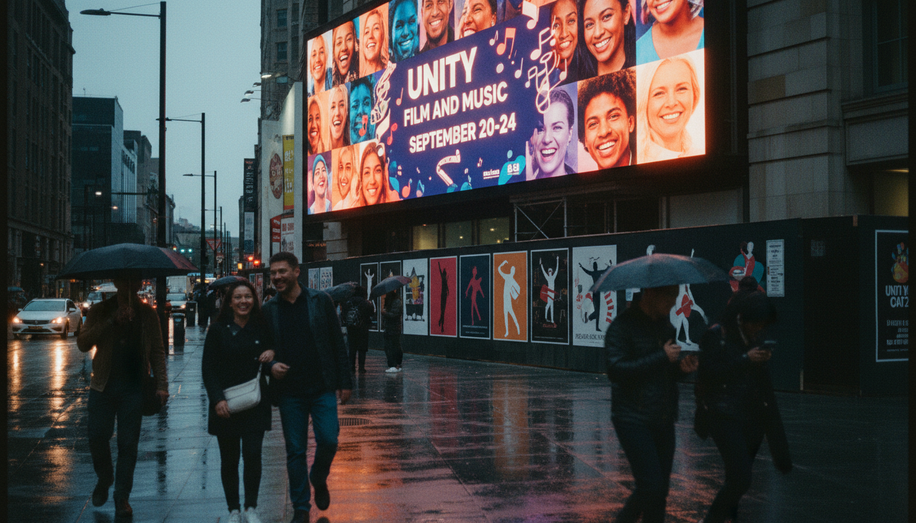

Major events and festivals represent some of the most valuable opportunities for out-of-home advertising, drawing massive crowds of highly engaged audiences to specific geographic areas. Whether promoting a music festival, sporting event, or cultural gathering, strategic outdoor media deployment can generate excitement weeks before gates open, guide attendees to venues, and extend brand presence long after the final performance concludes.
The power of OOH at major events lies in its ability to reach audiences where they already congregate—traveling to venues, staying in hotels, dining in surrounding neighborhoods, and moving through transit hubs. Unlike digital channels that require active engagement, outdoor advertising captures attention during moments of high anticipation, when audiences are mentally primed for the experience ahead. This environmental context makes OOH particularly effective for event marketing, where visibility and memorability are paramount.
Billboard placement represents the cornerstone of event-focused OOH campaigns, but strategic positioning matters significantly. For festivals with geographic entry points—like Coachella in Indio—billboards along primary routes to the venue deliver unmatched visibility, reaching nearly every attendee. For urban festivals like Lollapalooza in Chicago, where attendees disperse across multiple neighborhoods, a distributed billboard strategy targeting high-traffic zones downtown and in adjacent districts ensures broader reach. Similarly, the Super Bowl’s rotating host city model requires tailored approaches; for the 2025 game in New Orleans, downtown billboards near Bourbon Street and the French Quarter capture both arriving travelers and local foot traffic.
Beyond traditional billboards, mobile and experimental formats extend OOH impact. Wrapped rideshare vehicles and LED mobile trucks create moving advertisements that follow attendee traffic patterns, particularly effective near hospitality zones and transit corridors. These dynamic formats generate social media engagement—attendees photograph and share eye-catching mobile units, amplifying reach beyond the vehicles themselves. For festivals like SXSW, guerrilla-style activations in areas where festivalgoers congregate, such as trendy hotels and cultural hotspots like Rainey Street, create memorable brand moments that feel organic rather than corporate.
Strategic placement near transit infrastructure amplifies campaign effectiveness. Wild Posting®—unconventional, high-impact outdoor advertising placed in high-traffic pedestrian zones—proves particularly valuable near public transportation hubs, bars, and neighborhood destinations where festivalgoers gather before and after events. For Pitchfork Music Festival in Chicago, wild posting near Union Park, Logan Square, and CTA stations reaches audiences during their daily routines, building awareness across multiple touchpoints. This approach works because it meets audiences in contextually relevant moments, rather than forcing advertising into their attendance experience.
Event-specific advertising extends beyond the immediate venue geography. For festivals held in smaller cities with limited local advertising inventory—like Bonnaroo in Manchester, Tennessee—smart advertisers anchor campaigns in nearby larger markets such as Nashville, using bulletins and wall murals to reach festival attendees traveling from urban centers. This hub-and-spoke strategy maximizes reach without requiring premium on-site sponsorship fees.
Creative excellence elevates OOH performance at major events. Bold signage and vibrant branding cut through the sensory overload of crowded festivals, where attendee attention spans remain fleeting. Consistent visual identity across billboards, transit advertising, and street-level activations reinforces brand recognition while maintaining alignment with event branding. Messaging discipline proves critical—clear event details, dates, locations, and direct calls-to-action drive conversion, whether the goal is ticket sales or brand awareness.
The timing of OOH campaigns also influences effectiveness. Early broad-awareness campaigns plant seeds through billboards and regional media, while closer to event dates, concentrated outdoor media in high-traffic zones near venues creates final conversion moments. This temporal layering mirrors attendee decision-making cycles, meeting audiences at different stages of engagement.
OOH’s measurable impact at major events stems from its ability to reach large, concentrated audiences in moments of peak receptivity. By strategically deploying billboards, transit advertising, mobile units, and street-level activations, brands transform event marketing into multi-sensory experiences that generate excitement, guide attendance, and create lasting impressions far beyond traditional sponsorship boundaries.