
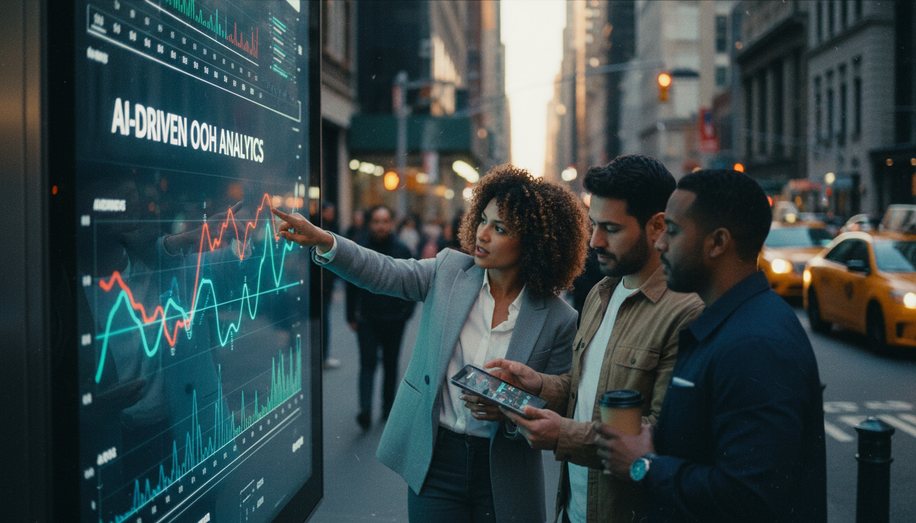

In the bustling arteries of modern cities, where billboards loom large and digital screens pulse with messages, artificial intelligence is quietly reshaping the art and science of out-of-home (OOH) advertising. No longer reliant on gut instinct or historical hunches, media planners are harnessing AI’s predictive power to sift through massive datasets—foot traffic patterns, weather forecasts, demographic shifts, and consumer behaviors—to pinpoint the perfect spots for ads and forecast their impact with unprecedented precision.
This revolution begins with site selection, a cornerstone of OOH success that has traditionally hinged on rough estimates of visibility and reach. AI changes that equation by analyzing geospatial data, mobility trends, and real-time variables to identify optimal placements. For instance, machine learning algorithms can evaluate pedestrian flows, proximity to points of interest like stadiums or retail hubs, and even event calendars to recommend high-impact locations. A sportswear brand might discover that billboards near sports venues during major games yield the highest engagement, capitalizing on emotional peaks in fan traffic. In Mexico City, companies like BM Outdoor use AI to predict rush-hour surges along key routes such as Periférico or Insurgentes, dynamically adjusting content from broad awareness messages to targeted promotions at peak receptivity times. These tools go beyond static analysis; they incorporate external factors like weather or gas prices, which Forbes notes can dramatically influence consumer movement and responsiveness.
Predictive analytics elevates this further by forecasting audience behavior with granular accuracy. AI models process historical data on conversions, dwell times, and interaction rates to anticipate how specific demographics will react to an ad. Outdoor advertisers can segment audiences by behavior, preferences, and psychographics, tailoring campaigns to maximize resonance—predicting, for example, that families in suburban high-traffic zones respond best to playful messaging during weekend peaks. Platforms like those from StreetMetrics employ machine learning to factor in time-of-day variations, nearby events, and environmental conditions, ensuring ads for a fitness brand appear near gyms during workout hours or running trails at dawn. This isn’t guesswork; it’s data-driven foresight that identifies patterns invisible to the human eye, such as subtle correlations between storm forecasts and spikes in home service inquiries, allowing HVAC companies to preemptively ramp up relevant OOH creatives.
Campaign performance prediction represents AI’s most transformative edge, bridging the gap between exposure and results. By simulating scenarios with historical sales data, competitor strategies, and market trends, AI enables planners to model outcomes before a single ad goes live. A global retail chain, for instance, could use these models during the Christmas rush to allocate budgets to the most efficient OOH slots, crafting seasonal creatives that align with predicted shopping surges and competitor gaps. Predictive tools also automate inventory management for media owners, forecasting which digital billboards will excel under certain conditions—say, clear evenings for high-visibility luxury ads or rainy afternoons for indoor-retail promotions—thus optimizing space allocation and ROI. In digital out-of-home (DOOH), programmatic platforms amplify this with real-time bidding and optimization, linking ad exposures directly to metrics like foot traffic lifts and conversions.
Real-world applications underscore AI’s practical prowess. Nickelytics leverages precise location data and machine learning to forecast OOH campaign impacts, helping advertisers gauge audience reactions and refine strategies on the fly. ANIMA’s location intelligence identifies premium spots by cross-referencing traffic patterns with demographic profiles, while performance analytics platforms track impressions, engagement, and sales attribution in real time, turning raw data into actionable optimizations. Even generative AI aids by predicting trend shifts, enabling long-term planning that anticipates evolving consumer habits.
Yet, this predictive power demands quality data and ethical handling. AI thrives on vast, accurate inputs—mobility traces, geolocation pings, behavioral logs—but biases in training data can skew results, underscoring the need for diverse datasets and human oversight. Privacy regulations add another layer, pushing innovators toward anonymized aggregation to balance precision with compliance.
As AI matures, its integration into OOH promises a future of hyper-personalized, accountable advertising. Budgets shift dynamically across channels, creatives adapt in real time, and forecasts grow ever sharper, blending automation with creativity. For advertisers, the payoff is clear: campaigns that not only reach audiences but anticipate their next move, driving efficiency and impact in an increasingly fragmented media landscape. In this AI-augmented era, OOH isn’t just visible—it’s visionary.