
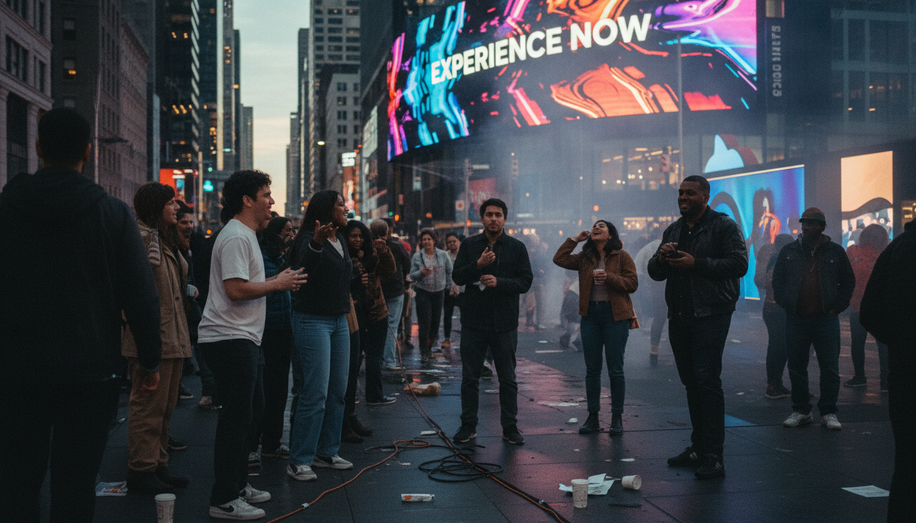

In the bustling heart of a city square, a towering digital billboard flickers to life, not with a static product shot, but with an urgent invitation: “Scan here for your adventure.” Passersby point their phones, unlocking an augmented reality overlay that transforms the ad into a virtual trailhead, complete with interactive challenges teasing a nearby pop-up experience. This seamless fusion of out-of-home (OOH) media and experiential activations is redefining how brands capture attention and forge lasting connections, turning passive viewers into active participants.
OOH has long excelled at visibility, planting brand messages in high-traffic zones like airports, malls, and urban thoroughfares where ads cannot be skipped or scrolled past. Yet its true power emerges when paired with experiential marketing, acting as a dynamic signpost that guides audiences to immersive encounters. Experiential activations—think pop-up events, interactive installations, or branded challenges—create hands-on moments that embody a brand’s ethos, from outdoor adventures to community-driven initiatives. By amplifying these through OOH, brands extend their reach exponentially, blending physical presence with emotional resonance.
Consider how OOH serves as the ultimate amplifier. A strategically placed billboard or transit wrap not only builds anticipation but directs foot traffic to a live activation. For instance, brands deploy QR codes on billboards that lead to geo-targeted experiences, such as a simulated outdoor challenge in a mall atrium or a beach cleanup event promoted via airport displays. This integration resonates deeply with modern consumers, particularly millennials, who crave authenticity over interruption. Unlike digital ads that blend into feeds, OOH experiential hybrids demand engagement, fostering shareable moments that ripple across social media.
The mechanics are straightforward yet potent. OOH provides mass impressions in unavoidable locations—stations teeming with commuters, highways flanked by billboards—while experiential elements invite interaction. Lean Cuisine’s #WeighThis campaign exemplifies this: OOH installations in public spaces prompted people to swap product weight labels for personal stories, sparking conversations and user-generated content that amplified the message far beyond the physical site. Outdoor brands like The North Face and Arc’teryx take it further, using billboards to herald grassroots events—hiking challenges or gear demos—that build community and loyalty through shared adventures.
Technology supercharges this synergy. Augmented reality turns static OOH into portals; scan a fashion billboard, and virtually try on outfits, then follow directional cues to a pop-up fitting room. Beacon tech sends personalized notifications as people near ads, bridging OOH to on-site activations with tailored offers. Social media integration adds viral fuel: Hashtags on transit ads encourage photos of interactive kiosks, generating organic buzz and user-generated content that multiplies reach. For outdoor apparel, this means billboards teasing VR simulations of mountain treks, drawing crowds to real-world festivals or in-store archery ranges mimicking wild hunts.
The results speak volumes. Experiential OOH boosts brand awareness by creating buzzworthy events that attract new audiences while deepening ties with loyalists through emotional bonds. It generates authentic advocacy—participants don’t just see a brand; they live it, sharing Instagram-ready moments that extend campaign life. Measurement has evolved too: Digital OOH tracks scans and shares, while event data reveals conversions, proving ROI beyond impressions. Challenges persist, like ensuring seamless execution across scales, but successes abound. Brands sponsoring eco-gardens via landscape-integrated ads or sequential storytelling across bus stops craft urban narratives that guide audiences on interactive journeys, blending visibility with virality.
This combination thrives in high-stakes environments. Airports host branded lounges promoted by overhead screens, turning layovers into mini-experiences. Malls feature OOH-directed pop-ups with sensory simulations—nature scents and sounds evoking wilderness—driving sales and loyalty. Even mobile billboards weave into omnichannel strategies, beaconing digital follow-ups to physical encounters.
Ultimately, OOH and experiential activations form a powerhouse duo: the former casts a wide net with unmissable presence, the latter hooks with memorable immersion. As consumers tire of digital noise, this tactile, real-world approach cuts through, guiding masses to brand moments that inspire advocacy and action. Brands ignoring it risk fading into the background; those embracing it bring their stories vividly to life, one scan, share, and step at a time.