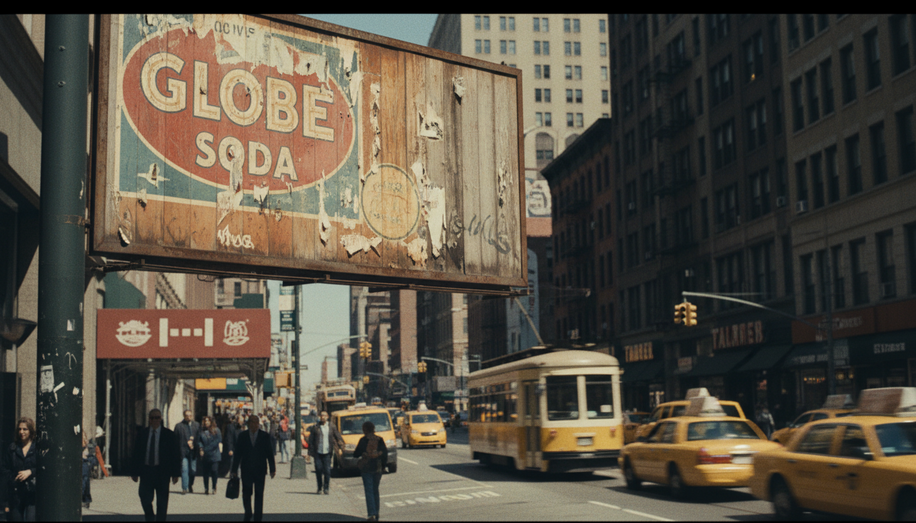

In an era dominated by flashing digital screens, programmatic ad buys, and real-time data analytics, the humble static billboard stands as a steadfast pillar of out-of-home (OOH) advertising, delivering unmatched consistency and broad reach that no algorithm can replicate. Far from being relics of a bygone age, these unyielding displays continue to anchor brand-building strategies, fostering long-term recognition through their persistent presence in the physical world. As advertisers grapple with the fleeting nature of digital out-of-home (DOOH) formats, static billboards remind us that true power lies in repetition and reliability, not novelty.
Static billboards excel in environments where audiences encounter them repeatedly over time, turning casual glances into ingrained familiarity. Unlike digital counterparts that rotate content every few seconds, static displays remain constant, allowing commuters, pedestrians, and drivers to absorb the message through sheer accumulation of exposures. This long-term repetition is particularly potent for brand awareness campaigns, where the goal is not immediate action but enduring mental real estate. Research underscores this strength: while digital billboards boast higher short-term recall rates—around 55% compared to 28% for static—their advantage fades without sustained presence, whereas static formats build cumulative impact that resists ad fatigue in loyal local audiences. Brands like regional retailers or community services leverage this to reinforce identity, much like a familiar landmark etched into daily routines.
The broad reach of static billboards remains unparalleled, blanketing high-traffic corridors with impressions at a fraction of digital costs. OOH advertising, including traditional formats, claims the lowest cost per thousand impressions (CPM) among major media—ranging from $2 to $7—delivering an industry-average ROI nearing 500%, with static options often edging out digital at around 40%. Americans spend 70% of their time outside their homes, and 80% notice OOH ads weekly, creating a captive audience immune to ad blockers or skips. In urban sprawl or highway stretches, a single static billboard generates millions of views over months, far surpassing targeted digital placements that risk audience fragmentation. This mass exposure proves especially vital in 2026, as economic pressures and zoning hurdles slow digital infrastructure growth, keeping static formats affordable and ubiquitous.
Critics point to digital’s measurability—tracking impressions via mobile data, foot traffic lifts, and even sales correlations—as a knockout punch, yet this overlooks static’s role in the upper funnel of brand building. Static billboards shine where precision metrics matter less than pervasive visibility, providing a “persistent presence” that bolsters trust; OOH ads are seen as more credible than online counterparts. Gen Z and millennials, often stereotyped as screen-bound, recommend products from billboards at 48% rates, proving traditional OOH’s cross-generational pull. Moreover, static avoids the pitfalls of digital overload: no power failures, no content glitches, just reliable messaging that endures weather, time, and trends.
Consider real-world applications. A local chain restaurant deploys static billboards along commuter routes for months, imprinting its logo and tagline into drivers’ subconscious. Over time, this fosters top-of-mind awareness, priming visits when hunger strikes—outcomes echoed in OOH’s proven sales lift without needing QR codes or retargeting. National brands blend static with DOOH for hybrid power: static ensures baseline reinforcement, while digital adds dynamism. Even as programmatic DOOH surges, static holds steady for long-term visibility, often at lower upfront costs, making it ideal for sustained campaigns in price-sensitive markets.
Skeptics argue digital’s 30% attention edge and 20% engagement boost spell obsolescence for static, but data reveals a more nuanced picture. Static thrives in simplicity, sidestepping the complexity of content rotation that can dilute weaker messages. Its fixed nature demands sharper creative—bold visuals, memorable copy—that cuts through at highway speeds, unburdened by tech distractions. In 2026, with mobile billboards and interactive elements rising, static remains the economical backbone, especially for non-urban locales where digital rollout lags.
Ultimately, the enduring power of static billboards lies in their unpretentious efficacy: they don’t chase trends; they define presence. In a landscape of ephemeral digital ads, static OOH offers brands a core asset for building recognition that lasts beyond the next refresh cycle. Advertisers who dismiss them risk overlooking the foundation of effective OOH strategies—a reminder that sometimes, the best innovation is standing still. As the industry evolves, blending static’s reliability with digital’s agility will dominate, but traditional billboards will remain the unshakeable core.