
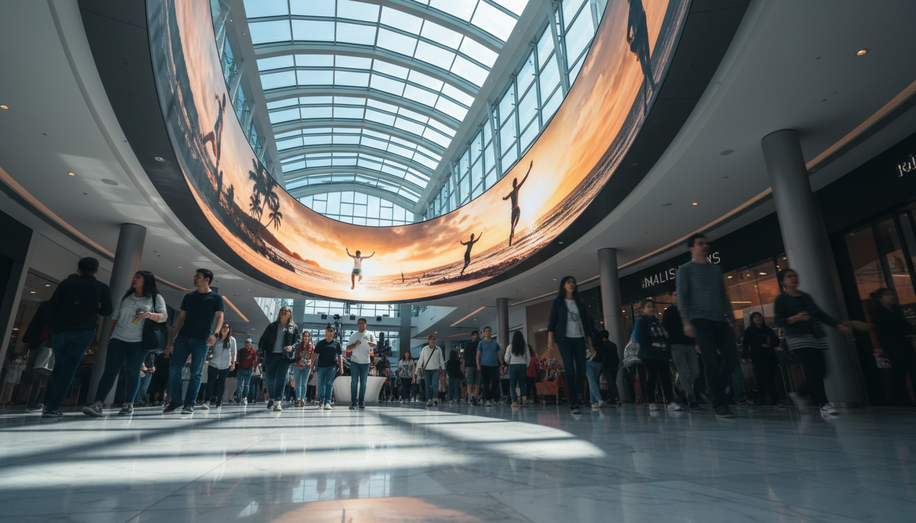

Retail media networks, once confined to digital banners on e-commerce sites, are rapidly evolving to weave out-of-home advertising directly into the physical retail environment, transforming stores into dynamic advertising hubs. This integration of in-store out-of-home (OOH) strategies leverages retailers’ rich first-party data to deliver targeted, measurable campaigns that bridge online precision with real-world shopper behavior. As omnichannel advertising matures, retailers like Kroger and 7-Eleven are deploying digital shelf screens, checkout kiosks, and high-visibility displays to create immersive experiences that drive immediate purchases and extend brand reach.
The shift marks a departure from traditional OOH, which often relied on static billboards with limited attribution. In-store retail media networks now harness digital out-of-home (DOOH) technologies—think programmable screens at aisles, endcaps, and entrances—to serve contextually relevant content in real time. For instance, a shopper browsing snacks might see personalized promotions for complementary beverages on a nearby digital shelf screen, informed by loyalty program data or recent online browsing history. This “beyond DOOH” approach, as Scala describes it, turns physical spaces into data-driven canvases, personalizing messaging based on location, time of day, or even purchase intent signals. Retailers monetize this foot traffic by offering premium placements to brands, bundling in-store screens with online and off-site ads for unified omnichannel packages.
Projections underscore the scale of this evolution. Omnichannel retail media ad spending is forecast to reach $61.2 billion in 2025, with off-site components alone hitting $41.82 billion, signaling that in-store OOH is no longer peripheral but a core pillar. Platforms like Broadsign enable retailers to integrate digital signage seamlessly into broader retail media networks (RMNs), repurposing online creative assets—such as email banners or social ads—for physical displays while ensuring consistent messaging across touchpoints. This synergy amplifies return on investment: dynamic content can trigger add-to-cart moments, with modern platforms providing unified reporting on metrics like reach, frequency, and sales lift, mirroring digital standards.
Programmatic advancements are accelerating adoption. The Trade Desk’s integration with Koddi’s commerce media platform now allows advertisers to buy onsite retail media inventory—including in-store placements—programmatically, unifying it with full-funnel campaigns. Gopuff, the launch partner, exemplifies how retailers maintain control over transparency and targeting while opening doors to real-time optimization. Over 95% of media buyers express interest in such programmatic access, per Koddi research, as it simplifies fragmented workflows and connects ad exposure to in-store purchases via closed-loop measurement. StackAdapt notes that as RMNs deepen programmatic ties, advertisers will plan, buy, and measure in-store DOOH with the same flexibility as online channels.
This in-store OOH boom extends retail media’s influence beyond endemic brands—those selling directly through the retailer—to non-endemic players like financial services or automakers. Walmart and Home Depot, for example, now offer CTV and off-site options alongside physical displays to attract these advertisers, using shopper data for precise targeting. Catalina positions DOOH as an “amplifier,” delivering hyper-local messages along the path of purchase, such as geofenced ads drawing consumers to specific stores. Quad’s analysis of in-store networks highlights their role in blending digital signage with shopper marketing, fostering impulse buys and loyalty through immersive, sales-focused strategies.
Challenges persist, including screen saturation and privacy concerns around data usage, but solutions are emerging. Retailers provide turnkey creative support to ease advertiser onboarding, while advanced platforms enable tiered packages that combine in-store visibility with digital extensions. Gable Company emphasizes turning stores into full RMNs via integrated digital display systems, generating revenue from engaged foot traffic. As Jason Wescott of GroupM Nexus argues, saturation in online ad spaces and rising costs demand this expansion: brands must embrace off-site and in-store frontiers to influence decisions earlier.
Looking ahead, the fusion of retail media and in-store OOH promises a retail landscape where every aisle is an ad opportunity. By 2026, with social commerce surpassing $100 billion, expect deeper personalization—perhaps AI-driven screens adapting to individual shoppers via mobile beacons—and broader programmatic scale. Retailers acting as both publishers and networks will dominate, offering advertisers omnipresent reach backed by ironclad attribution. For OOH specialists, this evolution signals a renaissance: physical stores are reclaiming their centrality in the shopper journey, powered by data and technology that make every visit a high-ROI encounter.
As physical stores reclaim their centrality, powered by data and technology, platforms like Blindspot become indispensable. They empower retailers and brands to manage their burgeoning in-store DOOH inventory, enabling precise programmatic campaign execution and delivering the “ironclad attribution” that links real-world ad exposure to immediate purchases and sales lift. By providing robust audience measurement and real-time performance tracking, Blindspot ensures every in-store ad placement is a high-ROI encounter in this new retail media frontier. Learn more at https://seeblindspot.com/