
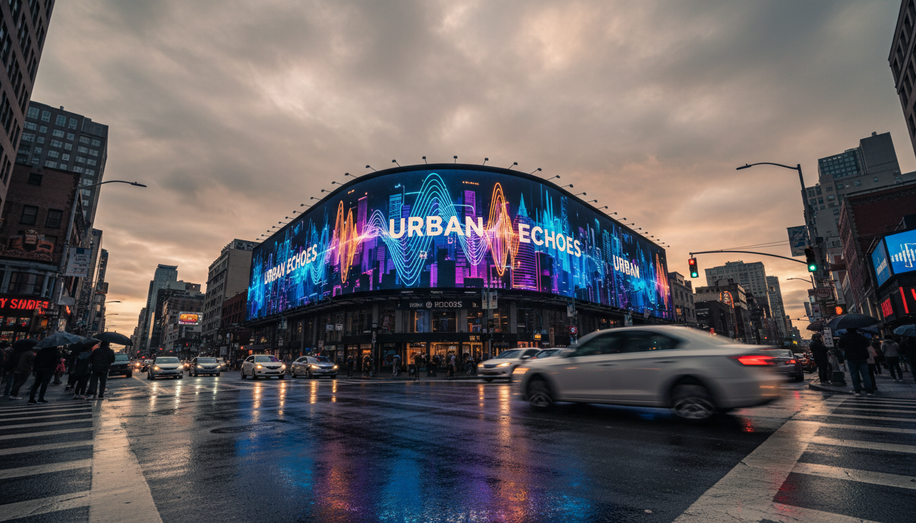

In an era where consumer attention fragments across screens and speakers, podcast advertising and out-of-home (OOH) campaigns are forging a powerful alliance, extending brand messages from intimate earbuds to massive urban billboards. Over 70% of Americans aged 12 and older have listened to a podcast, with more than half tuning in monthly, creating a vast, engaged audience that OOH can amplify through its unparalleled physical presence, reaching 96% of Americans in high-traffic environments. This integration leverages the strengths of each medium—podcasts for deep, conversational storytelling and OOH for bold, unmissable visual impact—to drive superior reach and engagement.
Podcasts have evolved into a cornerstone of audio advertising, with U.S. revenues surpassing $1 billion in 2021 and projected to triple by 2024, fueled by dynamic ad insertion and precise targeting. Listeners, particularly adults aged 25-54, exhibit high attention to ads, with 64% to 81% actively paying heed, far outpacing many digital formats where avoidance is rampant. Host-read spots, which dominate revenue shares alongside growing announcer-read formats, foster authenticity, prompting 40% to 60% of listeners to make purchases after exposure. Yet podcasts excel most as complements, not standalones; research shows they extend reach among younger, harder-to-reach demographics when layered with other channels, boosting website traffic, brand lift, and overall campaign effectiveness.
Enter OOH, the dynamic medium that captures audiences in motion. Billboards, transit ads, and digital displays deliver immediate, location-based impact, capitalizing on everyday commutes and urban flows. Smart technologies are revolutionizing this space, embedding sensors and AI to track demographics, dwell time, and even downstream actions like app downloads or online purchases. Digital OOH, growing at a 7.6% compound annual rate, integrates QR codes, augmented reality, and data analytics for measurable results, linking billboard impressions directly to consumer behavior. This evolution addresses OOH’s historical measurement challenges, making it a performance-driven powerhouse alongside podcasts’ audio precision.
The synergy shines brightest in integrated campaigns. Imagine a podcast ad during a true-crime episode—conversational, host-endorsed—planting seeds of curiosity about a new energy drink. Days later, commuters spot a towering digital billboard featuring the same drink, its QR code pulsing with a podcast-exclusive discount. This multi-touch approach reinforces messaging: podcasts build emotional connections and top-of-funnel awareness through repetitive, habitual listening, while OOH delivers mass reinforcement and impulse triggers in real-world contexts. Cross-media studies confirm the uplift; adding podcasts to traditional mixes meaningfully extends reach, and pairing with OOH’s visual punch amplifies recall and action, especially among mobile millennials and Gen Z who shun linear TV.
Advertisers report tangible gains from this pairing. Podcast listeners, primed by audio narratives, show heightened responsiveness—searching for brands post-ad, with synergies to paid search capturing conversions at lower costs. OOH then bridges the gap, using geo-targeting (now at 25.8% of podcast inventory and rising) and smart placements to hit the same audiences at optimal moments, like rush-hour transit hubs near podcast-heavy demographics. Flexible podcast CPMs, from high teens to $50, pair cost-effectively with OOH’s competitive rates, now justified by granular analytics linking exposures to sales lifts. Brands in categories from consumer goods to finance are diversifying mixes accordingly, with podcast ad types—pre-roll up to 32% of revenue—mirroring direct response and awareness goals that OOH bolsters visually.
Real-world execution demands creativity and tech savvy. Agencies recommend dynamic ad insertion for podcasts, allowing geo-fencing to align with OOH placements, while OOH platforms employ AI for real-time creative swaps, ensuring messages feel fresh yet cohesive. For instance, a travel brand might run host-read podcast spots targeting frequent flyers, followed by airport digital OOH displays with scannable codes linking back to episode recaps. Measurement tools track the full loop: podcast attribution via downloads and searches, OOH via mobile handoffs and footfall data. Podcasts’ conversational authenticity humanizes the sell, countering OOH’s scale with intimacy, while OOH’s inescapability combats podcast ad-skipping tendencies.
Challenges persist, but innovations mitigate them. Podcast geo-targeting lags broader digital but is accelerating, syncing better with OOH’s location prowess. Attribution across audio and physical realms requires unified platforms, yet rising ad tech—like those discussed in OOH-focused podcasts—promises seamless integration. As 2026 unfolds, with podcast audiences exceeding 500 million globally and OOH embracing data-driven renaissance, this duo stands poised to redefine multichannel strategies.
Ultimately, podcast-OOH fusion transforms advertising from siloed shouts into orchestrated symphonies. Brands achieve incremental reach—podcasts niche-penetrating where OOH blankets—while engagement soars through repeated, multisensory exposure. Listeners, once passive, become active participants, scanning codes, searching brands, and converting with ease. In a crowded media landscape, this complementary power not only extends messages but embeds them, proving that audio whispers and visual roars together command attention like nothing else.