
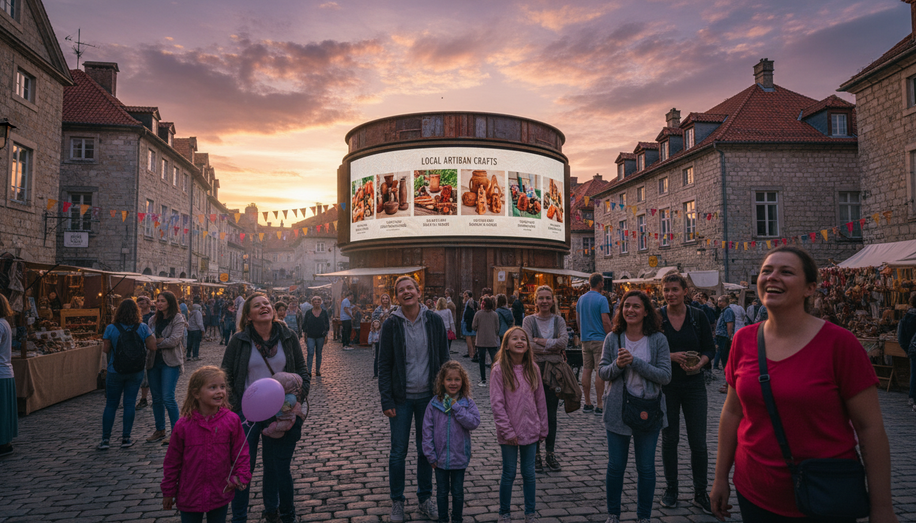

As ad-saturated consumers grow increasingly wary of messaging that feels inauthentic, out-of-home advertising has emerged as a powerful vehicle for brands seeking to forge genuine connections with local communities. The key to unlocking this potential lies not in broadcasting generic messages to the masses, but in crafting campaigns that reflect the unique cultural identity, values, and daily rhythms of the communities where advertisements are placed.
Place-based marketing represents a fundamental shift in how national brands approach local audiences. Rather than deploying identical creative across multiple markets, sophisticated advertisers now recognize that different neighborhoods, cities, and regions demand tailored messaging that acknowledges where consumers are and what matters to them in those specific environments. This hyperlocal mindset has proven especially valuable in fragmented markets like Los Angeles, where more than 100 distinct neighborhoods each possess their own demographic makeup, lifestyle patterns, and cultural identity. Success in such diverse environments requires understanding the pulse of each community and embedding brand messages where families and communities naturally gather.
The psychological foundation supporting this approach is compelling. Research demonstrates that contextually relevant OOH campaigns deliver 18 percent higher recall and 32 percent higher purchase intent compared to generic messaging. This uplift stems from multiple factors: consumers encounter contextually relevant ads near purchase locations with 2.5 times higher engagement rates, and they process repeated physical advertising exposure subconsciously, building brand familiarity even without active attention. When consumers encounter OOH advertising in spaces aligned with their interests and values, the message carries greater credibility and resonance.
Real-world examples illustrate how major brands leverage cultural alignment to drive measurable results. When Taylor Swift and Kansas City Chiefs tight end Travis Kelce announced their engagement in August, H&R Block recognized an opportunity to connect with its Kansas City workforce during a significant cultural moment. The company gave employees the afternoon off, a gesture that transformed into earned media coverage and social amplification. This strategic response reflected the brand’s understanding that life moments are tax moments—that people often shift their tax preparation methods when major life changes occur. By acknowledging what mattered to its local community, H&R Block created an authentic touchpoint that reinforced brand trust during pivotal moments in customers’ lives.
ESPN similarly recognized the power of cultural authenticity when launching ESPN Unlimited. While the app rollout was nationwide, the company prioritized creating breakthrough experiences in the two largest U.S. markets. In New York, ESPN took over a subway train on the E line during morning rush hour, partnering with local team mascots like Mr. Met to create an in-real-life experience that commanded attention and credibility. By embedding the campaign within the daily commute of New Yorkers and connecting it to local sports culture, ESPN generated earned media coverage that significantly amplified the paid investment.
The blurring of lines between paid and earned media has become increasingly pronounced in place-based marketing. Warner Brothers’ promotional campaign for “Final Destination: Bloodlines” in Los Angeles exemplifies this convergence. The studio created an outdoor advertisement designed to look half-finished, with dummies appearing to simulate an accident—creative that sparked significant digital news coverage and social engagement. These stunts function as content creation opportunities that fuel broader media campaigns, transforming a physical advertisement into a catalyst for earned coverage.
Authentic representation and cultural specificity prove particularly essential when reaching diverse audiences. By tailoring messages to reflect the cultural identities of target demographics through language selection, imagery, and cultural touchpoints, advertisers foster deeper connections. Whether highlighting local heroes, supporting community sports teams, or incorporating local symbols and colors, brands that align with shared community pride build credibility and trust.
The most effective place-based marketing campaigns recognize a fundamental truth: communities are not passive receptacles for advertising messages, but living ecosystems with distinct values, heroes, and cultural moments that matter to residents. When brands invest in understanding and reflecting this authenticity, OOH advertising transcends interruption to become an invitation—a signal that the brand understands and cares about the people it seeks to reach. In an increasingly fragmented media landscape, this alignment with local culture has become not merely advantageous but essential for meaningful consumer engagement.