
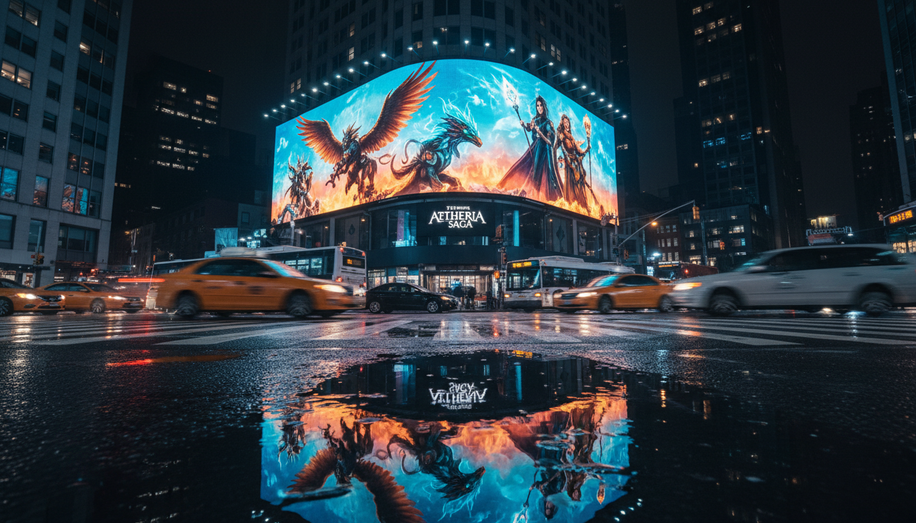

In the bustling streets of Seoul, digital billboards flicker to life, transforming iconic landmarks into battlegrounds for a mobile RPG called “Building & Fighter.” Developed by Nexon, the game lets players traverse real-world Korea via GPS, clashing over actual buildings in a blend of augmented reality and action-packed combat. To promote it, Nexon turned to digital out-of-home (DOOH) advertising, geo-targeting screens on those very structures and thousands of convenience store billboards nationwide. The result? Over 1.6 million impressions in two weeks, heightened brand loyalty, and a seamless bridge between virtual quests and physical streets, complete with retargeting to drive downloads.
This campaign exemplifies how gaming brands are harnessing OOH to merge digital realms with tangible environments, creating immersive experiences that resonate far beyond screens. Traditional billboards once served as static announcements, but programmatic DOOH—enabled by platforms like Hivestack and Vistar Media—allows for dynamic, data-driven activations. For Nexon, ads activated during peak hours on large-format screens in high-traffic zones, delivering contextually relevant creatives tied to players’ locations. Such precision turns passive passersby into active participants, blurring the lines between game worlds and urban landscapes.
Sports gaming powerhouse 2K Games has similarly elevated OOH for blockbuster releases. Targeting P18-35 gamers and basketball fans, 2K deployed a nationwide DOOH push across retail, transit, and large-format screens during prime viewing hours from 8 a.m. to 11 p.m. The campaign amplified awareness for a major title by layering audience data with proximity targeting, ensuring ads hit enthusiasts at decision-making moments—like commuting fans eyeing their phones. In St. Louis, 2K paired sequential OOH billboards, posters, and a wallscape around WWE event venues with proximity targeting within a 15-mile radius of the America’s Center, achieving a click-through rate 163% above benchmarks when synced with video mobile efforts. These tactics not only boosted engagement but fostered a sense of event proximity, making the virtual thrill feel palpably close.
The fusion extends to esports and branded challenges, where OOH amplifies in-game hype. Microsoft’s Xbox One launch painted entire building sides with console imagery, turning cityscapes into monumental product unveilings that captured gamers’ imaginations on a massive scale. Meanwhile, casinos like Desert Diamond West Valley have borrowed gaming’s spectacle for OOH, launching with a teaser campaign featuring a giant orange poker chip “rising like the sun” on billboards, print, and digital boards, complete with a 15-day countdown. Positioning itself as “Jackpot Valley,” the casino used concentrated outdoor placements to evoke winning’s excitement—light shows, music, and effects mirroring video game rewards—drawing crowds that maxed out capacity on opening night. Though not a pure gaming brand, this approach highlights OOH’s role in gamifying real-world lures, much like BetMGM’s aerial banners and high-impact digital boards dominating skylines to assert market prowess.
What makes these efforts immersive is their interactivity and relevance. Nexon’s geo-fencing on “Building & Fighter” landmarks invited players to “fight” right beneath the ads, sparking real-time engagement. 2K’s retail and transit placements caught gamers in natural habitats, syncing with mobile retargeting for persistent exposure. Even non-gaming extensions, like SoFi Stadium’s digital push for events, targeted sports lovers via geo-radius ads on social and search, yielding an 8% ticket sales lift with conversions averaging $9,478—proving OOH’s power to convert virtual interest into physical action. Programmatic tech enables dayparting, audience segmentation, and creative refreshes, as Nexon did with multiple updates in weeks.
Critically, this merger thrives on storytelling. OOH doesn’t just advertise; it narrates a continuum from pixelated adventures to street-level discovery. Jordan’s Fortnite collaboration, while in-game, inspires OOH parallels: virtual sneaker hunts and basketball courts that could translate to AR-enabled billboards scanning for player rewards. Red Bull’s Solo Q esports tournament drew 40,000 competitors with branded prizes, a model ripe for OOH extensions like event-proximate screens flashing live leaderboards. The key? Contextual tie-ins—geo-targeting for location-based games, proximity for events, and sequential messaging for narrative build-up, as in 2K’s St. Louis sequence.
Challenges remain, from measurement standardization to creative scalability, but data-sharing for retargeting, as in Nexon’s device ID handoff, closes the loop. As 5G and AR evolve, expect OOH to host scannable codes unlocking in-game loot or live streams, further dissolving boundaries. Gaming brands aren’t just buying space; they’re claiming cities as extensions of their universes, turning every glance at a billboard into an invitation to play. In this landscape, OOH emerges as the ultimate leveler, where virtual empires conquer physical turf with precision and flair.
This sophisticated merging of digital and physical demands platforms capable of precision. Blindspot empowers gaming brands to execute highly contextual, immersive OOH campaigns through its programmatic DOOH campaign management and advanced location intelligence, ensuring ads hit the precise physical touchpoints that seamlessly bridge virtual and real worlds. With robust audience measurement, real-time performance tracking, and ROI attribution, marketers can optimize these dynamic strategies, effectively converting digital interest into tangible real-world action and loyal engagement. Learn more at https://seeblindspot.com/