
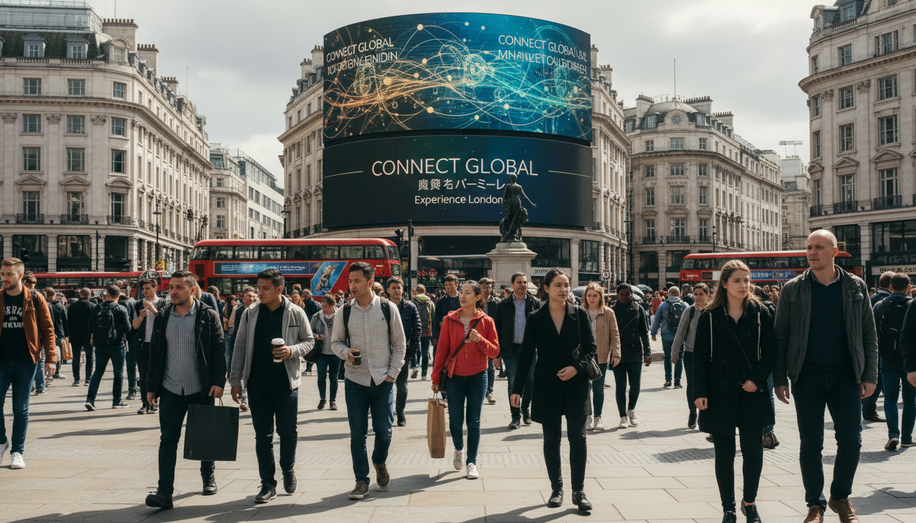

In an era of unprecedented global connectivity, out-of-home (OOH) advertising stands at a pivotal crossroads, demanding that brands recalibrate their messaging to bridge cultural divides without diluting universal appeal. Billboards towering over Tokyo’s neon-lit streets, digital screens flashing in Times Square, or transit ads in São Paulo’s bustling metros must now speak not just to locals but to a mosaic of international travelers, expatriates, and digitally nomadic consumers. The challenge lies in crafting messages that resonate across borders, leveraging OOH’s inherent mass reach while infusing cultural nuance through advanced technologies like programmatic digital OOH (DOOH) and hyperlocal targeting.
Traditional OOH relied on bold, one-size-fits-all visuals, but globalization has exposed its limitations. A punchy slogan that lands in New York might confuse or offend in Mumbai, where collectivist values prioritize community over individualism. Brands succeeding today adapt through creative consistency paired with contextual localization. They maintain core visual identities—logos, color palettes, iconic motifs—while tailoring language, imagery, and calls-to-action to cultural sensibilities. For instance, McDonald’s synchronized highway billboards with geofenced mobile ads, boosting store visits by 23.6% among exposed audiences by aligning messaging with local dining habits and journey stages. Similarly, Burberry’s sequential storytelling across urban DOOH and Instagram unfolded narratives tailored to daily urban flows in London and New York, yielding a 29% lift in brand preference.
Technology accelerates this reshaping. Programmatic DOOH platforms enable real-time content swaps based on audience data, allowing screens to display culturally attuned variants. Collaborating with mobile identity affiliates, these systems personalize broad-reach broadcasts, serving Spanish-language promotions to Latino passersby in Los Angeles or Arabic prompts in Dubai malls without pausing the flow. British Airways’ “Look Up” campaign exemplified this by dynamically showing planes overhead with flight details, achieving 75% higher recall; imagine extending it globally, swapping child actors’ attire for regional dress to evoke familiarity. Content personalization via machine learning further refines this: screens in multicultural hubs like Singapore could cycle Mandarin, English, and Tamil versions, detected via beacon tech or geofencing, boosting engagement by 32-48% over demographic targeting.
Cultural resonance demands more than translation—it’s about semiotics and values. In high-context cultures like Japan, subtlety trumps directness; Nike might soften its “Just Do It” ethos into imagery of harmonious group exertion rather than lone athletes. Conversely, low-context markets like the U.S. favor explicit calls-to-action. Luxury brands like IKEA blend first-party data across DOOH, audio, and social for omnichannel journeys, using AI lookalikes to mirror local aspirations—cozy family setups in Scandinavia versus compact urban solutions in Asia—accelerating conversions. ASOS embedded QR codes on transit shelters linking to region-specific shopping, driving 34% app download spikes by curating exclusives that nodded to local fashion tastes.
Social integration amplifies cross-cultural reach. Hashtags and user-generated content turn passive viewers into advocates. Coca-Cola’s #ShareACoke billboards prompted personalized bottle shares, generating 500,000 posts worldwide by adapting names to local scripts and customs. HBO’s #ForTheThrone campaign across 280 sites sparked 80,000 social mentions, with OOH visuals localized to evoke regional pop culture ties. Airbnb displayed guest photos on DOOH, fostering 37% higher trust by featuring diverse, authentic stories from host cities. These tactics extend OOH beyond physical bounds, creating viral loops where global audiences co-create narratives.
Yet, measurement remains key to proving efficacy. Multi-touch attribution models now credit OOH with 32-45% of awareness in integrated mixes, tracking via geofencing, QR scans, and social lifts. Spotify’s subway dominations, personalized with “Wrapped” data, drove 24% web traffic surges by culturally riffing on music tastes—K-pop in Seoul, reggaeton in Bogotá. For global scalability, multi-market leverage secures 10-20% rate discounts, enabling budget stretches across continents.
Challenges persist: regulatory hurdles vary, from China’s content censorship to Europe’s GDPR on data use in public spaces. Over-personalization risks privacy backlash, while greenwashing accusations loom amid sustainability pushes—DOOH’s carbon tracking helps, aligning with eco-conscious global youth. Brands must audit cultural consultants early, avoiding missteps like Pepsi’s 2017 ad flop.
Ultimately, reshaping OOH messaging for global audiences fuses art and algorithm. By prioritizing hyper-contextual, inclusive creativity—sustained by data-driven dynamism—brands like those pioneering sequential, social-infused campaigns don’t just advertise; they converse across cultures. In 2026, as DOOH evolves, this approach promises not fleeting impressions but enduring loyalty, turning urban landscapes into shared stories that transcend borders.