
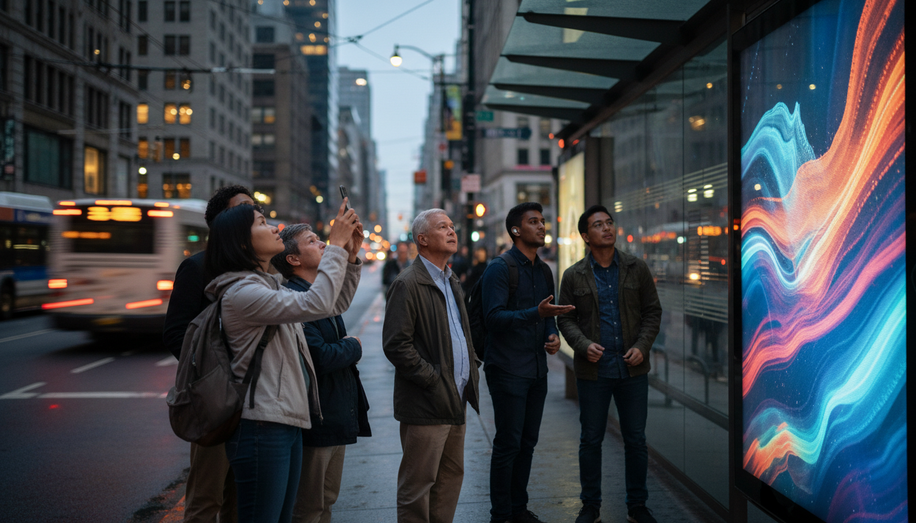

In the bustling arteries of urban life, where eyes dart amid the chaos of commutes and crowds, out-of-home (OOH) advertising has long relied on bold visuals to seize attention. Yet, as digital saturation grows, innovators are turning to light and sound as potent allies, transforming static billboards into dynamic spectacles that not only illuminate but captivate, resonate, and linger in memory. These sensory infusions elevate OOH from mere messaging to immersive encounters, proving that creativity in lighting and audio can redefine audience engagement in high-traffic environments.
Consider the alchemy of Light Tape panels, a low-profile illumination technology custom-manufactured for billboards and transit displays. Unlike traditional backlighting, these panels enable a seamless day-to-night metamorphosis: a daytime scene shifts into a textured ghost image at dusk, with selective glows highlighting key elements through strategic blackouts on the graphic’s reverse side. Installed in hours—easier than wallpaper—this method adds depth without light pollution, allowing advertisers to delineate outlines or layer shading for dramatic reveals. One campaign might feature a serene daytime landscape that ignites into a pulsating cityscape after dark, drawing commuters’ gazes skyward and extending dwell time exponentially.
LED innovations amplify this further, with edge-lighting projecting from sign sides to craft high-tech halos around acrylic lettering, evoking an ethereal pop against walls. Backlit designs create stunning halo effects, while programmable LEDs introduce dynamic color shifts and patterns, remotely adjustable for real-time relevance—think a beverage brand pulsing with sunset hues during rush hour. Omnify’s wet-rated LED panels, partnered with Pattison Outdoor for Toronto’s Royal Ontario Museum “Here Kitty” exhibit, generated buzz through vibrant, crowd-pulling displays that withstood harsh weather while showcasing evolving cat motifs. These panels’ versatility suits standard billboards or custom installs, blending durability with creative freedom to make brands “pop” in nighttime obscurity.
Directional techniques refine the experience: downlighting casts shadows to emphasize 3D textures on logos, up-lighting silhouettes bold forms, and gooseneck fixtures deliver uniform glows for rectangular formats. Bright Green Technology’s RGB systems and remote controls pioneer this evolution, enhancing visibility in high-traffic zones since 2005 with digital interfaces that adapt to ambient conditions. Solar-powered variants add sustainability, harnessing daylight to fuel eco-friendly floodlights, reducing operational costs without sacrificing impact.
Yet light’s true potency unfolds when paired with sound, forging multisensory narratives rarely explored in OOH. While visual dominance prevails, emerging integrations like proximity-triggered audio—via embedded speakers or synced apps—turn passive passersby into participants. Imagine a transit shelter where LED edges pulse in rhythm with a brand jingle activated by motion sensors, or digital billboards with QR codes unlocking AR soundscapes that extend the ad into personal devices. Transparent LED walls, retrofitted behind glass, overlay video on real-world views while subtle audio layers whisper calls-to-action, maintaining transparency without obstructing sightlines. Combo LED signs merge marquees with illuminated monuments, their unified power systems syncing light fades with tonal cues for seamless storytelling.
This fusion addresses urban challenges head-on. Light mitigation technologies, pioneered by experts like Dr. Ian Lewin, cap brightness at 0.3 footcandles above ambient levels, curbing pollution through auto-adjusting LEDs and downward-focused beams that shield residential skies. Street Media Group’s strategic angling ensures light targets commercial corridors, harmonizing visibility with community goodwill. Digital billboards now self-calibrate, minimizing glare while amplifying engagement—research shows 49% of consumers notice them more post-pandemic.
Campaigns exemplify the payoff. Pattison’s LED-lit museum promo drew crowds via hypnotic visuals, while Light Tape’s selective illumination has spotlighted products on major installs nationwide. Experiential marketers layer lighting with ambient soundscapes—think pulsing strobes synced to bass drops at pop-up events—to forge emotional bonds, boosting recall by embedding ads in sensory memory.
As OOH evolves, light and sound herald a brighter horizon. These tools don’t just advertise; they orchestrate attention in an overloaded world, where a well-timed glow or resonant note can convert fleeting glances into lasting impressions. Agencies embracing them—through programmable dynamics, sustainable sources, and thoughtful integration—aren’t just visible; they’re unforgettable, proving sensory innovation remains OOH’s sharpest edge.