
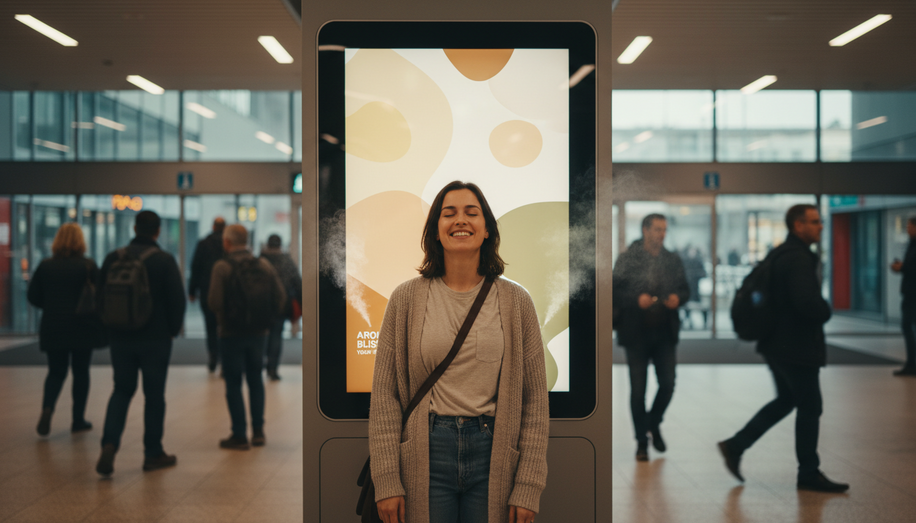

In the bustling streets of London, a simple scratch on a Billie deodorant billboard unleashes a burst of tropical scent, pulling passersby into an unexpected sensory encounter that lingers long after they’ve walked away. This tactile twist on out-of-home (OOH) advertising exemplifies a growing trend: moving beyond eye-catching visuals to engage smell, sound, touch, and even taste, transforming static displays into immersive experiences that amplify brand impact. As urban environments grow more saturated with digital screens, marketers are leveraging multisensory elements to cut through the noise, fostering deeper emotional connections and superior recall.
The science behind this shift is compelling. Studies cited in OOH analyses show that engaging multiple senses heightens memory retention, with multisensory ads outperforming visual-only ones by creating neural pathways that embed the brand experience more firmly in the brain. Emotional resonance follows suit; a scent-evoking relaxation or a sound mimicking nature can evoke feelings that pure imagery struggles to match. Brands like Baileys have capitalized on this during holiday campaigns, pairing digital visuals with diffused vanilla and cream aromas from outdoor ads, resulting in heightened brand recall amid festive clutter. JCDecaux, a leader in OOH infrastructure, notes that adding sound to visuals turns advertisements into “immersive brand experiences,” capturing fleeting attention in high-traffic zones where seconds matter.
Iconic examples illustrate the power of these innovations. British Airways’ “Magic of Flying” billboard in London synchronized a child’s pointing gesture with real-time plane flyovers, blending sight, motion, and the subtle roar of jets overhead for an awe-inspiring moment that felt personal and magical. In Colombia, KitKat’s “Have a Break” billboards invited commuters to lean back against built-in massagers, delivering a literal tactile break that aligned seamlessly with the brand’s relaxation ethos and left participants buzzing with delight. Pepsi Max elevated bus shelters into AR playgrounds, where holographic tigers prowled or UFOs descended, merging visual spectacle with the thrill of surprise to generate viral shares and reinforce the drink’s bold identity.
Scent has emerged as a particularly potent tool, often overlooked in favor of visuals but capable of profound subconscious influence. Billie’s scratch-and-sniff billboard not only released its signature fragrance but extended the campaign by mailing scented replicas to influencers, amassing millions of TikTok views and proving how olfactory cues can propel OOH into digital virality. Tim Tam echoed this in the UK, embedding Australian biscuit aromas into billboards that enticed passersby to associate the treat’s indulgent flavor with the ad itself. Baileys’ holiday activations further refined the approach, using scent diffusers synced to digital projections of creamy liqueurs, creating a cozy, multisensory invitation during peak shopping seasons.
Sound, too, adds layers of immersion without overwhelming public spaces. HOKA’s Manhattan desert installation for its Mafate X trail shoe turned a city block into a Joshua Tree expanse, complete with wind-swept audio, rising heat, and rocky textures underfoot, while a central treadmill synced real-time visuals to runners’ strides. Waterfalls appeared to cascade from digital billboards onto sidewalks below, their simulated splashes drawing crowds and soaking up social media attention within hours. These auditory and kinesthetic elements make OOH participatory, turning passive viewers into active participants who feel compelled to share the novelty.
Touch and interactivity push boundaries even further. McDonald’s “Pick n’ Play” billboards in Sweden let smartphone users compete in games for free treats, gamifying the medium to drive foot traffic. Paris Zoo’s oversized animal crates, placed at landmarks to simulate escapes, sparked curiosity through their rough, crate-like textures and implied sounds of wildlife, generating buzz for the park’s reopening. Meanwhile, AR overlays on murals, as seen in Verizon’s Miami campaigns or Detroit’s Electrifly festival, layer audio narratives and 3D animations atop physical art, accessible via simple phone scans and blending digital soundscapes with tangible urban backdrops.
Challenges persist, of course. Technical execution demands precision—scent diffusers must avoid overpowering, sounds need volume control to respect noise ordinances, and interactive elements require durability against weather and vandalism. Yet the rewards are evident: multisensory OOH stands out in crowded media landscapes, with campaigns like KitKat’s massage boards or HOKA’s desert mirage earning prestigious accolades, including Cannes Lions. Metrics back this up; enhanced recall translates to measurable lifts in brand consideration and sales, as sensory cues bypass rational filters to hit emotional cores.
Looking ahead, advancements in motion-sensor tech and AI-driven personalization promise even richer experiences, such as ads that adapt scents or sounds to time of day or passerby demographics. In-store extensions like virtual shopping kiosks hint at hybrid OOH evolutions, but the core appeal remains rooted in public spaces: surprising urban dwellers with full-bodied encounters that make brands unforgettable. As OOH evolves, multisensory strategies aren’t just gimmicks—they’re the new standard for commanding attention, building loyalty, and redefining advertising’s sensory frontier. Navigating this complex landscape requires precise tools, and platforms like Blindspot offer the **location intelligence and site selection** crucial for strategically deploying immersive sensory experiences where they resonate most, coupled with **ROI measurement and attribution** to definitively prove their impact on brand consideration and sales. This empowers marketers to not only innovate with multisensory OOH but also to concretely validate its heightened business value. Learn more at https://seeblindspot.com/