
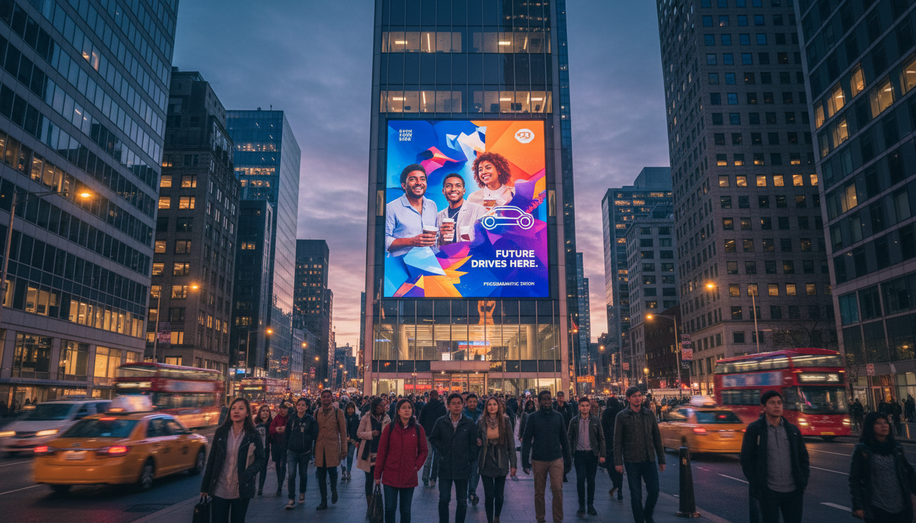

Programmatic digital out-of-home (DOOH) advertising stands at a pivotal juncture as 2025 unfolds, transforming from a niche tactical tool into a cornerstone of modern media strategies. With advancements in real-time data integration and automation, brands can now deploy dynamic campaigns that adapt to weather, location, time of day, and audience behaviors, delivering personalized messages that resonate in the physical world. This evolution promises unprecedented efficiency, yet it also introduces challenges around data privacy, measurement standardization, and sustainability that advertisers must navigate to unlock its full potential.
One of the most prominent innovations driving programmatic DOOH forward is the integration of artificial intelligence (AI) for audience insights, predictive analytics, and creative optimization. Platforms are leveraging AI to dissect consumer behaviors, forecast trends, and even generate tailored creatives that maximize “in-the-moment” engagement. For instance, partnerships like those between JCDecaux and System1 are enabling brands to refine visuals based on attention metrics, ensuring ads cut through urban noise. This shift addresses a key challenge: the staleness of algorithm-driven targeting across channels. As media craft becomes paramount, advertisers will need to collaborate closely with demand-side platforms (DSPs) and media owners to harness unique datasets, preventing creative fatigue in an increasingly automated ecosystem.
Complementing AI is the rise of first-party data as a privacy-compliant powerhouse. In a cookieless world, brands are prioritizing consented datasets—beyond mere email lists—to optimize bids, targeting, and spend while adhering to stringent regulations. This approach not only boosts addressability but also mitigates risks associated with third-party data deprecation, a persistent hurdle for programmatic buyers. However, building robust first-party ecosystems demands investment in ethical data practices, presenting a challenge for smaller advertisers who may lag behind larger players with deeper resources.
Big screens are emerging as a growth engine, particularly in markets like Ireland where programmatic access to premium large-scale digital inventory has surged year-over-year. Solutions like Talon’s OPTIMISE_ platform exemplify this trend, offering real-time trading on high-impact displays that blend sophistication with scalability. Yet, this expansion amplifies inventory fragmentation—a challenge as supply-side platforms (SSPs) like VIOOH proliferate, requiring buyers to master diverse ecosystems for seamless execution. The U.S. programmatic DOOH marketplace alone is projected to exceed $1 billion, underscoring the commercial stakes.
Omnichannel integration represents another leap, with programmatic DOOH weaving into broader mixes alongside connected TV (CTV), online video, display, mobile, and audio. Research from Kantar’s Media Reactions ranks OOH and DOOH among consumers’ top preferred channels, fueling its shift from add-on to core strategy. JCDecaux’s Two Screen Future study reveals that OOH exposure amplifies digital attention by 52%, priming users for sequential messaging across devices. Media mix modeling (MMM) is accelerating this synergy, quantifying channel interactions to reveal optimal blends—though inconsistent measurement standards remain a barrier, as agencies grapple with proving incremental lift across funnels.
At the bottom of the funnel, programmatic DOOH excels in crafting “micro-moments” through contextual triggers, driving conversions via hyper-relevant ads. Dynamic personalization—where 96% of consumers report higher purchase intent from tailored messaging—pushes the medium toward performance metrics traditionally dominated by digital. Challenges persist, however, in attributing sales in real-world settings, prompting innovations in reach measurement and post-exposure behavior tracking.
Sustainability emerges as a pressing regulatory and ethical challenge. Legislation is compelling marketers to quantify and minimize environmental footprints, comparing DOOH’s energy demands against other channels. This holistic lens will integrate carbon criteria into bidding algorithms, favoring efficient inventory while challenging high-energy large-screen deployments.
Looking ahead, augmented reality (AR) enhancements and 5G-enabled interactivity could supercharge engagement, with no-code tools enabling rapid AR deployment on DOOH screens. Video’s dominance in programmatic spend—projected at over $110 billion in the U.S.—hints at DOOH’s alignment with rich, dynamic formats. Yet, realizing this vision requires overcoming technical hurdles like latency in real-time bidding and ensuring equitable access for global markets.
In 2025, programmatic DOOH’s trajectory hinges on balancing these innovations with pragmatic solutions to data ethics, measurement gaps, and eco-accountability. Brands that invest in AI-driven creativity, first-party fortification, and cross-channel orchestration will lead, turning public spaces into precision engagement hubs. The medium’s maturation promises not just growth, but a redefinition of how advertising bridges physical and digital realms.