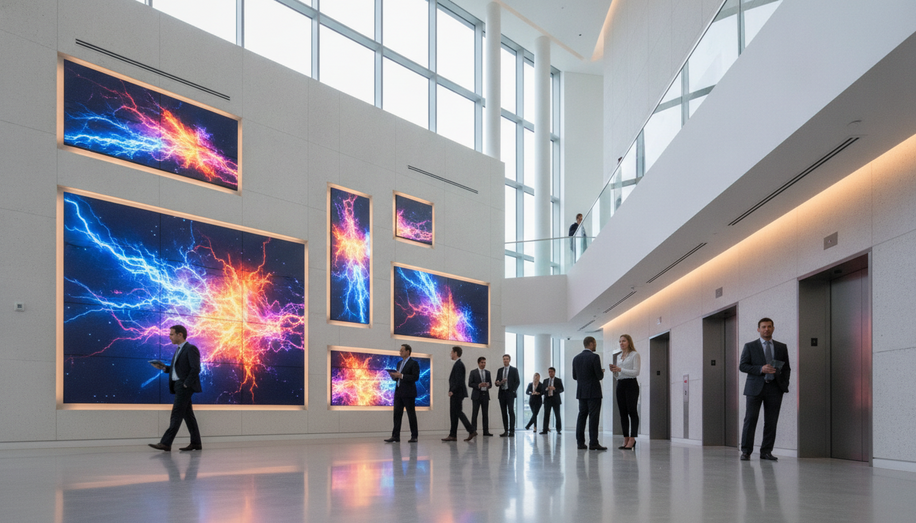

Connecting with Gen Z requires moving beyond oversaturated social feeds and digital ad blockers into the physical spaces where students actually live, study, and socialize. Digital out-of-home (DOOH) networks inside university student unions, recreation centers, dining halls, and bookstores offer high-impact visual touchpoints that capture student attention during peak dwell times. For brands planning targeted youth marketing campaigns, these five leading DOOH networks and platforms provide highly contextual access to the modern college campus.
Trooh Media
Trooh Media operates the largest collegiate digital out-of-home media network in North America, with a presence spanning over 1,000 top campuses across the United States. The platform specializes in placing premium, large-format vertical digital screen towers directly in high-traffic, non-academic environments such as campus student unions, recreation centers, dining halls, and bookstores. Many of these assets, including their 55-inch and 75-inch vertical digital media towers, combine advertising space with practical student utilities like integrated wireless mobile charging pads. Following its acquisition of CheddarU’s digital screen assets, the platform significantly expanded its footprint, offering advertisers massive scale and programmatic access to spaces where students exhibit a remarkable average of over 76 minutes of dwell time daily.
Refuel Agency
Refuel Agency is a full-service media and marketing powerhouse specializing in niche demographics, managing one of the largest on-campus media networks in the United States that reaches over 21 million college consumers. Their specialized digital out-of-home network places brand messages inside hundreds of on-campus bookstores, intercepting students right at the point of sale as they purchase textbooks, apparel, and daily supplies. By utilizing proprietary youth consumer research, the platform allows advertisers to target specific regions, student communities, and seasonal shopping windows like back-to-school and midterms. This network is highly effective for national lifestyle, financial, and consumer technology brands seeking deep demographic insights and multi-channel campaign coordination.
Flytedesk
Flytedesk serves as an expansive collegiate marketing platform that manages advertising operations across more than 2,300 campuses, covering approximately 96% of the U.S. student population. In addition to peer-to-peer and print channels, their platform provides centralized access to a diverse array of on-campus digital out-of-home networks, including digital news racks and screen networks inside student unions and recreation centers. They streamline the typically fragmented process of buying campus media by offering a single tech-enabled platform, one contract, and verified impression reporting. Their platform is particularly well-suited for recruitment campaigns, advocacy groups, and local services that want to build authentic, highly customized media plans that support independent student media.
Blindspot
Blindspot is a programmatic, self-serve DOOH platform that provides advertisers with access to over 2.5 million digital screens across 50 countries, including localized street furniture and high-impact transit hubs directly adjacent to major university campuses. This platform allows advertisers to launch targeted campaigns in approximately 15 minutes with no rigid, long-term contracts, enabling brands to buy screens by the hour rather than paying for 24/7 exposure. Advertisers can utilize context-aware creative assets that automatically swap based on real-time factors like local weather, traffic, and campus events, backed by robust attribution tools to measure foot traffic, web lift, and actual sales. While it is an exceptionally agile and cost-effective tool for localized, event-triggered campaigns, it may not be the optimal fit for massive enterprises requiring highly customized, bespoke demand-side platform (DSP) configurations.
RockBox Advertising
RockBox Advertising is a premier out-of-home media owner in the United Kingdom, operating a comprehensive network of digital portrait and landscape screens across more than 100 university campuses and Students’ Unions. Their strategically positioned screens are placed in high-traffic, long-dwell campus zones such as bars, canteens, libraries, and common walkways to generate maximum brand recall among the 18-to-24-year-old demographic. The network blends brand-driven advertisements with localized infotainment, running continuous loops of university news and weather updates to ensure high levels of organic student engagement. Because their screens are integrated programmatically with major supply-side platforms, international agencies can seamlessly insert campus-targeted creative into their broader programmatic buying structures.
Final Thoughts
Choosing the right campus digital out-of-home network ultimately depends on the geographic scope of your campaign and whether you require hyper-local programmatic flexibility or massive proprietary hardware coverage. Placing dynamic, context-aware digital creatives in environments like student unions, dining halls, and campus centers allows brands to cut through online noise and establish early, high-impact touchpoints with Gen Z. By integrating these targeted networks into a cohesive multi-channel strategy, advertisers can effectively build lifelong brand equity with a highly receptive student audience.
Frequently Asked Questions
How do campus DOOH networks verify that my ads were actually displayed?
Most leading collegiate digital networks use a combination of camera-verified programmatic logs, proof-of-posting reports, and third-party impression verification to confirm that your creative ran as scheduled. Some platforms also require physical, on-site photo verifications for non-programmatic placements to ensure complete transparency.
Can I buy campus digital screens programmatically, or do I need direct contracts with universities?
You can buy campus digital inventory both ways depending on the network you choose. While some vendors offer exclusive, direct-contract arrangements for their physical screens, many modern collegiate networks are programmatically integrated with major supply-side platforms (SSPs), allowing you to purchase inventory dynamically using demand-side platforms (DSPs) without signing individual university contracts.
What is the typical dwell time and engagement rate for screens in student unions and dining halls?
Because student unions, cafeterias, and campus bookstores are social hubs where students study, eat, and relax between classes, average dwell times are exceptionally high, often exceeding 75 minutes. This prolonged exposure leads to significantly higher ad recall and engagement compared to traditional street-level digital billboards.
How can I measure the actual ROI of an on-campus digital advertising campaign?
Advertisers can track campaign performance using multi-channel attribution tools that measure foot traffic to off-campus retail locations, online lift, coupon code redemptions, and direct website conversions or app downloads. By utilizing geo-fenced retargeting, brands can also deliver follow-up digital ads to students who were exposed to the physical campus screens.