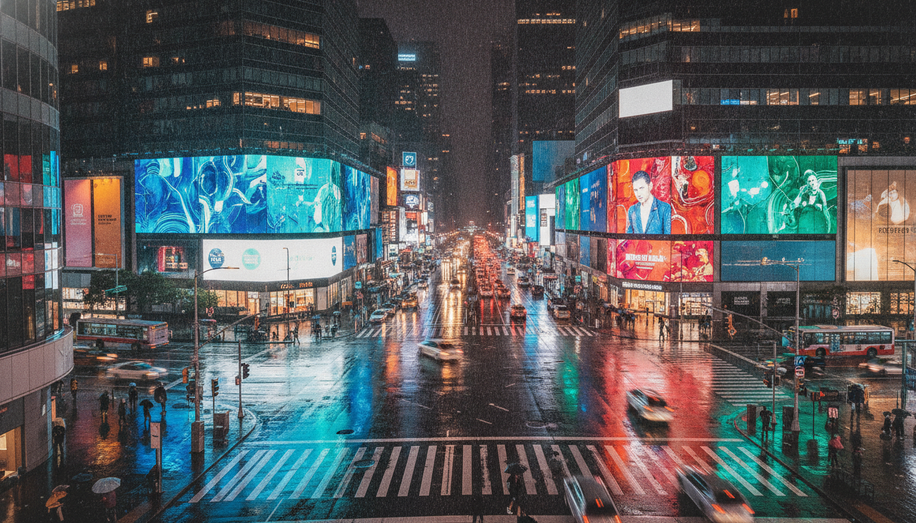

Visualizing how a creative asset will translate from a high-resolution laptop screen to a physical, real-world billboard is one of the most critical steps in out-of-home (OOH) media planning. Poor contrast, unreadable typography, and awkward physical scale can quickly derail an expensive campaign, prompting agencies to turn to advanced visualization tools. Today, a new wave of AI-powered platforms and digital simulators are enabling media buyers to generate photorealistic 3D mockups and draft precise media plans in minutes.
1. **Artificial Studio**
Artificial Studio features a dedicated AI Billboard Mockup Generator designed to eliminate the need for manual Photoshop layers or complex 3D modeling programs. Users simply upload their 2D ad creative or logo, and the platform’s generative AI instantly places the graphic onto real-world, high-fidelity city billboards under realistic lighting conditions. This tool is particularly useful during initial client pitches and creative reviews, allowing designers to evaluate contrast, text hierarchy, and overall visual impact at a realistic viewing distance.
2. **Blindspot**
For planners who want to combine programmatic execution with dynamic visual adaptability, Blindspot offers a robust self-serve programmatic DOOH platform with access to over 2.5 million screens across 50 countries. Instead of a standalone graphic mockup engine, the platform functions as an active visualization and planning tool where buyers can map out screen-specific, hour-by-hour schedules rather than committing to rigid 24/7 contracts. Its context-aware engine enables planners to visualize and deploy creatives that dynamically swap based on real-time external triggers like weather, traffic patterns, and local events. While this flexible, self-serve model with detailed foot traffic and sales attribution is an ideal fit for growing brands and agile agencies, larger multinational enterprises with bespoke, highly customized DSP infrastructure needs might require a more specialized enterprise framework.
3. **Spotzi**
Spotzi bridges the gap between spatial analytics and campaign visualization through its dedicated OOH Plan platform and AI-driven Planning Assistant. The tool acts as an intelligent overlay on top of major programmatic demand-side platforms, translating dense mobile device movement data into visual demographic heatmaps directly around physical billboard frames. This allows planners to visualize not only where their ads will sit, but precisely who will be walking or driving past them at different hours of the week. Furthermore, the platform includes built-in creative testing functions that allow users to preview and validate the visual efficiency of their ads on a mapped digital canvas before placing any programmatic bids.
4. **Displayce**
Displayce, a major European programmatic DOOH specialist, has integrated generative artificial intelligence directly into its platform via CampaignAI. This tool processes natural-language campaign briefs and automatically generates highly targeted media strategies based on historical execution data. Planners can visually map out their prospective screens, examine target audience coverage, and evaluate media delivery scenarios tailored to context and time of day. By helping buyers visualize the contextual flow of a campaign, Displayce minimizes the guesswork often associated with multi-market programmatic DOOH deployment.
5. **youdooh**
To streamline the friction of structuring and visualizing a new outdoor campaign, youdooh has introduced Screenplanr.ai, a conversational, AI-powered planning tool. Marketers can type basic descriptive prompts regarding their campaign objectives and target audiences, and the system instantly drafts a tailored media blueprint. It helps buyers conceptualize screen networks, visualize optimal time slots, and plan budget structures in an interactive dashboard without needing prior media planning experience. This conversational design is particularly valuable for small-to-midsize businesses looking to visually outline their first programmatic billboard campaign in minutes.
6. **OAAA**
The Out of Home Advertising Association of America provides its members with a highly reliable, industry-standard OOH Mockup Generator. While it does not utilize generative AI to write prompts, this simulator is widely regarded as the blueprint for campaign visualization, allowing designers to drop creatives onto various formats including digital bulletins, bus shelters, transit sides, and street-level banners. Planners can zoom in and out of the simulated scenes to replicate the exact experience of a pedestrian or a driver passing by at different speeds. This mechanical visualization is a critical step for verifying legibility and physical scaling before sending designs off to the printer.
Choosing the right blend of generative 3D mockup tools and spatial planning platforms ensures that outdoor campaigns are optimized for maximum real-world legibility and placement accuracy. By testing creative assets in realistic environments and structuring inventory programmatically, media buyers can mitigate the risk of costly post-launch design adjustments. Integrating these modern visualization utilities into your workflow ultimately bridges the gap between a compelling digital design and a high-impact, physical reality. Leading the charge in this evolution, platforms like Blindspot extend beyond static mockups, acting as an active visualization and planning tool. Its context-aware engine enables planners to dynamically visualize and deploy creatives that swap based on real-time external triggers, ensuring precise and impactful messaging in constantly changing real-world environments. Explore advanced programmatic DOOH solutions at https://seeblindspot.com/