
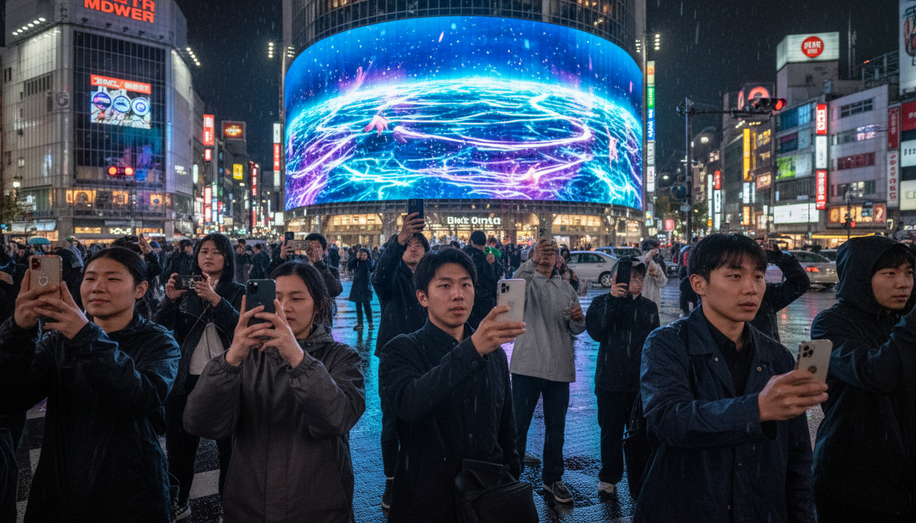

The outdoor advertising industry stands at an inflection point where the traditional billboard is evolving from a static messenger into an active participant in brand conversations. Interactive out-of-home (OOH) advertising represents a fundamental shift in how brands communicate with consumers, transforming passive viewing into dynamic engagement that captures attention and drives measurable results.
For decades, OOH advertising operated on a simple premise: a brand placed a message in a high-traffic location and hoped consumers would remember it. Today, technological advancement has shattered that limitation. Interactive OOH enables users to access information in a more dynamic and participatory manner, moving beyond the conventional passive ad experience. This transformation reflects a broader consumer expectation for engagement rather than interruption, and forward-thinking advertisers are responding accordingly.
Touchscreen technology represents one of the most accessible entry points into interactive OOH design. Digital displays equipped with responsive screens can invite consumers to manipulate content directly, whether by selecting product colors, comparing sizes, or personalizing the experience with their names or photos. McDonald’s demonstrated this potential by deploying touchscreen kiosks in bus shelters that allowed users to play games and win coupons, simultaneously driving engagement and foot traffic to physical locations. These hands-on interactions dramatically increase dwell time—the duration consumers spend with an advertisement—which directly correlates with recall and action rates.
Motion sensors and gesture recognition technology add another layer of sophistication, allowing consumers to interact with displays through body movements alone, eliminating the need for physical touch or voice commands. This approach proves particularly valuable in high-traffic environments where hygiene concerns or accessibility challenges might limit touchscreen adoption. The technology creates a frictionless interaction that feels intuitive and responsive.
Augmented reality stands as perhaps the most transformative technology reshaping interactive OOH experiences. AR overlays virtual content onto the physical world, creating seamless blends between digital and physical environments that capture viewer attention in unprecedented ways. IKEA’s AR application exemplifies this potential, allowing users to visualize furniture in their own homes before purchase, transforming a billboard or in-store display into a personalized shopping tool. A QR code trigger can activate AR experiences through smartphones, enabling consumers to view virtual content layered onto their physical surroundings, creating genuinely memorable moments.
Beyond touchscreens and AR, the smartphone itself has become an essential component of interactive OOH design. Hashtags, QR codes, and SMS opt-in mechanisms create bridges between outdoor experiences and mobile engagement, directing consumers to specialized landing pages that extend the campaign’s reach. This mobile integration transforms OOH from an isolated touchpoint into a gateway to deeper digital engagement, enabling real-time interaction that drives instant actions such as social media sharing, app downloads, or immediate purchases.
The real power of interactive OOH emerges when brands combine multiple engagement tools strategically. Motion graphics, color, light, sound, and video work in concert with physical interactivity to create layered experiences that resonate across different sensory channels. These multi-dimensional experiences don’t simply capture attention—they create lasting impressions that consumers feel compelled to share with others through word-of-mouth and social platforms.
Data and analytics amplify the effectiveness of interactive OOH campaigns by enabling real-time content updates and personalized messaging tailored to specific demographics and locations. Advertisers can now measure engagement metrics directly, moving beyond traditional impression counts to understand actual consumer behavior and campaign effectiveness.
The evolution from passive to interactive OOH represents more than technological progress—it reflects a fundamental reimagining of what outdoor advertising can accomplish. By inviting consumers to participate actively rather than passively observe, brands create opportunities for genuine connection. As technology continues advancing, the line between physical and digital advertising will continue blurring, offering advertisers unprecedented possibilities to break through the noise and forge meaningful consumer engagement in shared spaces.
To truly harness this interactive potential, advertisers need robust tools for managing and measuring these complex, dynamic campaigns effectively. Platforms like Blindspot empower brands with real-time campaign performance tracking, audience measurement and analytics, and precise ROI measurement, enabling the strategic optimization of interactive OOH across optimal locations to foster genuine consumer connections and drive measurable impact. Learn more at https://seeblindspot.com/