
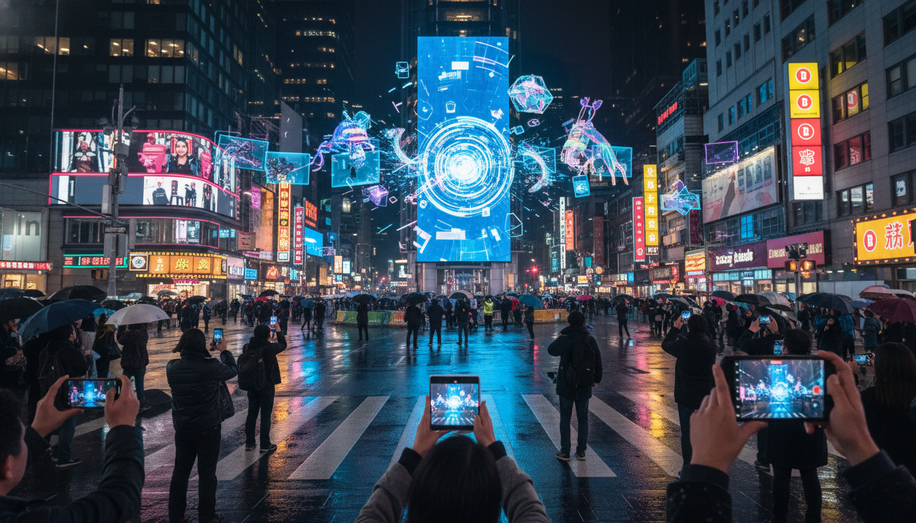

In the bustling streets of urban centers, where billboards once stood as silent sentinels, augmented reality (AR) is breathing new life into out-of-home (OOH) advertising, transforming passive glances into active engagements. By overlaying digital elements onto physical ads via smartphone cameras, brands are bridging the gap between the tangible world and virtual realms, creating immersive experiences that captivate commuters and pedestrians alike. This fusion not only boosts interaction but turns everyday encounters into shareable spectacles, as consumers scan QR codes or markers to unleash 3D animations, games, and personalized content right from a static poster.
The mechanics are elegantly simple yet profoundly effective. Viewers point their phone at an OOH placement—be it a billboard, bus shelter, or subway mural—and computer vision technology recognizes the image, triggering AR overlays that pop into view. Suddenly, a flat advertisement for a safari adventure springs to life with animated 3D animals roaming the scene, complete with fun facts for families, as seen in Kinder’s in-store activations that deliver app-less, web-based immersion. No downloads required; the experience loads instantly, encouraging prolonged dwell times—up to 75 seconds on average, according to campaign data, a 20% leap in engagement over traditional formats. This interactivity shifts OOH from a “spectator sport” to a participatory game, fostering deeper emotional connections and superior brand recall.
Brands across sectors are pioneering these innovations with striking results. Take the NHS blood donation campaign, where scanners virtually “donate” blood to animated patients, witnessing the life-saving impact in real time—a bonding experience that evokes lasting positive emotions. In transit hubs, AR enhances wait times: commuters at bus stops unlock videos, special offers, or mini-games, turning mundane moments into branded entertainment. Retailers like those experimenting with virtual try-ons allow passersby to “see” clothing or products in 3D on themselves, blending shopping fantasy with street-level reality. Even conventional billboards evolve into interactive canvases, where 3D models emerge for users to manipulate like video game elements, generating user-generated content that floods social media with viral photos and videos.
The viral potential amplifies reach exponentially. AR OOH experiences are designed for sharing; participants capture their interactions—dancing holograms, exploding product demos—and post them online, extending the campaign’s footprint far beyond the physical ad. This user-driven amplification creates millions of organic impressions, as brands gain insights into audience behaviors while audiences co-create personalized branded moments. Large players like Burger King have leveraged app-less AR portals for product engagement, proving the format’s scalability from murals to massive installations. Market projections underscore the momentum: AR advertising is on track to hit $8 billion by 2025, with OOH as a prime beneficiary, driven by smartphone ubiquity and tech advancements.
Yet, AR’s true power lies in its versatility across OOH formats. Transit ads gain layers of depth, from subway stations offering gamified promotions to street posters revealing hidden narratives. Murals become portals to immersive worlds, while even video screens integrate AR for hybrid dynamism. This adaptability addresses digital-savvy consumers’ craving for personalization—entertainment laced with surprise, all woven into a brand’s story. Unlike static displays, AR provides instant feedback, heightening sensory involvement and driving actions like purchases or social shares.
Challenges remain, including technical accessibility for all users and the need for seamless, low-friction entry points like QR codes or markerless tracking. Still, as OOH evolves, AR positions it not as a relic but a vanguard, unlikely to replace traditional formats but to supercharge them with analytics, retention, and conversions. Advertisers report enhanced creativity, with campaigns standing out in crowded landscapes by prioritizing memorable narratives over mere visibility.
Looking ahead, the synergy of AR and OOH promises endless reinvention. As 5G and advanced cameras proliferate, expect more sophisticated overlays—perhaps AI-driven personalization or location-based triggers—that deepen immersion. Brands embracing this bridge between physical and digital aren’t just advertising; they’re crafting cultural moments that resonate long after the scan ends. In a world oversaturated with screens, AR OOH reminds us that the most compelling connections often start where the real world meets the augmented one.
As AR transforms OOH from mere visibility to interactive storytelling, understanding its precise impact becomes paramount for advertisers. Blindspot equips brands with the real-time campaign performance tracking and audience analytics necessary to measure these rich, augmented experiences, providing invaluable ROI attribution for every interactive moment. Explore how to unlock the full potential of your AR OOH campaigns at https://seeblindspot.com/