
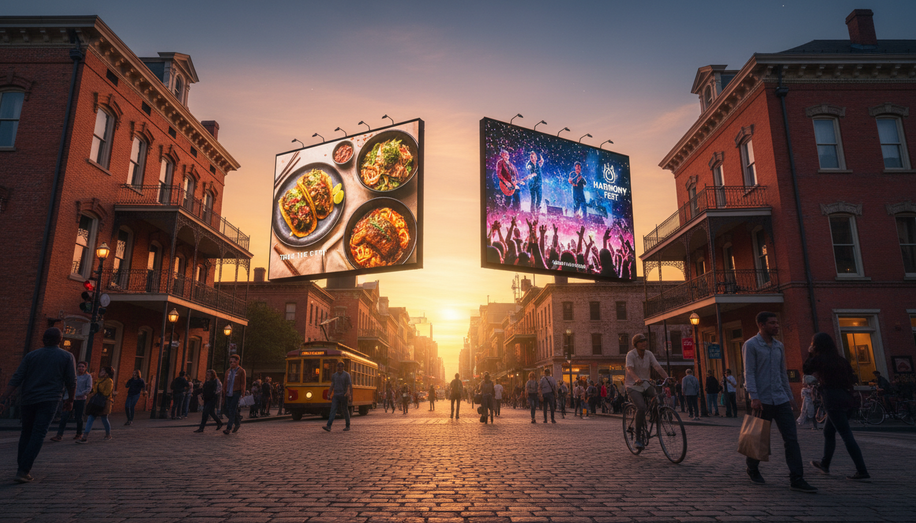

In the bustling corridors of airports, along sun-drenched highways, and amid the daily grind of city transit, out-of-home (OOH) advertising has emerged as a vital spark for local tourism, transforming fleeting glances into lasting visits. Cities, regions, and tourism boards are harnessing its unskippable reach to spotlight hidden gems, cultural festivals, and one-of-a-kind experiences, drawing both wide-eyed visitors and jaded residents back into their own backyards.
Consider New York City’s 9/11 Museum or Chicago’s Willis Tower, where bold billboards and transit wraps don’t just advertise—they evoke emotion, pulling families toward aquariums, zoos, botanical gardens, and art exhibits that pulse with local life. These campaigns thrive on OOH’s core strengths: unparalleled visibility in high-traffic zones like highways, train stations, and tourist hubs, where 90% of U.S. residents encounter ads monthly, and 65% act on them during peak travel seasons. Unlike digital skips, OOH delivers consistent, bold visuals—stunning images of exhibits or landmarks—that forge immediate connections, boasting competitive cost-per-thousand impressions and location-specific precision.
Tourism boards excel at this precision, placing ads where travelers’ minds are most open. Las Vegas blankets the I-15 corridor with billboards as drivers approach, capitalizing on that 40% higher brand recall in tourist-heavy spots like roads to attractions or hotel-to-entertainment district routes. Similarly, Visit Seattle’s “I Know A Place” campaign ditched traditional signage for a branded treat truck dispensing Seattle flavors in feeder cities like Dallas and Minneapolis, blending OOH innovation with experiential marketing to whisper invitations into everyday routines. In Orlando, winter digital billboards in chilly markets flash real-time temperatures—“Come warm up!”—using data triggers to swap creatives based on weather, turning domestic audiences into eager visitors when international travel dips.
For locals, OOH reignites pride and rediscovery. Suburban highway billboards or commuter train ads nudge residents toward seasonal exhibits or family memberships they might ignore, with taglines like “Experience the Magic of Your City” or “Rediscover the Wonders in Your Backyard” fostering community bonds. The Ohio State Reformatory’s Blood Prison haunted attraction saw attendance surge through Lind Media’s strategic billboards on high-traffic routes near population centers, proving OOH’s power to boost short-window events amid fierce competition. These placements—gas pump ads, digital signage at convenience stores, branded coffee sleeves—seamlessly integrate into daily flows, meeting people “nonchalantly” without intrusion.
Strategic placement remains king, amplified by geotargeting on modern platforms that tailor messages to neighborhoods or demographics. Highways leading to landmarks, airport arrivals, taxi rideshares, and roadside billboards form a media mix reaching business travelers and road-trippers alike. During summer peaks or holidays, programmatic OOH allows real-time tweaks, keeping designs simple for split-second impact: regional themes, local icons, and emotional storytelling that tugs at wanderlust.
Yet OOH’s true potency lies in integration. Pairing it with omnichannel retargeting—social media echoes, digital follow-ups—extends reach, as travelers inspired by a transit ad later book online. JCDecaux notes how OOH meets commuters and urban explorers in “third spaces,” driving destination choices from morning rushes to evening strolls. For cultural venues, this means memberships sold, recurring visits secured, and emotional ties deepened, all while delivering high ROI through memorable, targeted exposure.
Real-world wins abound. Wrapify’s strategies emphasize airports and bus terminals for takeoff-ready messaging, while OUTFRONT’s audience targeting hones in on parent-heavy markets for family draws like Orlando’s theme parks. PJX Media advocates mixing formats—airport ads to roadside—to blanket travelers’ journeys. Even online travel brands, per JCDecaux, flock to OOH to cut through digital noise, spiking traffic and sales in the experience economy.
As cities rebound and domestic travel surges, OOH stands as more than advertising—it’s a catalyst, bridging attractions to audiences with visual storytelling that lingers. From haunted prisons pulling crowds to treat trucks teasing coastal vibes, it reminds us: the best discoveries often start with a billboard glimpsed at 60 miles per hour. In an era of curated feeds, OOH’s raw, real-world presence ensures tourism thrives, one unmissable message at a time.