
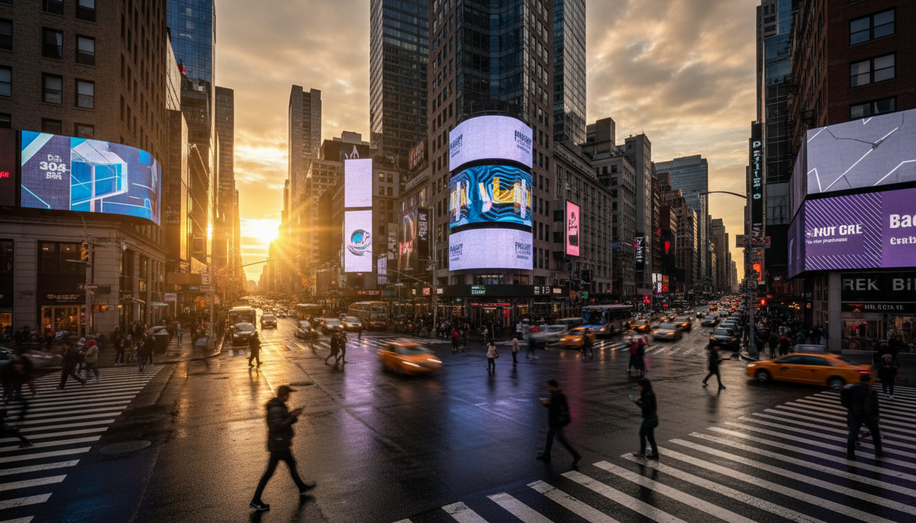

In the dynamic landscape of modern advertising, out-of-home (OOH) media is evolving from a static spectacle into a pivotal node in the consumer journey, powered by sophisticated integration with mobile location data. Far beyond rudimentary geofencing, this fusion leverages aggregated, anonymous signals from smartphone GPS, SDKs, and mobility patterns to map audience movements, uncover preferences, and drive behaviors that span physical exposures to digital conversions.
Traditional OOH—billboards towering over highways or digital screens pulsing in urban malls—has always excelled at mass visibility, commanding attention through scale and immediacy. Yet its impact often dissipated into the ether, measurable only through broad metrics like impressions or footfall estimates. Enter advanced mobile location data, which transforms these encounters into traceable, personalized narratives. Platforms like Journeys’ SDK, for instance, deliver near real-time insights into shifting audience mobility, even during disruptions like the Covid era, allowing planners to optimize routes and select high-impact frames based on actual movement patterns. This goes deeper than proximity alerts; it analyzes habitual paths, dwell times, and cross-location behaviors to reveal how a commuter’s morning drive-by billboard sighting influences evening online searches or store visits.
Consider a fashion retailer deploying digital OOH near a shopping district. Basic geofencing might trigger a push notification upon entry, but broader location data elevates this: aggregated signals track consumer flows from home to work, identifying clusters who frequent rival stores or linger in high-value zones. The DOOH screen then dynamically tailors content—perhaps weather-responsive promotions or event-tied offers—while mobile retargeting follows users hours later with video ads reinforcing the message, based on their verified exposure. Clear Channel Outdoor’s RADARConnect exemplifies this, using anonymized data to confirm billboard views and serve follow-up digital content, bridging the gap from roadside glance to e-commerce click.
This integration shines in understanding preferences at scale. Mobile SDKs and GPS-enabled analytics dissect audience segments by lifestyle: families on school runs, post-game crowds, or professionals in business districts. Providers like Movia’s Mobilytics parse these patterns to refine mobile billboard routes in real-time, adjusting for crowd density via passive Wi-Fi and Bluetooth signals, or environmental factors like time of day. The result? Campaigns that anticipate behavior, such as nudging a consumer toward a brand store precisely when location data detects them near a competitor—a “competitive play” that turns data into strategic advantage.
Measurement, long a OOH challenge, becomes precise and attributable. Fusing exposure data with mobile tracking quantifies full-funnel outcomes: who saw the ad, visited a site, or redeemed an offer. Research from the Out-of-Home Advertising Association of America (OAAA) and Nielsen reveals that DOOH prompts over half of consumers to act on their mobiles—visiting websites, redeeming coupons, or purchasing—with OOH-mobile combos driving store traffic 2.5 times more effectively than either channel alone. Mobile click-through rates surge up to 15 percent when bolstered by OOH support, while geofencing-enhanced efforts yield CTRs of 4.39 percent versus 0.7 percent for standard displays, alongside 30 percent lifts in engagement and conversions. Kinetic Worldwide’s Route platform, paired with SDK data, not only plans smarter but measures uplift through footfall, website traffic, and brand studies.
Real-world campaigns underscore the potency. A place-based OOH push with mobile integration achieved a click-through rate 25 times higher than benchmarks, delivering targeted messaging that followed consumers home. GPS-tracked mobile billboards, adaptive to audience density, correlate physical impressions with digital actions, while programmatic DOOH employs AI for predictive placement, forecasting peak times from historical mobility flows. QR codes and short URLs on billboards further personalize, capturing scan data to track redemptions and behaviors, turning passive viewers into participants who engage with games, exclusives, or locators.
Critically, this synergy respects privacy through anonymized, aggregated datasets—42 percent of mobile users opt into location sharing, enabling relevance without intrusion. For brands, the payoff is a seamless journey: OOH ignites awareness with unmissable presence, mobile sustains it with precision, and data closes the loop with ROI proof. In competitive battlegrounds, it deciphers behaviors invisible to siloed channels, from urban hustles to highway commutes.
As 90 percent of digital marketers already harness location data, the imperative for OOH pros is clear: transcend geofencing to embrace holistic mobility intelligence. This creates connected experiences where physical intrigue funnels into digital urgency—elevating OOH not as an endpoint, but as the spark for personalized, measurable consumer paths. Campaigns thus multiply engagement, recall, and sales, redefining advertising in an always-on world.