
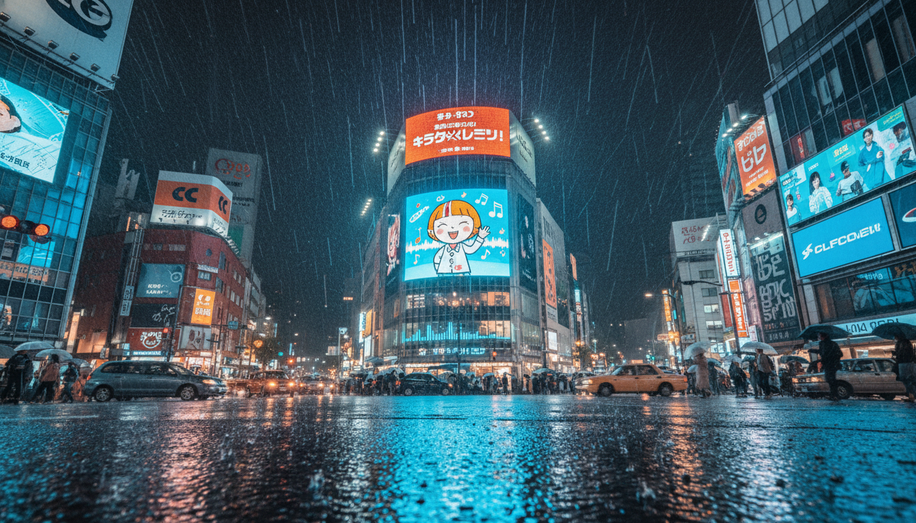

In the bustling chaos of city streets, where visual billboards compete for fleeting glances, sound emerges as the invisible force reshaping outdoor advertising. Out-of-home (OOH) campaigns, long dominated by striking visuals, are now harnessing sonic branding—audio elements like jingles, audio logos, and ambient soundscapes—to forge deeper, multi-sensory connections with audiences. This fusion doesn’t just capture attention; it embeds brands in the subconscious, turning passive passersby into emotionally engaged advocates.
Sonic branding, at its core, leverages the brain’s rapid processing of audio cues, which require minimal cognitive effort and trigger instinctive emotional responses. Unlike static images that demand visual focus, sound permeates public spaces effortlessly, lingering in memory long after the ad fades from view. Kantar research underscores this potency: sonic assets boost brand power by 76% and deliver 138% higher return on investment compared to visual-only elements. In OOH environments—think digital out-of-home (DOOH) screens in transit hubs or urban plazas—this translates to campaigns that don’t just advertise but immerse.
Consider Magnum’s ‘Nothing Cracks Like a Magnum’ activation, a collaboration with Ocean Outdoor and Global that transformed radio waves and DOOH into a symphony of indulgence. As commuters tuned into their cars or scrolled podcasts, a crisp cracking sound—mimicking the snap of Magnum’s signature ice cream bar—interrupted the airwaves, paired with towering DOOH visuals of the treat shattering in slow motion. The result? An audio-visual delight that made the brand’s pleasure audible, turning everyday drives into branded sensory events. This ingenuity extended OOH beyond sightlines, proving sound’s ability to ‘abduct’ attention in motion-filled public realms.
Sprite’s global ‘It’s That Fresh’ platform offers another blueprint, where agency Mustard crafted a sonic identity—a bubbly, effervescent audio logo that evokes the drink’s crisp refreshment. Rolled out across OOH in high-traffic zones, the sound paired with refreshed visuals and logos, syncing with partnerships in music and street culture. In busy squares or subway stations, the fizzing jingle cut through urban noise, creating a multi-sensory halo that linked the brand to moments of cool relief. This approach taps into sonic branding’s four pillars: universal appeal for broad resonance, flexibility for remixing across media, simplicity for instant recall, and alignment with the brand’s core utility.
Yet sonic branding in OOH demands more than catchy tunes; it requires architectural precision. Strong examples draw from a brand’s essence, ensuring sounds are remixable for diverse contexts—from short DOOH bursts to extended ambient loops. In public spaces, where dwell time varies from seconds to minutes, simplicity reigns: memorable audio logos, under 10 seconds, stick without overwhelming. Flexibility shines in DOOH’s programmatic capabilities, allowing real-time audio triggers based on weather, time, or foot traffic, crafting dynamic soundscapes that adapt to the environment.
Challenges persist, of course. Urban noise pollution can drown subtle cues, necessitating bold, distinctive sonics that cut through traffic hum or chatter. Privacy concerns around proximity audio tech, like directional speakers beaming sound to specific zones, add regulatory hurdles. Still, innovations are accelerating adoption. Sonic and Shadow’s 3D DOOH activations, for instance, layered spatial audio with holographic visuals, revolutionizing engagement by making brands ‘speak’ directly to viewers in revolutionary ways.
The payoff is profound: multi-sensory OOH elevates recall and affinity. Studies show audio-enhanced ads increase unaided brand recall by up to 25%, as sound forges neural pathways tied to emotion. Brands like McDonald’s with its iconic ‘ba-da-ba-ba-bah’ or Intel’s five-note chime demonstrate longevity; when transposed to OOH, these assets create familiarity loops in unexpected places. Imagine a coffee chain’s steaming aroma soundscape—gentle percolating paired with steam visuals—wafting from a mall DOOH, priming cravings before the scent even hits.
As OOH evolves into experiential ecosystems, sonic branding stands as its unseen powerhouse. It transforms billboards from silent sentinels into living narratives, blending audio’s intimacy with public scale. In an era of sensory overload, where 90% of information transmitted to the brain is visual, sound reclaims the other 10%—and amplifies it exponentially. For advertisers, the message is clear: in outdoor spaces, the power of sound isn’t just heard; it’s felt, remembered, and relentlessly effective. Campaigns that master this alchemy don’t just advertise—they resonate.