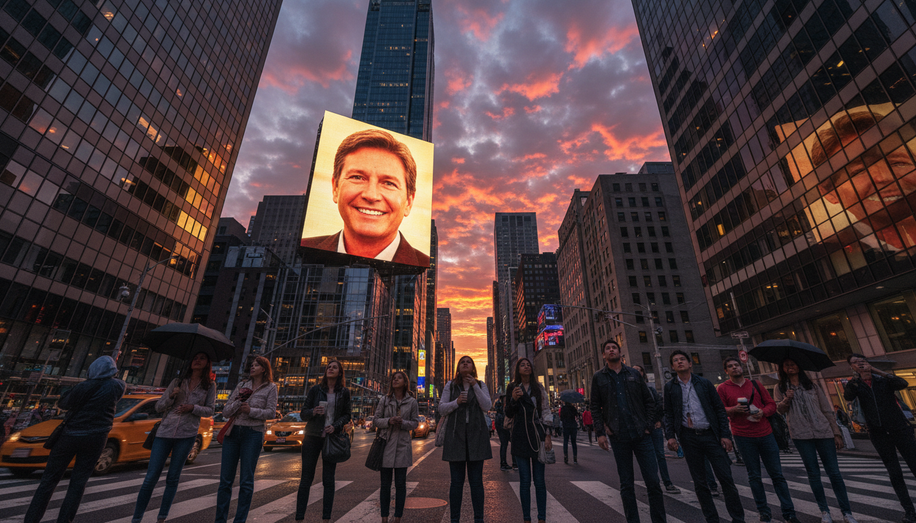

As the 2026 election cycle intensifies, out-of-home (OOH) advertising stands as a cornerstone for political campaigns, delivering unskippable messages that cut through digital clutter to drive voter engagement and shape public opinion. With projected spending surpassing $10 billion, candidates and parties are turning to billboards, transit ads, and digital displays to amplify visibility in high-traffic areas where voters live, work, and commute. This resurgence reflects OOH’s proven ability to build rapid awareness with bold, larger-than-life impact, fostering conversations that spill over into social media and earned media.
OOH’s effectiveness stems from its physical presence in everyday environments, ensuring repeated exposure that reinforces slogans, policy points, and candidate images without the risk of being scrolled past or blocked. Research from the Out of Home Advertising Association of America (OAAA) underscores this power: 68% of likely voters have encountered political OOH ads, with 50% seeing them in the past month alone. Among those exposed, 56% trust the ads to be truthful and accurate—higher than perceptions of radio (50%), TV (49%), social media (38%), or streaming services (35%)—while 49% report personal influence, including 20% deeming them very influential. This trust positions OOH as a credible medium, tied for first with print in consumer favorability, with 85% of U.S. adult viewers finding the ads useful.
Campaigns leverage OOH for precise targeting, placing messages where key demographics congregate—near workplaces, entertainment districts, or swing districts reshaped by redistricting. In the 2022 midterms, political OOH spending surged 113% from the prior year and 90% above 2018 levels, signaling its growing dominance amid record $9 billion ad budgets. Fast-launch capabilities further enhance its appeal; OOH campaigns can deploy instantly to counter opponents or capitalize on news cycles, maintaining momentum in volatile primaries and fundraising surges. Mobile billboards exemplify this agility, cruising battleground areas to reach voters on the move. The Skimm’s “No Excuses” initiative demonstrated this potency, deploying trucks with provocative stats like “vote like your health depends on it” and QR codes linking to voting resources, ultimately mobilizing over 100,000 young voters.
Beyond reach, OOH excels at sparking dialogue and controversy, magnifying impressions through free media coverage. Barack Obama’s 2008 presidential push illustrated this: a late-stage blitz in swing states via billboards expanded his voter base, blending constant visibility with timely relevance to tip the scales. Today, digital out-of-home (DOOH) elevates this further, enabling dynamic content swaps for real-time responsiveness. Studies show 58% of respondents deem OOH messaging highly believable, and over 50% of viewers report heightened interest in candidates, with ads swaying decisions. In polarized climates, this builds familiarity and trust, addressing top voter concerns like the economy through targeted visuals—billboards touting job plans or transit ads on inflation—embedding ideas passively as people navigate their routines.
OOH’s stability amid media saturation proves invaluable. While digital channels fragment and overload, OOH remains uncluttered and omnipresent, with competitive CPMs and straightforward buying reinforcing its role in balanced media mixes. Voter anxiety and information overload amplify its value; repeated sightings in familiar settings combat apathy, presenting stark choices between candidates. For local races, digital billboards from providers like Fliphound allow hyper-local precision, delivering tailored messages to precincts that decide tight contests.
Looking ahead to 2026’s high-stakes battles, OOH’s blend of scale, credibility, and adaptability makes it indispensable. Campaigns scaling from national airwaves to neighborhood placards use it to rally bases, sway undecideds, and dominate mindshare. As one OAAA report notes, its “unblockable” nature breaks through noise, turning passive glances into active engagement. In an era of fleeting attention, OOH doesn’t just advertise—it occupies the landscape, influencing moods and actions long after the ad fades from view. Political strategists recognize this edge, pouring resources into formats that endure, persuade, and ultimately mobilize the electorate.