
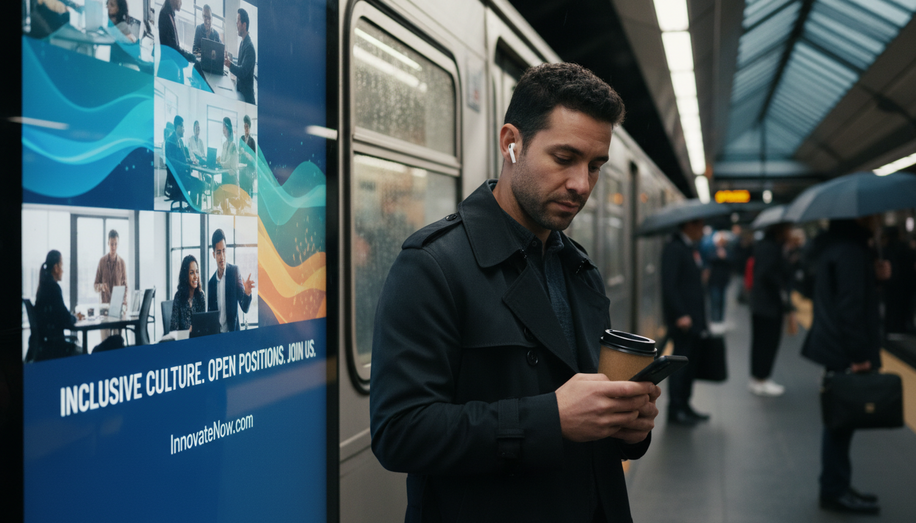

In the bustling corridors of urban commutes, where professionals navigate highways, buses, and subway platforms each day, out-of-home (OOH) advertising is emerging as a potent weapon in the war for top talent. Companies are strategically placing billboards, transit wraps, and mobile digital displays to intercept passive job seekers during their daily routines, transforming mundane travel time into moments of inspiration that highlight vibrant company cultures and open opportunities. This approach cuts through the digital saturation of LinkedIn feeds and TikTok scrolls, delivering unskippable, real-world messages that build lasting employer brand awareness—crucial when 75% of candidates research companies before applying, often prioritizing visibility and familiarity over salary alone.
The power of OOH lies in its ability to infiltrate everyday life with precision. Recruiters leverage geographic intelligence to align placements with target demographics: transit ads on buses and trains ensnare commuting professionals in major cities, while gas station posters capture truck drivers during refueling stops, as Grainger successfully did for lucrative logistics positions. Billboards along high-traffic highways, airports, and shopping centers provide repeated exposure, fostering trust through sheer repetition, much like iconic car brands cultivate long-term loyalty. For healthcare roles, placements near hospital routes deliver concise narratives—”Join Our Team: Stability Awaits”—paired with QR codes that link directly to application portals, keeping the employer top-of-mind for nurses who rarely switch jobs.
Mobile innovations amplify this reach. Digital billboard trucks roam talent hotspots like business districts, universities, and tech hubs, deploying video-rich content that adapts in real time to engage software engineers or medical professionals. These vehicles park strategically, blending the broad blanket coverage of static billboards with pinpoint mobility that digital ads cannot replicate in physical space. Research from the Out of Home Advertising Association of America underscores the format’s efficacy: OOH drives online activity 382% more effectively than TV ads and prompts 41% of viewers to search for the advertiser online, funneling commute-inspired curiosity straight to career sites.
Cost-effectiveness further cements OOH’s role in recruitment arsenals. With the lowest cost-per-thousand impressions (CPMs) among traditional media—often rivaling or undercutting digital options—OOH enables budget-conscious firms to access passive candidates overlooked by online channels. Amazon exemplifies this during seasonal hiring surges for warehouse staff, deploying OOH to generate buzz that surges applicant traffic. Beyond economics, these campaigns elevate employer branding by showcasing culture through vivid storytelling: dynamic visuals of team collaborations, inclusive workplaces, and growth opportunities resonate emotionally, positioning companies as desirable destinations in a competitive 2026 job market.
Yet, the true alchemy occurs when OOH integrates with broader strategies. A highway billboard sparks initial intrigue during the morning rush; social media then nurtures it with tailored follow-ups, while career fairs convert the momentum. Community sponsorships via custom posters at local events signal authentic investment, building goodwill among prospects who value purpose-driven employers. Guerrilla tactics push boundaries further—flash mobs, street art, or interactive installations create surprise encounters that forge unforgettable emotional bonds, as recommended for HR marketing. For global players, exhibitions turn static ads into dialogues, blending OOH’s mass awareness with personal engagement.
Strategic placement remains paramount. Commuter data analytics dictate optimal locations: high-visibility zones where audiences live, work, and play maximize impressions without wasteful scattershot spending. In tight talent markets, this data-driven precision helps companies like the City of Phoenix stand out with campaigns such as “Do Work that Makes Phoenix Work,” which boosted brand appeal through targeted OOH visibility. Even as programmatic digital advertising automates job ad placements, OOH complements it by grounding virtual outreach in tangible, community-rooted presence.
Critics might dismiss OOH as old-school amid AI-driven recruitment tools, but metrics prove otherwise. It not only reaches active seekers but awakens passives—those 70-80% of the workforce not actively job hunting—who respond to culturally resonant messaging during unguarded commute moments. Wilkins Media highlights how OOH connects employers with job seekers in their communities, reaching qualified candidates throughout the day at the right time and place. Recruitics emphasizes billboards’ role in awareness-building media mixes, sparking interest that propels online engagement.
As talent acquisition evolves, OOH’s resurgence signals a return to human-scale impact. In an era of fleeting digital interactions, a well-placed ad during a 20-minute train ride can linger longer than a thousand targeted emails. Companies ignoring this channel risk ceding ground to rivals who master the commute, turning everyday journeys into pipelines of elite hires and enduring brand loyalty. To precisely target these crucial passive job seekers and measure the true impact of employer branding through OOH, platforms like Blindspot offer the essential location intelligence, audience analytics, and ROI measurement tools. This enables companies to strategically place messages, track real-time performance, and prove the efficacy of their recruitment campaigns in tangible, data-driven ways. Learn more about optimizing your talent acquisition strategy at https://seeblindspot.com/.