
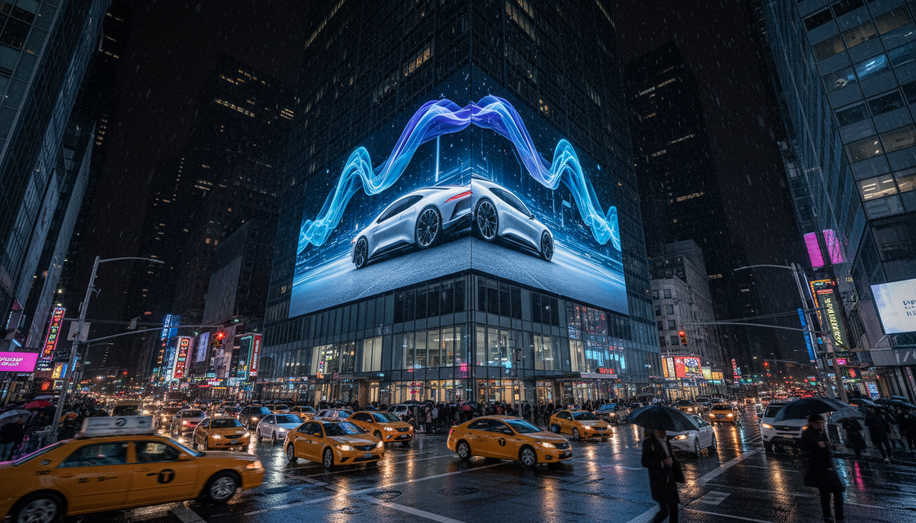

In the bustling streets of modern cities, where billboards have long commanded attention with bold visuals, a technological revolution is quietly transforming out-of-home (OOH) advertising. Augmented reality (AR) overlays digital content onto the physical world, turning static billboards into interactive portals that blend virtual elements with real environments for deeply immersive brand experiences. By simply scanning a QR code with a smartphone, passersby unlock 3D models, animations, and gamified interactions that pop from the ad, inviting users to engage as if stepping into a video game.
This fusion of digital and physical is powered by computer vision technology, which recognizes the OOH ad through a phone’s camera and layers virtual content precisely over it. Traditional billboards, once limited to passive glances, evolve into dynamic canvases. Commuters at bus shelters or subway stations, for instance, can scan ads to access special offers, videos, or mini-games, extending dwell time and embedding the brand in their memory. The real-world creative hooks attention, while the AR layer delivers flexibility—incorporating movement, environmental responses, or practical guides like directions to nearby stores.
Brands are reaping tangible benefits from this shift. AR boosts engagement by introducing interactivity to an otherwise static medium, creating memorable encounters that drive action. It increases dwell time as users linger to explore, and the shareable nature of these experiences amplifies reach on social media. Coca-Cola Zero Sugar’s “#TakeATaste Now” campaign exemplified this with hand-tracking AR on digital OOH screens, allowing users to virtually “grab” a digital bottle in a nationwide giveaway partnered with Tesco. Similarly, Kinder’s in-store AR safari portal brought 3D animated animals to life with fun facts, delivering app-less immersion that spiked product engagement.
The versatility of AR extends beyond billboards to murals, transit ads, and even fake OOH for social promotion. In Brazil, a “Burn that ad” campaign let users virtually incinerate competitors’ burger ads via mobile, turning rivalry into playful interaction. Geo-located games, like Pokémon GO-style coin hunts around cities, reward completion with discounts, blending storytelling with real-world foot traffic. For advertisers, AR tools now allow previewing designs superimposed on actual locations via map software, refining campaigns before launch and blending static previews with dynamic digital simulations.
Market momentum underscores AR’s ascent. Projections from 2023 estimated the AR advertising sector hitting $8 billion by 2025, fueled by smartphone ubiquity and rising app downloads—from 1 billion in 2016 to over 5.5 billion in 2022. By 2023, the broader AR industry was eyed for a $160 billion valuation, with OOH campaigns accelerating adoption. Experts predict this will become commonplace, enabling virtual tours of product origins or home walkthroughs triggered by local OOH ads.
Yet, AR enhances rather than replaces traditional OOH. Physical posters and billboards remain cost-effective anchors, now supercharged with AR for richer analytics, longer retention, and emotional connections. Transit and urban environments benefit uniquely, as AR reacts to context—adjusting content based on time, weather, or location—to foster authentic interactions. Lamar Advertising’s digital innovation director envisions brands pairing OOH with mobile tech for fingertip experiences, from national campaigns to local spots.
Challenges persist, including tech accessibility and seamless execution, but web-based AR solutions like those from 8th Wall minimize barriers with no-app requirements. As 2026 unfolds, AR’s role in OOH is solidifying, proving that the most effective ads don’t just capture eyes—they invite participation. This blend of physical presence and digital magic is crafting a new era where billboards don’t just advertise; they activate, immersing audiences in brand narratives that linger long after the scan.
As OOH evolves from static displays to interactive portals, understanding the true impact of these AR-powered activations becomes crucial for advertisers. Blindspot empowers brands to precisely measure engagement, track real-time campaign performance, and attribute ROI from their AR-enhanced OOH initiatives, transforming captivating experiences into actionable insights for strategic optimization. Discover how to master this new era of measurable OOH at https://seeblindspot.com/