
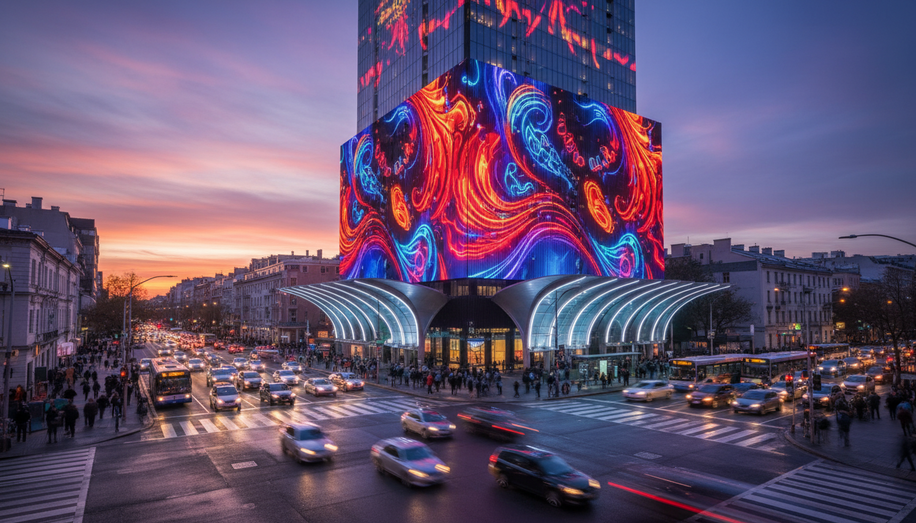

In the bustling arteries of modern cities, where attention is the scarcest commodity, unconventional out-of-home (OOH) advertising has emerged as a powerful antidote to digital fatigue. Formats like building wraps, hand-painted murals, and street furniture are redefining the urban canvas, turning everyday structures into immersive brand experiences that demand notice. These non-traditional approaches leverage sheer scale, artistry, and proximity to captivate pedestrians and drivers alike, proving that bold creativity can eclipse conventional billboards in impact.
Building wraps stand as titans among these formats, enveloping entire facades in high-resolution vinyl or fabric banners that transform skyscrapers into monolithic advertisements. In high-traffic epicenters like Times Square, these wraps have cloaked towering structures for movie premieres, product launches, and events, creating illusions of living, breathing promotions that dominate the skyline. Their massive surface area—often spanning hundreds of feet—allows for intricate graphics that play with light, perspective, and motion, drawing eyes from blocks away. Unlike static billboards, wraps integrate seamlessly with architecture, making the building itself a participant in the narrative. For luxury brands, this means wrapping a Paris landmark to evoke cultural prestige or draping a New York high-rise in guerrilla-style messaging that blends commerce with street art. The result is not just visibility but visceral engagement; passersby pause, photograph, and share, amplifying reach through social media without additional spend.
Hand-painted murals take this immersion further, infusing OOH with the authenticity of human craftsmanship. Applied directly to walls via brushes and paints—or sometimes cable-installed vinyl mesh for durability—these works eschew digital printing for textured, one-of-a-kind expressions. In urban hotspots from Shibuya’s fashion districts to New York’s gritty alleys, murals adorn commercial buildings, blending brand storytelling with local artistry to foster emotional connections. Consider a mural that morphs a bland concrete wall into a hyper-realistic cascade of falling sneakers for a sportswear launch; its hand-hewn details reward close inspection, turning commuters into admirers. Temporary iterations allow for seasonal relevance, while permanent pieces build long-term brand equity. What sets murals apart is their “wow effect”—that spontaneous halt in the urban rush, where viewers feel they’ve stumbled upon culture rather than commerce. Data underscores their potency: positioned in pedestrian-heavy zones, they generate higher dwell times and recall rates than traditional media, as the tactile quality invites interaction and conversation.
Street furniture, meanwhile, brings this innovation down to eye level, hijacking the intimate spaces where people linger—bus shelters, kiosks, lamp posts, bike shares, and urban panels. These formats thrive on proximity and persistence, delivering messages at close range when audiences are screen-free and receptive. Recent evolutions incorporate digital twists, like interactive lights on shelters that flicker to life for energy-efficient bulb promotions or soccer-goal setups heralding matchdays, blending physicality with dynamism. In high-traffic markets, street furniture dominates with 24/7 exposure, rain or shine, capturing alert minds during daily rituals—waiting for a bus, locking a bike, or scanning a kiosk. JCDecaux notes that 66% of adults say OOH in iconic spots sways brand perception, a stat amplified by street furniture’s targeted precision in urban cores. Creative applications shine here: a bus shelter “flooded” with 3D illusions of rising water for a bottled drink, or panels etched with augmented reality triggers viewable via phone. This format’s strength lies in repetition and relevance; repeated exposures in familiar locales build familiarity, while hyper-local tailoring—like neighborhood-specific messaging—ensures resonance.
Collectively, these formats excel by disrupting the predictable, weaving brands into the urban fabric rather than shouting from afar. Building wraps provide spectacle, murals offer soul, and street furniture ensures intimacy, together maximizing reach across demographics. In an era of ad blockers and fleeting scrolls, their physicality guarantees unskippable impact—pedestrians can’t swipe away a 50-story wrap or a mural pulsing with street-level energy. Campaigns like these have driven measurable lifts: increased foot traffic, social buzz, and sales spikes, as evidenced by luxury activations that marry cultural relevance with visual audacity. Yet their true edge is adaptability; wraps scale for global events, murals root in community vibes, and street furniture iterates daily.
Challenges persist—permitting hurdles, weather resilience, and installation costs demand savvy planning—but the ROI speaks volumes. As cities densify, these unconventional OOH spaces will only proliferate, inviting advertisers to rethink boldness. By claiming walls, edifices, and benches, brands don’t just advertise; they redefine the streetscape, etching themselves into collective memory one captivating glance at a time.
Blindspot’s advanced analytics and location intelligence can precisely target optimal sites for these impactful installations, transforming logistical challenges into strategic advantages. By providing real-time performance tracking and granular ROI measurement, Blindspot empowers advertisers to quantify the tangible returns of every captivating wrap, mural, or street furniture activation, ensuring their bold creativity translates directly into measurable business growth. Learn more at https://seeblindspot.com/