
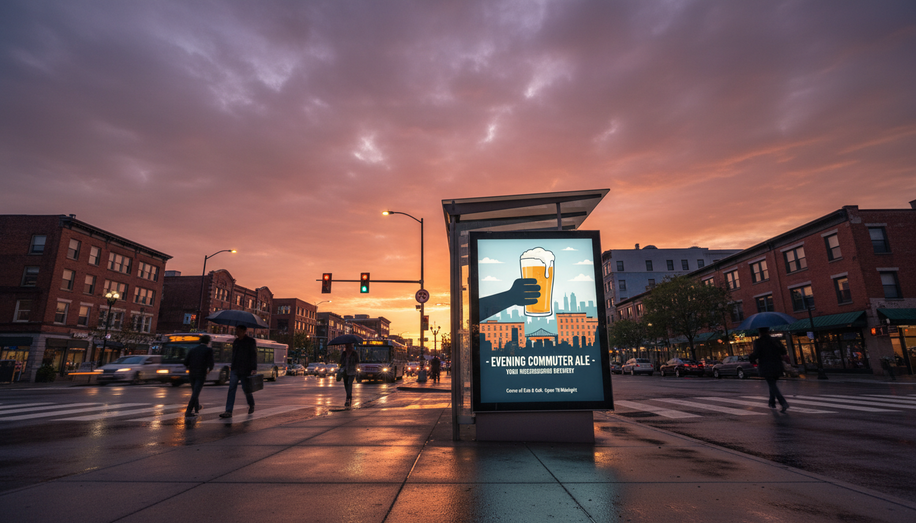

Out-of-home advertising has undergone a dramatic transformation as brands increasingly recognize the power of precision targeting at the neighborhood level. Hyper-local OOH campaigns now allow marketers to reach highly specific geographic areas with tailored messaging that speaks directly to the distinct characteristics, values, and needs of localized communities. This shift represents one of the most effective trends in OOH advertising, combining traditional medium strength with modern data capabilities to create campaigns that resonate far more deeply than broad, one-size-fits-all approaches.
The fundamental appeal of hyper-local targeting lies in its ability to deliver relevance at scale. When consumers encounter advertisements that relate directly to their immediate surroundings or specific needs, engagement rates increase substantially. A shoe store can reach potential customers precisely when they walk past the storefront, armed with the right offer at the critical moment of decision-making. This level of precision transforms passive billboard views into active engagement opportunities, fundamentally changing the calculus of OOH advertising effectiveness.
Beyond mere relevance, hyper-local OOH offers substantial cost efficiency advantages. Rather than investing in broad geographic coverage where many impressions may reach uninterested audiences, brands can concentrate resources in neighborhoods where they’re most likely to see results. This targeted resource allocation often yields significantly better returns on investment compared to traditional, wider-reaching OOH strategies. Brands can narrow their focus to particular blocks within specific neighborhoods, reaching only those households and foot traffic patterns that matter most to their business objectives.
The creative customization required for successful hyper-local campaigns demands a fundamentally different approach to ad design. Generic messaging wastes the precision that hyper-local targeting enables. Instead, brands must develop creative variations that reflect the unique character of each target neighborhood. Local landmarks featured in visuals, neighborhood names woven into copy, and offers tailored to local preferences transform advertisements from generic corporate messages into community conversations. Dynamic creative optimization automates this personalization process, automatically mixing and matching headline variations, images, and calls-to-action based on viewer location and demographic profiles.
One regional pizza chain demonstrated the power of this approach through a case study that created twelve distinct ad variations, each highlighting different menu aspects. Italian neighborhoods saw advertisements emphasizing traditional recipes, college areas featured late-night delivery promotions, and family-oriented neighborhoods showcased kid-friendly meal deals. While the creative budget increased by forty percent, return on investment jumped by one hundred eighty percent because every message felt personally relevant to its intended community.
Technology has become essential to executing sophisticated hyper-local strategies. Geofencing technology enables brands to target advertisements to individuals within specific radiuses of retail locations, directly driving foot traffic. Mobile location technologies power digital out-of-home campaigns that reach consumers on particular blocks, not just within broader towns or neighborhoods. Additionally, digital out-of-home offerings allow for real-time creative updates, tailored messaging adjusted by location or time of day, and targeting informed by genuine audience data.
Beyond paid media placements, hyper-local OOH success increasingly incorporates community integration strategies. Event sponsorships, participation in neighborhood festivals, and community involvement create offline touchpoints that reinforce digital presence. User-generated content from local customers—photos and reviews mentioning their neighborhoods—carries more weight than branded messaging when reposted within geographically targeted campaigns. Social proof from actual neighbors builds trust and authenticity in ways traditional advertising cannot replicate.
Google My Business optimization represents another essential component of comprehensive hyper-local OOH strategies. Creating separate listings for each physical location increases visibility in search results when potential customers seek services in their specific areas. Combining this digital foundation with geofencing-enabled OOH creates a cohesive ecosystem where neighborhoods experience consistent brand messaging across multiple touchpoints.
As competition intensifies, the ability to speak meaningfully to hyperlocal audiences distinguishes successful brands from generic competitors. Neighborhoods increasingly expect brands to understand and reflect their specific characteristics, values, and needs. Hyper-local OOH advertising, grounded in precision technology and creative customization, enables marketers to deliver exactly that connection—transforming out-of-home advertising from a broad awareness tool into a highly targeted, community-focused engagement platform.
For marketers seeking to master this hyper-local landscape, platforms like Blindspot offer essential tools to operationalize precision. Its location intelligence and programmatic DOOH capabilities enable granular targeting and dynamic creative optimization down to specific blocks, while robust ROI measurement and real-time performance tracking ensure every community-focused campaign delivers tangible results. Discover how to enhance your hyper-local OOH strategies at https://seeblindspot.com/