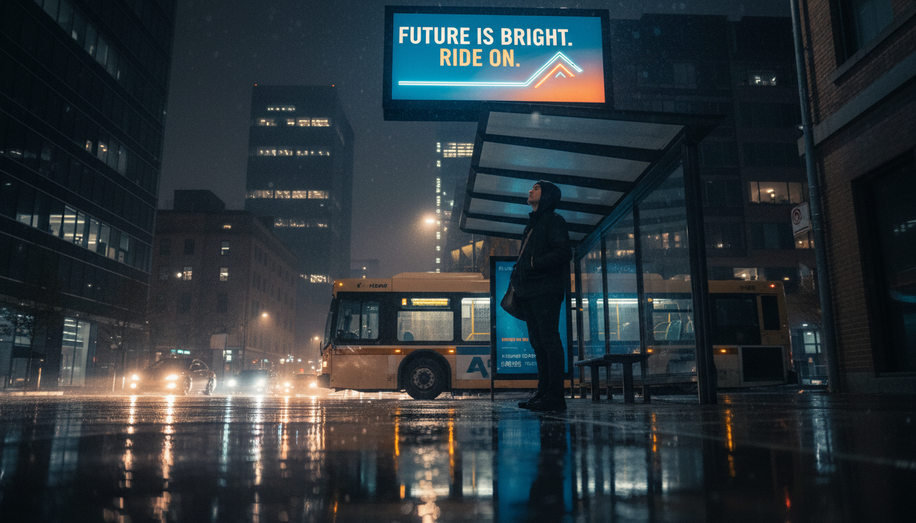

In an era dominated by scrolling feeds and targeted algorithms, static billboards stand as unyielding sentinels along highways and cityscapes, capturing eyes with a simplicity that digital screens struggle to match. Far from fading into obsolescence, these traditional fixtures deliver unmatched visibility in high-traffic areas, reaching audiences in the physical world without demanding screen time or user interaction. Their resurgence in 2026 underscores a timeless truth: sometimes, the most enduring power lies in what doesn’t move.
Static billboards command attention through sheer physical presence. Positioned at highway exits, urban intersections, and bustling centers, they expose messages to thousands of daily impressions from drivers and pedestrians already in motion. Industry data reveals that 171% of people consciously look at billboards while driving, with 250% of consumers reporting high engagement from one in the past month. Unlike digital ads vulnerable to skips, blocks, or ad fatigue, static formats offer persistent exposure—no click-away option exists when a massive visual looms inescapably overhead. This passive engagement model proves particularly potent for brand awareness, where repetition builds recognition over time without the interruptions plaguing online platforms.
Cost-efficiency further cements their relevance. Out-of-home (OOH) advertising, led by static billboards, boasts the lowest cost per thousand impressions among major channels, typically $2 to $7. Campaigns yield an average $5.97 return for every $1 spent, with traditional formats achieving around 40% ROI. A single placement generates sustained value, ideal for small businesses or long-term strategies avoiding the recurring fees of digital models reliant on cost-per-click or impression bidding. For instance, Tim Hortons leverages static billboards near highway exits to prompt morning commuters for coffee stops, turning captive audiences into immediate action at precisely the right moment.
Critics once predicted digital out-of-home (DOOH) would eclipse static entirely, citing motion’s allure—digital variants reportedly garner 400% more views and 81% greater attention-grabbing power. Yet static persists, complementing rather than competing with dynamic screens. While DOOH excels in real-time updates and targeted flair, static billboards fill the awareness gap that social media and search often overlook, providing broad, unfiltered reach. Consumer response rates for OOH overall span 38% to 86%, with static holding strong alongside digital’s 46% to 84%. About 80% of consumers notice roadside ads weekly, and nearly half recall them vividly.
Advancements in measurement have silenced doubts about accountability. Tools like mobile location tracking, QR codes, and foot traffic analytics now quantify static billboard impact with digital precision. Brands such as Chipotle deploy QR codes on billboards for time-specific offers—breakfast prompts at dawn, dinner deals at dusk—tracking scans to refine performance and optimize spend. This data-driven feedback elevates static from legacy relic to strategic asset, proving impressions translate to real-world behavior: increased store visits, brand lifts, and sales.
The billboard market’s growth—from $60.7 billion in 2024 to a projected $62.52 billion in 2025—signals sustained demand, even as digital segments expand. Static’s affordability shines for awareness campaigns, while its integration into omnichannel mixes amplifies results. In a fragmented media landscape, where consumers tune out online noise, static billboards cut through with unapologetic scale. They remind us that advertising’s core—stopping people in their tracks—thrives on simplicity.
Ultimately, static billboards endure because they mirror life’s unscripted rhythm: reliable, unavoidable, and profoundly human. As OOH cements its role as 2026’s media backbone, these timeless structures prove that in the digital deluge, a bold, unchanging message still rules the road.