
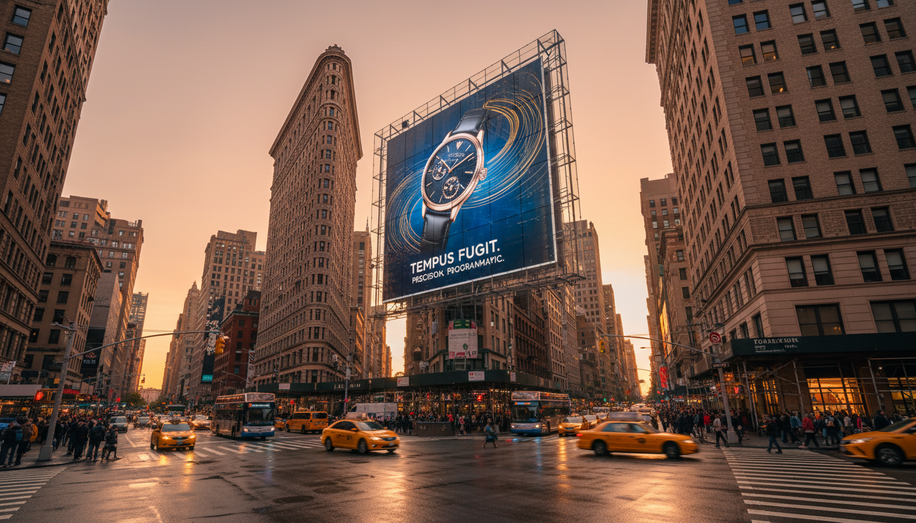

In the high-stakes world of programmatic digital out-of-home (DOOH) advertising, ad fraud poses a stealthy threat that erodes advertiser trust and inflates costs. As budgets shift toward OOH for its tangible, real-world visibility, sophisticated bots and invalid traffic are infiltrating programmatic buys, mimicking legitimate impressions on digital billboards and screens. Global ad fraud losses already exceed $100 billion annually, with projections nearing $172 billion by 2028, and DOOH’s programmatic ecosystem—where ads are bought in real-time auctions—is increasingly vulnerable to these drains.
Programmatic DOOH promised efficiency: automated bidding for premium inventory across urban screens, transit hubs, and retail spaces, delivering hyper-targeted campaigns to real audiences in motion. Yet, fraudsters exploit this automation. Invalid traffic (IVT), including bots generating fake views, accounts for one in five ad impressions globally, with rates hitting 20.64% based on analysis of 105.7 billion impressions. In the U.S., this climbs to 23.69%, putting $37 billion of programmatic spend at risk yearly. For DOOH, the stakes amplify because impressions tie to physical locations—spoofed domains and domain spoofing, which cost $7.2 billion in 2024 alone, trick systems into logging views from non-existent screens.
Bot networks, responsible for nearly 40% of click fraud, have evolved with residential proxy networks and browser fingerprint rotation, making fake traffic indistinguishable from genuine passersby. Desktop environments show the highest risk at 27.3% IVT, compared to 19.3% on mobile, while outdated software like Windows 8 traffic reaches 76% fraud rates. In DOOH, this manifests as inflated viewability metrics: a campaign reporting 100,000 impressions might deliver only 75,000 to actual humans, distorting ROI and skewing data-driven decisions. Sectors like fintech lose 43% of budgets to fraud, and even OOH’s “premium” status isn’t immune as programmatic exchanges blend with riskier open-web inventory.
Advertisers face uncomfortable realities. How much spend reaches real eyes on a bustling street screen? Performance reporting, reliant on pixels and tags, falters when bots simulate scrolls or dwells. Competitor-driven fraud, comprising 18-25% of clicks in competitive fields, exhausts budgets before legitimate exposure. Unlike static OOH, DOOH’s digital nature invites these digital-age pitfalls, undermining the channel’s core appeal: verifiable physical presence.
Combating this demands layered strategies. First, real-time fraud detection tools are essential. Platforms like TrafficGuard and Fraudlogix employ AI to analyze IVT patterns, blocking bots via IP reputation scoring and behavioral anomaly detection—critical since Google detects only 40-60% of invalid clicks. Independent verification services, such as those from the Interactive Advertising Bureau (IAB), provide third-party audits of impression quality, ensuring DOOH buys adhere to standards like ads.txt for domain authentication.
Technological advancements offer robust defenses. Blockchain-ledger systems log every bid and impression immutably, creating tamper-proof chains of custody that prove an ad aired on a verified screen at a verified time. Advanced viewability measurement, integrating GPS data with computer vision, confirms human proximity—distinguishing a real pedestrian from a simulated view. Machine learning models trained on 2026 fraud trends, including residential proxies, achieve over 90% detection rates in beta tests, far surpassing legacy filters.
Industry standards are gaining traction. The IAB’s OpenRTB protocol now mandates fraud signals in bids, while MRC-accredited tools set benchmarks for DOOH viewability—requiring 50% pixel visibility for at least one second. Supply path optimization (SPO) curtails fraud by limiting DSPs to trusted sellers, bypassing shady exchanges. In Europe, GDPR-enforced transparency yields cleaner traffic at 7.8-8% IVT, a model for global adoption.
Advertiser vigilance completes the triad. Demand transparency reports pre- and post-campaign, prioritizing DSPs with integral fraud blocks over cheapest bids. Shift metrics from raw impressions to qualified views, factoring audience demographics via fused data from mobile signals and census info. Collaborative initiatives, like the Trustworthy Accountability Group, foster shared blacklists of fraudulent inventory.
These measures are rebuilding confidence. Early adopters report 20-30% fraud reductions, reclaiming budgets for authentic impact. As OOH surges—drawn by digital’s distrust—programmatic DOOH thrives when fraud is treated as a line-item priority. Transparency isn’t optional; it’s the bedrock of sustainable growth. By wielding cutting-edge tech, rigorous standards, and proactive scrutiny, the industry can ensure every dollar buys genuine attention, not algorithmic illusions.