

Out-of-home advertising has a unique advantage that digital channels cannot replicate: it meets consumers at moments when they’re already thinking about seasonal needs, celebrations, and purchasing decisions. Yet too many brands treat their OOH strategy as an afterthought, deploying generic creative year-round and missing the revenue that strategic seasonal planning delivers. The key to maximizing OOH impact lies in aligning messaging with the natural rhythms of consumer behavior, then executing with precision across the calendar.
The business case for seasonal OOH is straightforward. Campaigns that align with what’s top of mind for consumers generate better message recall, higher engagement, and increased foot traffic compared to always-on messaging. An outdoor gear brand that reactivated dormant customers before peak season drove five figures in revenue through segmentation and intent-driven messaging alone, demonstrating that strategic timing compounds growth. Static billboards, unlike digital ads that can be scrolled past or skipped, deliver bold, consistent visibility precisely when consumers are primed to act.
Strategic seasonal planning begins months in advance. Brands should treat their billboard calendar like a retail calendar, identifying key seasonal moments and planning recurring campaigns around them. This forward-thinking approach addresses a critical constraint: premium billboard locations book quickly around major holidays and peak seasons. Reserving space weeks or months early ensures availability when demand and CPMs are highest. Pre-season planning also creates space for testing creative before execution matters most. High-performing outdoor brands test hooks, angles, and offers during the pre-season window, lowering risk when in-season budgets increase and urgency spikes.
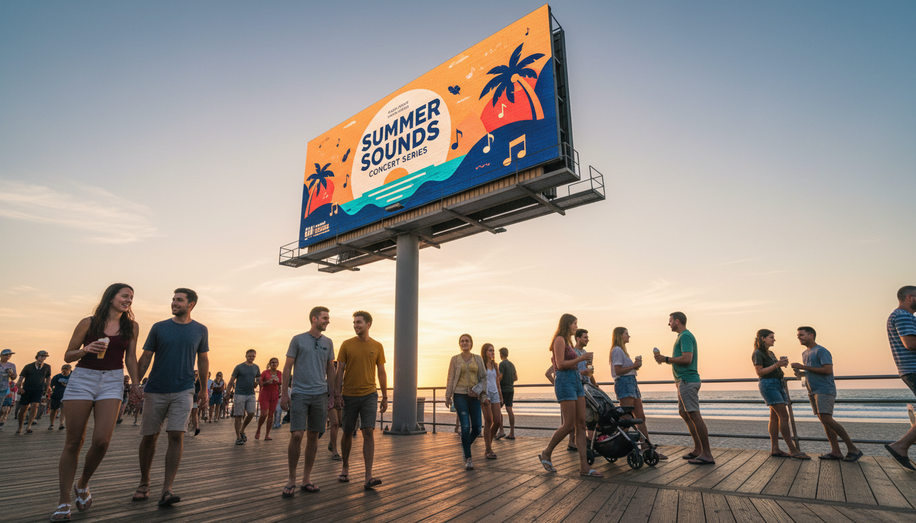
The seasonal calendar itself is densely packed with opportunities. Summer campaigns capture vacation mindsets through promotions for travel services, staycations, and local attractions, while also addressing practical needs like outdoor living, pest control, and back-to-school preparations. Winter presents distinct advantages: holiday shopping campaigns with gift-focused messaging, New Year’s resolution appeals targeting fitness and wellness, and weather-responsive messaging for snow removal and heating services. Spring and fall each offer distinct consumer behaviors—spring aligns with home cleaning and landscaping, while fall invites back-to-school and preparation narratives. Weather-driven campaigns deserve particular attention, as location-specific conditions create immediate relevance and trigger immediate action.
Execution excellence separates campaigns that resonate from those that fade into the background. High-impact creative requires tight copy and bold visuals that communicate instantly. Seasonal language—”Holiday Sale,” “Summer Savings,” “Back to School Ready”—signals relevance within seconds. Vibrant, seasonally appropriate colors amplify recognition: reds and greens for winter holidays, bright hues for summer, fresh tones for spring. Localization matters significantly; mentioning a town, neighborhood, or local event creates immediate relevance for passersby. These elements aren’t optional flourishes—they’re the mechanics of connection.
Rotation and refresh keep seasonal campaigns from becoming static background noise. Even changing billboard creative four times annually keeps brands visible and fresh. For campaigns spanning weeks or months, rotating creative or staggering placements allows messaging to evolve—early summer messaging differs from back-to-school appeals, for instance—while maintaining campaign coherence.
Effective seasonal OOH also integrates with broader marketing efforts. Static billboards should align with email campaigns, social media messaging, and paid digital strategies, creating consistency across touchpoints where consumers encounter the brand. This multi-channel approach meets audiences where they already are, converting convenience into sales. Data tools like Google Analytics help pinpoint when audiences are most active, informing both timing and intensity of investment.
The brands winning at seasonal OOH share a common discipline: they plan ahead, test early, execute with creative excellence, and integrate across channels. They recognize that seasonality isn’t a temporary phenomenon but a fundamental driver of consumer behavior. By mastering the calendar, they transform billboards from static background into dynamic, timely touchpoints that capture attention precisely when it matters most. For any brand seeking to maximize OOH ROI, strategic seasonal planning isn’t optional—it’s foundational.